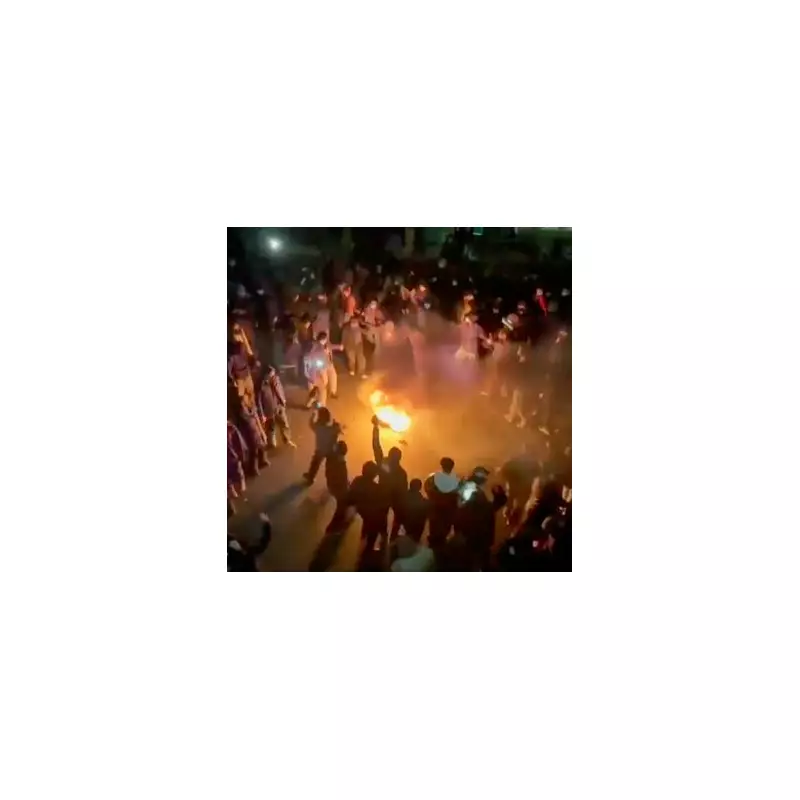
Iran is engulfed in a significant wave of civil unrest, with demonstrators flooding the streets of Tehran and other major cities in a bold challenge to the country's leadership. The protests have drawn a severe response from authorities and have escalated international tensions, with the United States indicating it is prepared to take military action.
Deadly Crackdown and Regime's Stark Warning
The scale of the government's crackdown has been severe. Reports indicate that at least 500 people have been killed and approximately 10,000 individuals have been arrested since the protests erupted. On the streets, a tense standoff has unfolded, with armed security forces directly pointing their weapons at unarmed protesters.
In a dramatic session of parliament, Speaker Mohammad-Bagher Ghalibaf issued a direct threat to the United States, shouting "death to America." He explicitly warned that "In the event of an attack on Iran, both the occupied territory and all American military centres, bases and ships in the region will be our legitimate targets." This statement frames any potential US intervention as an act that would justify immediate and widespread retaliation.

US Posture and Communication Blackout
The prospect of American involvement has been heightened by comments from former US President Donald Trump, who stated that the US was "ready to help" and claimed Iran was "looking at freedom." This rhetoric has placed the long-standing adversarial relationship between Washington and Tehran at the centre of the crisis.
Within Iran, the government has attempted to stifle dissent and control the narrative by implementing a widespread internet blockade. However, this measure has been partially circumvented by the use of Starlink satellite terminals, providing a crucial digital lifeline for some protesters to communicate and share information with the outside world.
Exiled Voices and Escalating Police Response
Adding to the pressure on the regime, Reza Pahlavi, the exiled son of Iran's last Shah who resides in the US, released a video message on X (formerly Twitter). In it, he expressed solidarity with the protesters, stating, "I know that I will soon be by your side," and encouraged people to continue their demonstrations.
Domestically, Iran's Chief of Police, Ahmad-Reza Radan, confirmed that the level of confrontation with protesters had been deliberately intensified. This official admission underscores the regime's strategy of using overwhelming force to quell the unrest. The situation remains volatile, with the potential for further bloodshed and a significant international confrontation hanging in the balance.