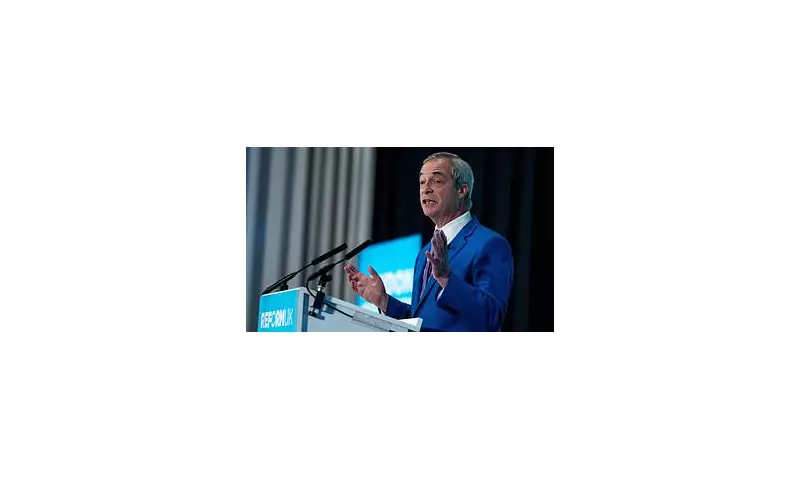
Reform UK leader Nigel Farage has declared he will vote against any move to deploy British troops to Ukraine as part of a potential peacekeeping mission, launching a scathing attack on Prime Minister Keir Starmer's new international commitment.
The 'Paris Declaration' and a Pledge for a Vote
This political crisis follows Sir Keir's return from talks in the French capital, where he signed a significant agreement alongside French President Emmanuel Macron and Ukrainian leader Volodymyr Zelensky. Dubbed the 'Paris Declaration', the document outlines a plan for Britain and France to establish military hubs across Ukraine should a peace deal with Russia be reached.
Addressing the House of Commons, the Prime Minister sought to reassure MPs, stating that any final decision to put boots on the ground would be put to a parliamentary vote. "If there is a decision to deploy then I would put that matter to this House," Sir Keir told MPs during Prime Minister's Questions. He emphasised that the declaration was a political statement of intent that sits under pre-existing military plans.

Farage's Fierce Opposition and Manpower Warning
However, Nigel Farage dismissed the agreement out of hand. Speaking to Times Radio, the Reform leader stated bluntly, "I would vote against." He argued that the United Kingdom lacks the necessary resources for such a mission, warning that "we neither have the manpower nor the equipment to go into an operation that clearly has no ending timeline."
Mr Farage derided the so-called 'Coalition of the Willing', suggesting it amounted to little more than Britain and France. He pointed out that while Sir Keir and President Macron stood together, other major European leaders like Italy's Giorgia Meloni and Germany's Olaf Scholz appeared less committed. "The coalition of the willing is just two countries," he claimed.
Commons Clash Over Parliamentary Scrutiny
The Prime Minister faced immediate pressure in Parliament, led by Conservative leader Kemi Badenoch. She challenged Sir Keir to provide concrete details on how many personnel could be deployed and branded it "astonishing" that he was not making a full formal statement to MPs on the agreement.
Mrs Badenoch accused the PM of showing a "fundamental lack of respect" for the House by not addressing the landmark commitment immediately. In response, Sir Keir insisted he would keep Parliament updated and that a statement would be made "at the earliest opportunity." He clarified that any deployment would only occur after a ceasefire, with the role of supporting Ukraine's capabilities and protecting military hubs.
The debate touches on a sensitive constitutional precedent. While governments technically hold the royal prerogative to deploy troops, a convention of holding parliamentary votes for major operations has developed since the Iraq War. This was underscored in 2013 when then-Prime Minister David Cameron was defeated in a vote on proposed airstrikes in Syria.
The Paris talks, aimed at bolstering support for Ukraine, were also attended by key figures from Donald Trump's camp, including his son-in-law Jared Kushner and peace envoy Steve Witkoff. Mr Kushner indicated that a potential Trump administration would offer "real backstops" to a peacekeeping force.
As the political row intensifies, the core questions of military capacity, the duration of any mission, and the depth of international support remain unresolved, setting the stage for a fierce national debate on the UK's role in securing peace in Eastern Europe.