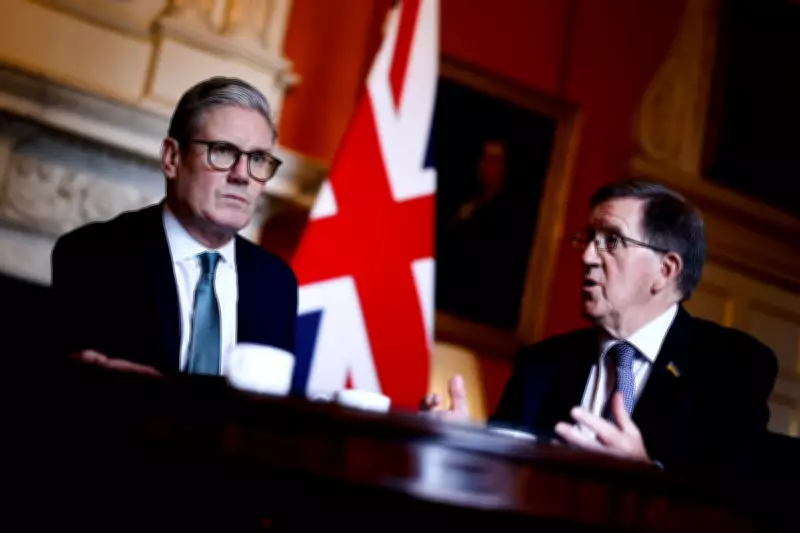
Lord Robertson's Unprecedented Public Intervention Sends Shockwaves Through Westminster
Lord George Robertson, the former Labour defence secretary and ex-NATO general secretary, has broken his longstanding silence with a devastating public critique of Sir Keir Starmer's government. This rare intervention from a figure known for his discretion and political integrity has triggered alarm bells throughout Downing Street and Whitehall.
The Significance of a Silent Statesman Speaking Out
Former politicians typically fall into distinct categories regarding public commentary. Some become ubiquitous media commentators, while others offer measured opinions on specific issues. A third group provides anonymous briefings, and finally, there are those who maintain strict public silence, reserving their counsel for private discussions with leaders.
Until now, Lord Robertson firmly belonged to this last category. His loyalty to the Labour Party endured even during the challenging Corbyn years, and he has consistently used his extensive defence knowledge to advise leaders privately rather than through public pronouncements.

The Tipping Point: Global Conflicts and UK Paralysis
The catalyst for Lord Robertson's extraordinary public intervention appears to be Britain's apparent powerlessness amid escalating global conflicts. The former NATO chief has reached what observers describe as "peak anger" regarding the government's defence paralysis.
A particularly telling incident involved the delayed deployment of HMS Dragon to protect British bases in Cyprus during Iranian bombardment. While the warship remained docked in Portsmouth awaiting refitting, and another vessel faced operational limitations in warm waters, both French and Greek naval forces managed to deploy to the Mediterranean island promptly.
The Core Issue: Defence Spending Versus Welfare Priorities
Lord Robertson's critique penetrates to the heart of Britain's strategic dilemma. The UK continues to allocate substantial resources to welfare programs while adopting what he characterizes as a "parsimonious" approach to defence expenditure. Despite government claims of increased military funding, frontline services are implementing in-year cuts because the Treasury declined to finance promised pay increases for military personnel.
This situation exposes what analysts describe as the "sheer paralysis" of the Starmer administration. Since last summer's welfare rebellion humiliation, the Prime Minister has struggled to implement significant policy changes. He lacks the political capital to substantially reduce welfare spending to fund the enhanced defence capabilities that global instability demands.
Leadership Vacuum and Strategic Drift
With his premiership persistently under scrutiny, Sir Keir Starmer has increasingly adopted inaction as his default position. This approach occasionally yields benefits, such as the decision not to participate in bombing campaigns against Iran. However, more frequently, it leaves both his government and the nation adrift without clear strategic direction.
This leadership vacuum explains why the crucial Defence Investment Plan has languished on the Prime Minister's desk for an extended period. Sir Keir appears to lack both the political clout and the decisive gumption required to mediate between the Treasury's fiscal constraints and the Ministry of Defence's operational requirements.
The Consequences of Strategic Stagnation
Without this essential defence blueprint, Britain cannot progress with rearmament initiatives or adequately prepare for an increasingly volatile international landscape. The nation risks falling behind allies in military readiness while global threats multiply.
Lord Robertson's decision to break his customary silence at this precise moment carries profound symbolic weight. The rarity of his public interventions amplifies their impact, delivering a particularly stinging rebuke to a government that many observers believe has lost its strategic compass. His intervention serves as both warning and indictment of a leadership struggling to navigate complex defence challenges amid domestic political constraints.