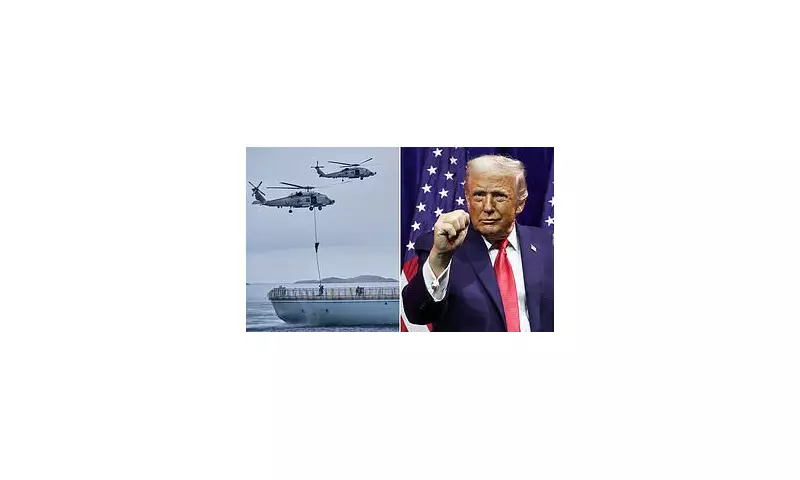
Tensions in the Arctic have reached a boiling point after Denmark confirmed a longstanding military rule that would see its forces open fire immediately on any invading army, including that of its NATO ally the United States. This dramatic revelation follows a week of escalating threats from the Trump administration regarding the potential seizure or purchase of Greenland.
A 1952 Rule with Modern-Day Consequences
The Danish defence ministry has confirmed to newspaper Berlingske that a 1952 regulation, known as the order on precautionary measures for military defence, remains fully in force. This rule mandates that if Denmark or its territories are invaded, "the attacked forces must immediately take up the fight without waiting for or seeking orders." This applies even if local commanders are unaware of a formal declaration of war.
The clarification comes directly in response to inquiries about the rule's status, with the ministry stating it "remains in force" in the context of recent US rhetoric. A senior Trump administration official this week confirmed the exploration of plans to either purchase Greenland or take charge of its defence, citing strategic needs against Russian and Chinese activity in the Arctic.

European Allies Rally Behind Greenland's Integrity
The US threats have triggered a furious and unified response from European NATO leaders. In a powerful joint statement, the leaders of the UK, France, Germany, Italy, Poland, Spain, and Denmark declared they will "not stop defending" Greenland.
They emphasised that "Greenland belongs to its people" and that only Denmark and Greenland can decide on matters concerning the territory. The leaders pointed to the 1951 defence agreement between the US and Denmark, framing America as an "essential partner" whose actions now threaten the alliance's very foundation.
Security experts warn that any US military action against Greenland would almost certainly mark the catastrophic end of the NATO alliance, forcing allies into an unthinkable confrontation.
Trump's Fiery Retort and a Show of Force
President Donald Trump launched a ferocious counter-attack on his NATO allies, lashing out at what he called "fans" of the alliance. In a social media post, he reiterated his longstanding grievance that most members were not meeting defence spending targets until he pressured them.
"Russia and China have zero fear of NATO without the United States," Trump asserted, adding, "I doubt NATO would be there for us if we really needed them." He concluded by stating that the "only nation" China and Russia fear is the "DJT-rebuilt USA."
This diplomatic broadside coincided with a significant show of US military strength: the seizure of a Russian oil tanker off the north coast of Scotland. The vessel was reportedly smuggling sanctioned oil from Venezuela, and Moscow had dispatched a submarine to escort it, highlighting the complex geopolitical backdrop to the Greenland dispute.
The situation leaves Europe on edge, with vital talks underway among allies on how to respond to any potential US aggression towards the Danish territory, a crisis that could redraw the map of international alliances.