Senior Democratic figures in the United States have reacted with outrage to a military intervention ordered by President Donald Trump in Venezuela, branding the operation as unlawful and a dangerous escalation carried out without the required consent of Congress.
A Raid Without Warning
The audacious dawn operation on Saturday, which involved a bombardment and a military landing aimed at capturing Venezuelan President Nicolás Maduro, proceeded without prior notification to key lawmakers. Notably, even the bipartisan "gang of eight" – the top congressional leaders traditionally briefed on sensitive national security matters – were kept in the dark.
Jim Himes, the leading Democrat on the House intelligence committee, confirmed he had received no communication from the administration, stating, "I'm a member of the gang of eight, and I have yet to get a phone call from anyone from the administration."

Constitutional Breach and Democratic Fury
Democrats were swift to condemn the action as a clear violation of the US constitution, which reserves the power to declare war for Congress. The 1973 War Powers Resolution further mandates that presidents seek congressional authorisation for military engagements.
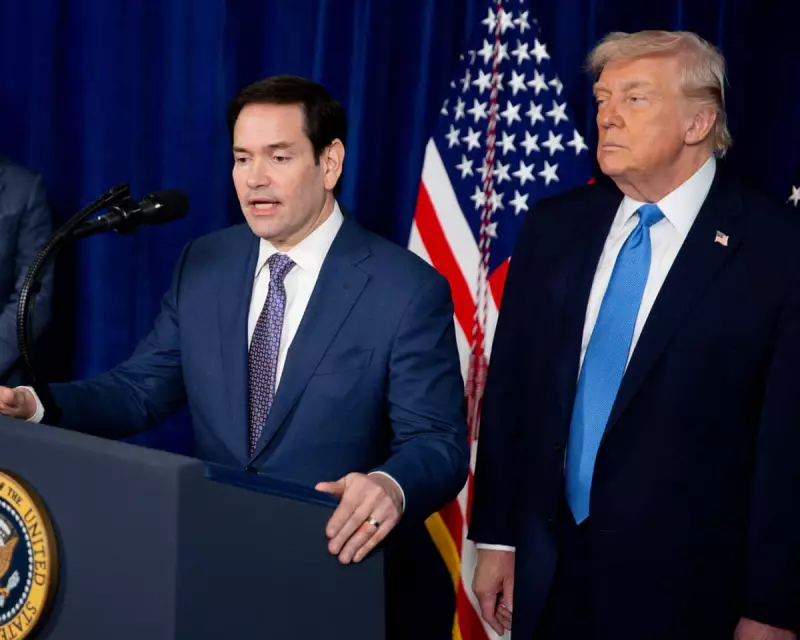
Senator Chris Murphy of Connecticut accused the Trump administration of outright deception. Referring to a briefing last month by Secretary of State Marco Rubio, Murphy said, "They literally lied to our face… The message they sent was that this wasn't about regime change … They said this is just a counter-narcotics operation." He labelled the Venezuela raid "wildly illegal" and declared there was "no way to trust this administration."
Representative Hakeem Jeffries, leader of the Democrats in the House, dismissed the administration's counter-narcotics justification, telling NBC News, "This was an act of war. This was a military action involving Delta Force, involving the army, apparently involving thousands of troops, involving at least 150 military aircraft."
Political Repercussions and a Looming Showdown
The unilateral move has dramatically intensified a looming political battle in Washington. A bipartisan war powers resolution, which seeks to block any further military action against Venezuela without express congressional approval, is scheduled for a vote in the Senate.
The debate is privileged, preventing Republican leaders from halting it, and requires only a simple majority to pass. It has garnered support from key figures including Democratic Senate leader Chuck Schumer and Republican Senator Rand Paul of Kentucky, a frequent critic of the president's foreign policy.
Schumer framed the intervention in stark terms on ABC News, warning, "We have learned through the years, when America tries to do regime change and nation building in this way, the American people pay the price in both blood and in dollars." He argued it contradicted Trump's own campaign promises against "endless wars."
Senator Murphy pointed to Trump's stated intent to temporarily seize control of Venezuela's oil as revealing the true motive. "Venezuela is all about making money for his friends… Once again, you're seeing that this president's foreign policy… is about making his crowd filthy rich. It has nothing to do with American national security," he asserted.
The administration's decision to sideline Congress now sets the stage for a critical constitutional and political confrontation over the limits of executive power in the coming days.