Australian authorities are investigating a chilling international dimension to the deadly Bondi Beach mass shooting, revealing the accused father and son spent weeks in the Philippines for what security sources describe as "military-style training".
International Journey Under Scrutiny
The pair, identified as Sajid Akram, 50, and his son Naveed Akram, 24, arrived in the Philippines together on 1 November 2025 on a flight from Sydney. According to the Philippine immigration department, the elder Akram entered the country as an Indian national. Their listed destination was Davao, a city on the southern island of Mindanao, a region with a historical presence of Islamist militant activity.
They departed the Philippines on 28 November, returning to Sydney. The Australian Broadcasting Corporation (ABC), citing security sources, reported the trip's suspected purpose was for paramilitary instruction. While the Philippine military stated it could not verify these claims, New South Wales Police Commissioner Mal Lanyon confirmed investigators are meticulously examining the visit's purpose and the men's movements abroad.

Links to Terror Network Probed
The investigation into the Bondi Beach attack, which left 15 people dead and dozens injured during a Hanukkah celebration, is now probing potential connections to a transnational terror network. Commissioner Lanyon revealed that a vehicle linked to Naveed Akram contained improvised explosive devices and two homemade ISIS flags.
Australian Federal Police Commissioner Krissy Barrett stated the attack appears to have been carried out by individuals who "aligned themselves with a terrorist organisation, not a religion", echoing earlier police statements that the atrocity was "inspired by Islamic State".
Despite the grave allegations, Prime Minister Anthony Albanese noted that a previous six-month investigation by the Australian Security Intelligence Organisation (ASIO) in 2019 into Naveed Akram found "no evidence" he had planned any act of violence, and no evidence either man had been radicalised at that time.
Aftermath and National Response
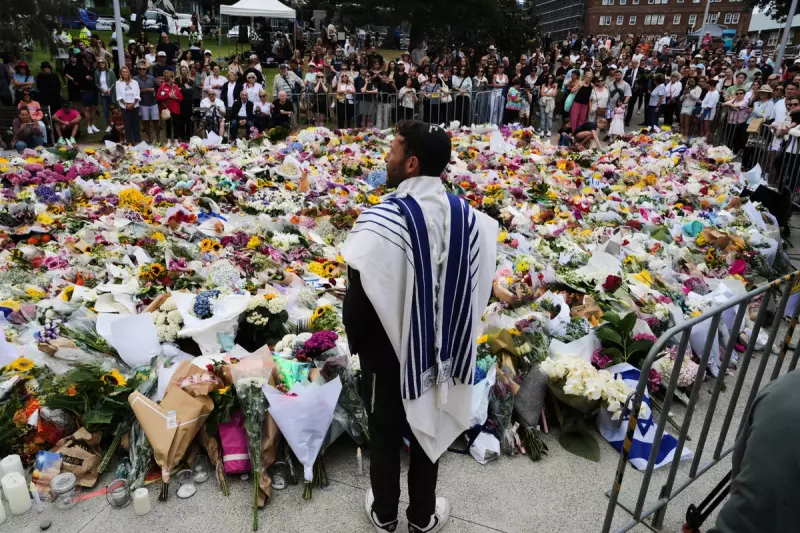
The human toll of the attack remains severe. Health authorities confirmed 24 people are still hospitalised, with several in critical condition. The victims included a 10-year-old child, a British-born rabbi, a former police officer, and a Holocaust survivor.
In response, Prime Minister Albanese and NSW Premier Chris Minns have vowed to strengthen Australia's gun laws. The Prime Minister also hailed a civilian who tackled one of the gunmen and seized his weapon as a "true Australian hero". Meanwhile, Naveed Akram, who was shot during the incident, has regained consciousness after being in a coma.
On the diplomatic front, Australian Foreign Minister Penny Wong has briefed her Philippine counterpart, Tess Lazaro, on the ongoing investigation as authorities in both nations work to unravel the full extent of the suspects' activities overseas.