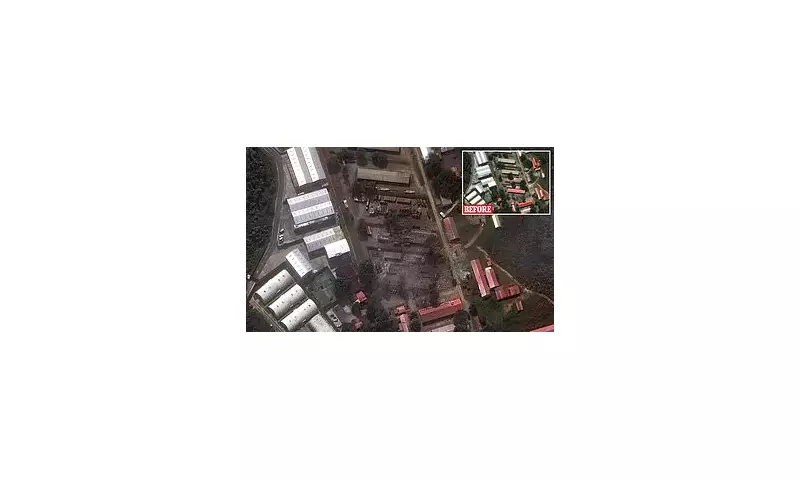
Shocking aerial photographs have exposed the severe aftermath of a major US military operation in Venezuela, launched with the objective of apprehending the country's leader, Nicolas Maduro.
Targeting the Heart of Military Power
The overnight strikes focused on Fuerte Tiuna, the largest military complex in the capital city of Caracas. Images taken from the air show the precise and devastating impact, with several buildings completely obliterated in single attacks. The scenes are dominated by charred patches of earth and plumes of smoke rising from the wreckage.
A senior Venezuelan official informed the New York Times that the human cost is believed to be significant. Approximately 40 people are thought to have been killed in the assault, a toll that includes both members of the military and civilians caught in the crossfire.

Maduro Captured and Flown to New York
Former US President Donald Trump stated that the 'large scale strike' was executed specifically to capture Nicolas Maduro and his wife, Cilia Flores. The operation was successful, and the pair are now reported to be in custody in New York City, where they face serious drug trafficking charges.
They are being held at the Brooklyn Metropolitan Detention Center, a facility notorious for its poor conditions. This prison has previously housed other high-profile inmates, including music mogul Sean 'Diddy' Combs.
Political Vacuum and US Control
In the wake of the operation, Trump announced that the United States would govern Venezuela indefinitely. He dismissed the possibility of the country's popular opposition figure, Maria Corina Machado, assuming leadership, claiming she 'does not have the support' necessary to take the reins of power.
This dramatic intervention marks an unprecedented escalation in US-Venezuela relations, effectively removing the sitting government by force and installing a provisional American administration. The long-term consequences for regional stability and international law are yet to be fully understood.