
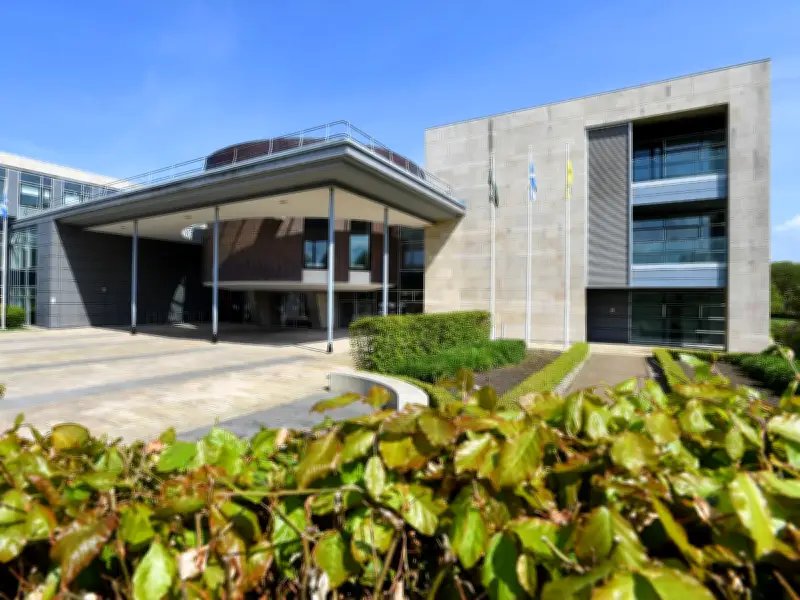
West Lothian Council has backed redrawn proposals for its new Local Development Plan, which will now be submitted to the Scottish Government. The plan sets the blueprint for all planning decisions in the region until 2038.
A meeting of the full council revealed deep political divisions on housing and health care that will shape the final document. With council elections scheduled for next May, the current majority that approved the plan will be out of office before it takes full effect.
Revised Housing Targets
The initial draft of the Evidence Report was returned to the council earlier this year after ministers deemed it insufficient—a fate shared by most Scottish local authorities. The revised plan proposes 10,825 homes over the next decade, an increase from the original 9,850, equating to just over 1,000 homes per year.
Kate Hopper, the council’s Development Planning and Environment Manager, said: “Since the Evidence Report was returned to the council, the Scottish Government and the DPEA have produced a further advice note in February which sets out the approaches that councils can use in setting their Indicative Local Housing requirement (iHLR). These are using updated figures on existing need and/or new household projections, and policy-driven uplifts supported by housing emergency declarations and LHS targets.”
Changes in Housing Legislation
Changes to housing legislation—including the removal of local connection requirements—have led to a surge in homeless presentations. Previously, applicants had to demonstrate familial ties to West Lothian; now, anyone from anywhere in Scotland can present as homeless, forcing the council to find accommodation.
The plan also emphasizes a broader range of home styles, including more bungalows, and focuses on adaptability to serve a changing and ageing population.
Health Care Constraints
In health care, the council remains limited to providing facilities such as extended or new buildings for GP practices and allied services. Craig McCorriston, head of planning, reminded councillors that the local authority and Integration Joint Boards have no influence over staffing costs or primary health care provision, which fall under NHS Scotland and the Scottish Government.
Integration Joint Boards oversee crossover services between NHS Scotland in primary health care, such as vaccines, and manage social care provision. Ms Hopper’s report stressed that despite widespread problems securing GP appointments, the issue is not solely about restricted space.
Ms Hopper stated: “At 16 of the 20 GP practices in West Lothian there is sufficient capacity to accommodate the anticipated growth in list size from current housing allocations. In two practices there is clearly a requirement for additional capacity (East Calder and Almond) while a further two practices (Linlithgow, Barbauchlaw) require further investigation of service delivery and infrastructure availability to explore whether additional capacity is required.”
Political Implications
The decision comes as the council prepares for elections next May, meaning the current administration will not oversee the plan's implementation. The divisions on housing and health care highlight the challenges ahead for the region's development.




