Pittsburgh Media's Remarkable Revival: From Near-Death to Nonprofit Rescue
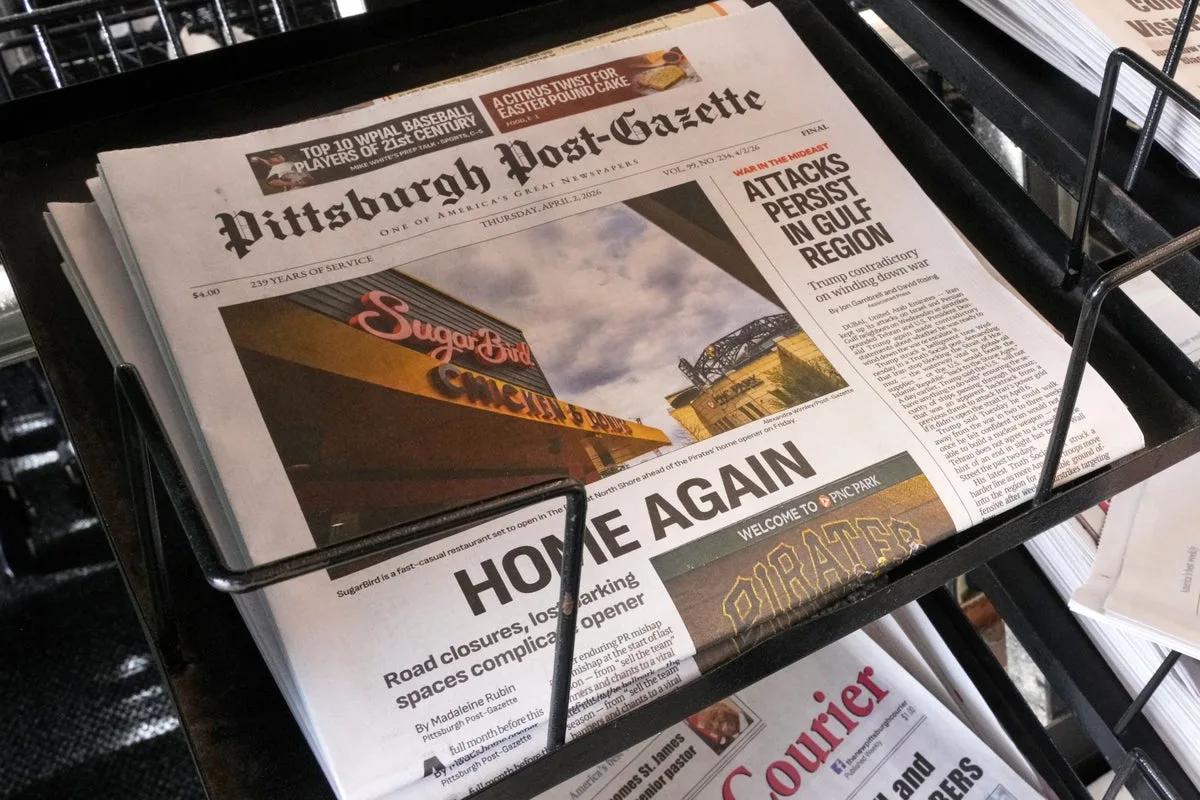
In a stunning reversal of fortune, Pittsburgh's media landscape has experienced both a near-death experience and a dramatic resurrection within just a few weeks this spring. The city's dominant newspaper, the Pittsburgh Post-Gazette, was scheduled to close permanently on May 3rd, which would have left the Steel City as America's largest community without a city-based paper. However, owners announced last week that the newspaper has been sold to a nonprofit foundation committed to keeping it operational.
A Historic Institution Saved from Extinction
The Pittsburgh Gazette was born on July 29, 1786, making it the first newspaper west of the Allegheny Mountains. Over its long history, it underwent several name changes including The Commercial Gazette, the Gazette-Times, and briefly the Pittsburgh Gazette and Manufacturing and Mercantile Advertiser. A consolidation caused by the closing of the Pittsburgh Post in 1927 created the Post-Gazette, which has maintained that name for 99 years.
"The Post-Gazette is really the paper of record for this city," said Kevin Acklin, chief of staff to a former Pittsburgh mayor and former president of the Penguins hockey team. The newspaper earned a solid reputation, winning a Pulitzer Prize in 2019 for its coverage of the Tree of Life synagogue shooting. The other longtime "paper of record," The Pittsburgh Press, closed in 1992 after a Teamsters Union strike.
Labor Strife and the Threat of Closure
Labor problems marred the Post-Gazette's final years, with much of the staff on strike between 2022 and 2025, though the newspaper continued operating in diminished form. Its owner, Block Communications, Inc., announced the closing in January, creating widespread concern about Pittsburgh's journalistic future.
Weeks earlier, the alternative Pittsburgh City Paper, whose staff learned on New Year's Day that it was closing after 34 years, roared back to life under new ownership. The paper's former owner? Block Communications. "You thought we were dead and gone, didn't you?" wrote Ali Trachta, top editor at the Pittsburgh City Paper, on the outlet's revived website.
Nonprofit Intervention Changes the Game
When Block announced its sale of the Post-Gazette last week, it was to the Venetoulis Institute for Local Journalism, which publishes the digital success story The Baltimore Banner. Many in Pittsburgh had feared the newspaper would be sold to a hedge fund notorious for stripping newspapers of resources.
"For better or worse, the Blocks will never get credit for that," said Andrew Conte, a journalism professor at Point Park University who runs Pittsburgh's Center for Media Innovation. "But it does seem like they made an effort to come up with the best outcome they could as they were leaving Pittsburgh. They could have just walked away and said, 'You know, we're done.'"
Significant Investment and National Implications
The new owner's benefactor, hotel magnate Stewart Bainum Jr., has committed to investing $30 million in both the Banner and Post-Gazette over the next five years. "This is going to be one of the most closely-watched newspaper acquisitions in years," said Tim Franklin, founding director of the Medill Local News Initiative at Northwestern University. "Can a money-losing newspaper with serious labor strife be saved and resurrected as a non-profit? If Stewart Bainum and his team pull this off — and I hope they do — it could be a model for the nation."
Community Response and Collaborative Efforts
Anticipating a Pittsburgh without the Post-Gazette, other news sources had begun making plans to fill marketplace gaps, and they're not necessarily changing them because of the sale. Another area newspaper, the Pittsburgh Tribune-Review, will reinstate a Sunday print edition in Pittsburgh on May 9 and will add about a dozen new journalists, according to CEO Jennifer Bertetto.
Halle Stockton, co-executive director and editor-in-chief of the digital news outlet Public Source, noted that her organization has widened its outlook. "It's human nature that sometimes you have to be shaken a bit to realize what's important in your life," Stockton said. Public Source has convened town halls for residents to discuss what they want in local news and published a list of 40 to 50 small news outlets in the region.
"People are actively interested in where they get their information and who they can trust for it," Stockton added. "So we're leaning into that."
Journalists Adapt and Collaborate
With their careers in limbo for several months, Post-Gazette content editor Erin Hebert and photographer Steve Mellon were among several journalists meeting regularly as the Pittsburgh Alliance for People-Empowered Reporting (PAPER), exploring whether they could create a digital news site. Those plans remain uncertain.
Conte can walk a few blocks from the university to show office space set aside for journalists from small, local publications. He hopes to convince the Tribune-Review to print a periodic insert featuring the best reporting from these outlets. Reflecting on the former bitter competition between newspapers, Conte said, "Literally, they were trying to kill each other. I don't think any of us want to go back to a point where we're doing that. We've evolved. We're trying to work together."
These developments represent rare positive news for a local news industry that has experienced the opposite over the past two decades — newsrooms shuttered or thinned out, journalists thrown out of work, and consumers drifting away. While no one pretends that a true turnaround will be easy in Pittsburgh, the city's forced preparation for a news abyss may ultimately prove beneficial for its journalistic future.