

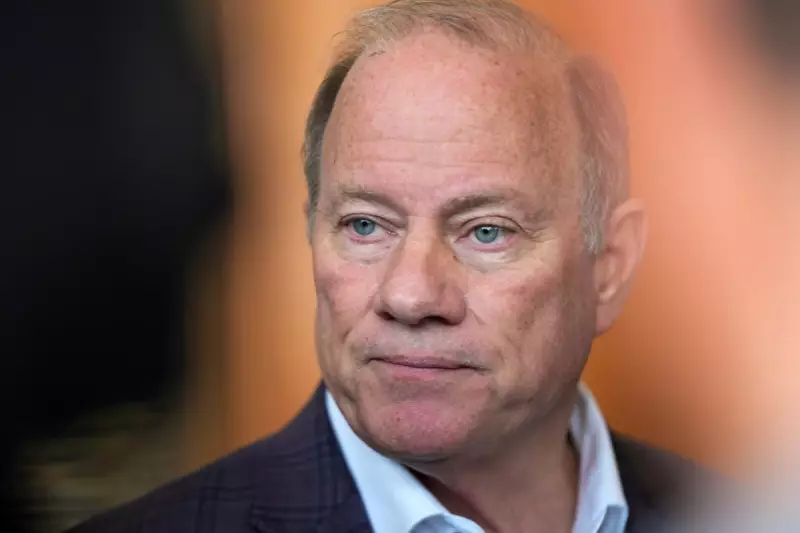
As his final days in office approach, Detroit is taking stock of Mayor Mike Duggan's transformative leadership over three terms, a period that saw the city emerge from financial ruin and begin a tangible urban renaissance.
From Bankruptcy to Balanced Budgets: A City Rebuilt
Mike Duggan assumed office in January 2014, inheriting a city in profound crisis. Detroit was bankrupt, saddled with billions in debt, and struggling to provide basic services. Former Mayor Dave Bing had starkly declared the city had "hit bottom," with over a third of residents living in poverty. A state-appointed emergency manager had been necessary to file for bankruptcy in the summer of 2013.
Duggan, a former prosecutor, presided over Detroit's exit from bankruptcy in December 2014, which wiped away $7 billion in long-term debt. His administration has since delivered more than a decade of consecutive balanced budgets, a stark turnaround monitored for years by a state review team.

Tackling Blight and Reversing Population Decline
A cornerstone of Duggan's strategy was addressing the city's physical decay. Upon taking office, Detroit had more than 40,000 vacant houses and buildings. Using primarily federal funds, his team demolished over 24,000 structures and stabilised thousands more.
Perhaps the most significant metric of success, however, is population. Detroit's populace had plummeted from a peak of 1.8 million in the 1950s to below 700,000 by 2010. Duggan had famously asked voters to judge him on whether the city could gain population. Recent census estimates show that promise was kept, with Detroit's population rising to 645,705 in 2024, an increase of roughly 12,000 since 2021.
A Legacy of Progress, But Challenges Remain
Residents like Thomas Millender, a 40-year-old plumber, acknowledge the visible improvements. "Duggan did a good job from what the city was to how it has been revamped," he remarked, noting the activity of renovation crews in previously blighted neighbourhoods.
Yet, voices like those of Pastor Solomon Kinloch, an unsuccessful mayoral candidate, and incoming Mayor Mary Sheffield emphasise the need for equitable development across all neighbourhoods, not just the downtown core. Sheffield, elected to succeed Duggan and taking office in January, has pledged to ensure "Detroit’s progress reaches every block and every family."
Rip Rapson of the Kresge Foundation praised Duggan's holistic approach, stating, "People will have quarrels with bits and pieces, but he’s done all of those things... He leaves quite a powerful and positive legacy." As Duggan prepares to depart, the consensus is that he has set a foundation upon which future leaders must build, acknowledging that fully restoring Detroit remains a work of decades.






