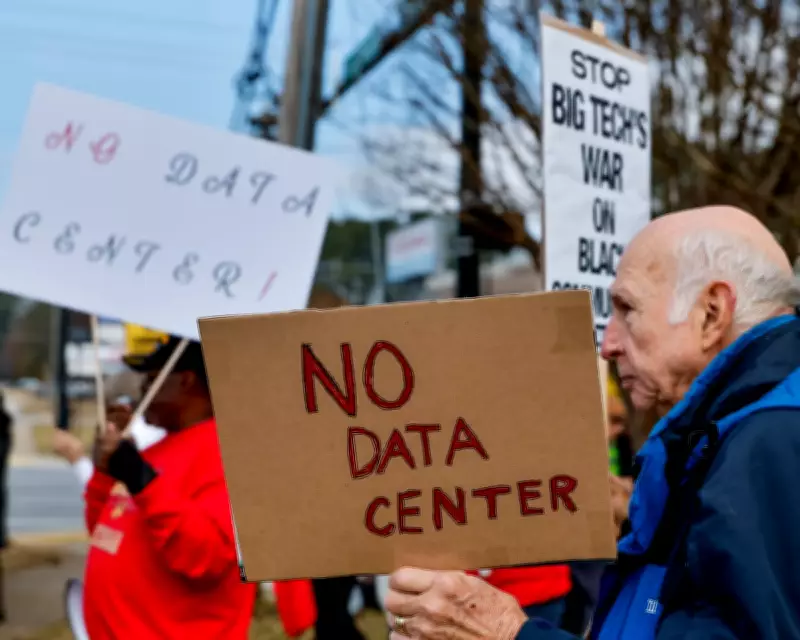
In Decatur, Georgia, a coalition of demonstrators has taken to the streets to voice strong opposition against a proposed datacentre intended for artificial intelligence operations. This local protest encapsulates a broader national trend, where fears over AI's rapid expansion, escalating energy expenses, and environmental degradation are increasingly converging into a unified public outcry.
Bipartisan Skepticism Emerges Across the United States
From Republican strongholds in Texas to Democratic-leaning areas in California, skepticism and outright hostility towards the unregulated construction boom of datacentres are mounting. Remarkably, this issue has bridged political divides, uniting blue-collar supporters of former President Donald Trump with progressive advocates aligned with figures like Bernie Sanders. Last month, Texas Republicans expressed firm opposition to datacentre projects unless robust environmental safeguards are implemented, reflecting a shared concern that transcends traditional party lines.
Political and Economic Repercussions of the Datacentre Boom
The White House, which has prioritised datacentre rollout in its AI action plan, faces an unexpected challenge as protests scale up nationwide. Donald Trump's administration, upon his return to office, authorised a deregulated approach to construction, favoured by Silicon Valley backers who funded his campaign. Industry giants such as Amazon and Microsoft are driving an estimated $710 billion in datacentre investments this year, aiming to lead the AI race. However, this boom carries significant political costs for states that have lured investment with tax breaks and subsidies.

Local communities bear the brunt through higher electricity bills for consumers and intense strain on water systems and power grids, due to the centres' voracious energy demands. Alarmingly for Trump, this perception that big tech's needs are prioritised over those of struggling voters is resonating with his Maga base ahead of the November midterm elections.
Democrats Awaken to the Political Potential
Democrats have been slow to recognise the political leverage of an issue that pits powerful corporations against concerned local residents. However, after aggressively competing to attract big-tech investment, leaders like Pennsylvania Governor Josh Shapiro are now emphasising the need to avoid an unregulated free-for-all. This shift aligns with a wiser stance as concerns over AI, rising energy costs, and environmental protection intermesh more tightly.
Blocked Projects and Federal Threats
In 2025, opposition to datacentre construction led to an estimated $156 billion worth of projects being blocked or suspended across the US. The rebellion's scale and intensity have prompted Washington to threaten withholding federal funding from states deemed to obstruct progress too heavily. Florida Governor Ron DeSantis, a potential Republican presidential candidate in 2028, criticised this approach as an attempt to "kneecap the states and let big tech write the rules", highlighting the contentious nature of federal intervention.
Early Skirmishes in the AI Politics Battle
These protests represent early skirmishes in a wider battle over AI's societal impact. A recent Pew Research Center study found that 56% of AI experts believe it will positively affect the US over the next two decades, yet only 17% of all Americans share this optimism. This ambivalence stems from deep anxiety about job displacement and a growing awareness of the social costs of a digital revolution that has enriched a wealthy elite while outpacing regulatory efforts to mitigate harms.
Silicon Valley should heed the datacentre protests as a stark warning: citizens in the nation at the forefront of the AI revolution are increasingly determined to reclaim control over technological advancements and their consequences.