

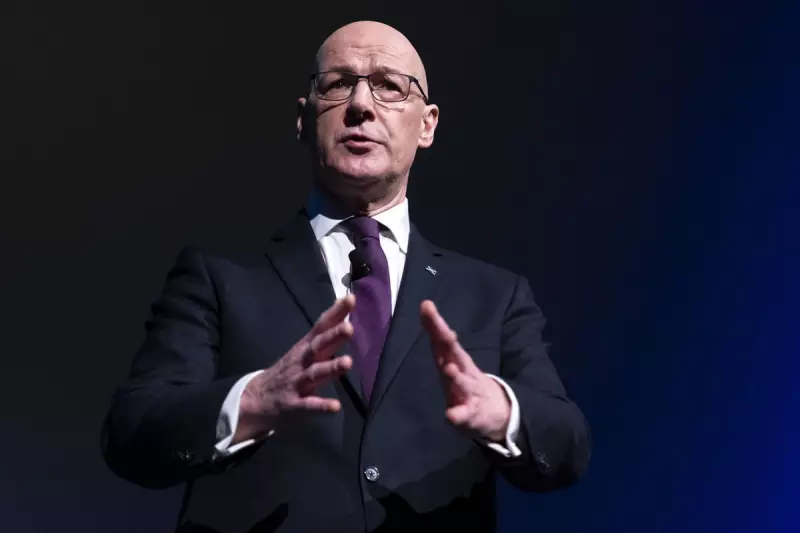
First Minister John Swinney has issued a blunt message to Scottish independence supporters, warning them not to "muck about" by considering tactical votes for other parties in the upcoming Holyrood election.
A Direct Appeal for Dual SNP Support
In an interview with the Press Association, the SNP leader made a direct appeal for voters to back his party in both the constituency and the regional list ballots on election day in May 2026. This comes despite analysis suggesting the SNP's expected success in constituencies could limit its gains from the regional lists under Holyrood's proportional system.
Mr Swinney argued that the only way for Scotland to make progress on independence is for the SNP to perform "really well" at the polls. He dismissed suggestions that giving the SNP a second vote on the list could be a wasted ballot, a claim made by some within the independence movement.

The Majority Precedent for a Referendum
The First Minister is explicitly targeting an SNP majority in the Scottish Parliament as the trigger for a fresh vote on Scotland's future. He pointed to the precedent set after the party's landslide victory in the 2011 Holyrood election, which led to the 2014 independence referendum.
"That precedent is what I will rely on," Mr Swinney stated, emphasising that a majority would provide a clear mandate. He warned that failing to secure a majority would not only hinder the push for independence but would also force the SNP into negotiations with other parties to pass legislation, including the annual budget.
The Uphill Battle for 65 Seats
Current polling indicates a challenging path to that crucial majority. Analysis by Ballot Box Scotland of a December Ipsos Mori poll suggests the SNP could win around 63 seats, all from constituencies. While an improvement, this would fall short of the 65-seat threshold required for a parliamentary majority.
To bridge this gap, Mr Swinney said the SNP's campaign will focus on inspiring voters with a message of hope and addressing the "lack of progress" on living standards, which he blamed on Westminster's handling of Brexit and austerity.
"These issues can be addressed by Scotland having the power of independence," he asserted, framing the election as a choice between stagnation under Westminster control and a future shaped by Scotland's own priorities.






