
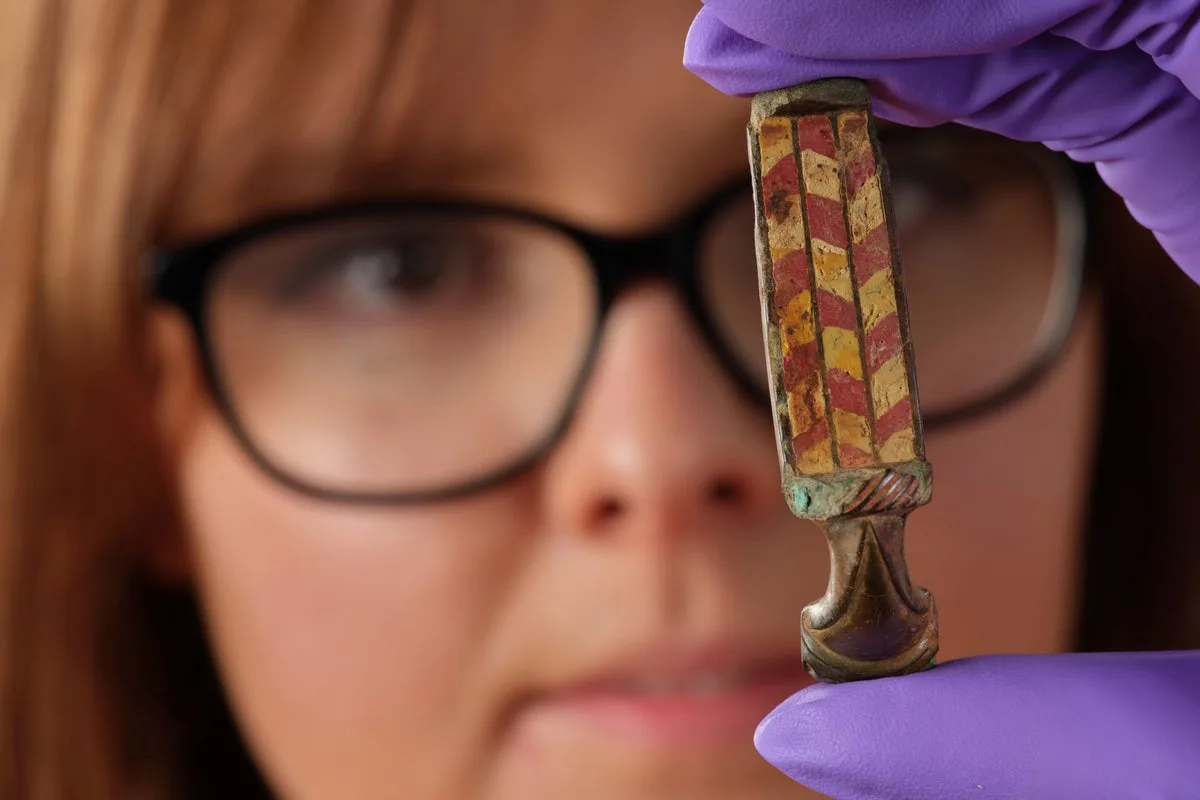
A rare Roman brooch discovered by a metal detectorist in a Midlothian field in 2022 is set to go on public display for the first time. The bronze artefact, described as a 'miniature masterpiece', will feature in the new exhibition 'Roman Scotland: Life on the Edge of Empire' at the National Museum of Scotland in Edinburgh from November.
The brooch, dating to around 100-160 AD, is notable for its unique blend of local and Roman design styles. Experts believe it was crafted in northern England, combining Roman influences with local Celtic art traditions. The brooch features enamel in a zig-zag pattern of red and yellow, and scientific analysis suggests it was once coated with tin to create a silvery sheen.
Dr Fraser Hunter, principal curator of prehistory and Roman archaeology at National Museums Scotland, said: 'The Pathhead brooch is a miniature masterpiece of craftworking and the details are exquisite. Fancy Roman pieces like this were unusual even at the time and were used to show off in local society.'
The brooch is thought to have come into local hands as a gift from the Roman world, possibly to influence a local leader. It was likely worn as a symbol of status and favour. Other archaeological finds suggest an Iron Age settlement existed nearby, indicating a community that engaged with Rome.
The exhibition aims to reshape understanding of Scotland's relationship with the Roman world, exploring the experiences of soldiers and local communities. It will also feature two 'spectacular' altars from the world's most northerly known temple to the god Mithras, located at the fort of Inveresk in East Lothian.
Tickets for the exhibition are available at nms.ac.uk/RomanScotland.




