

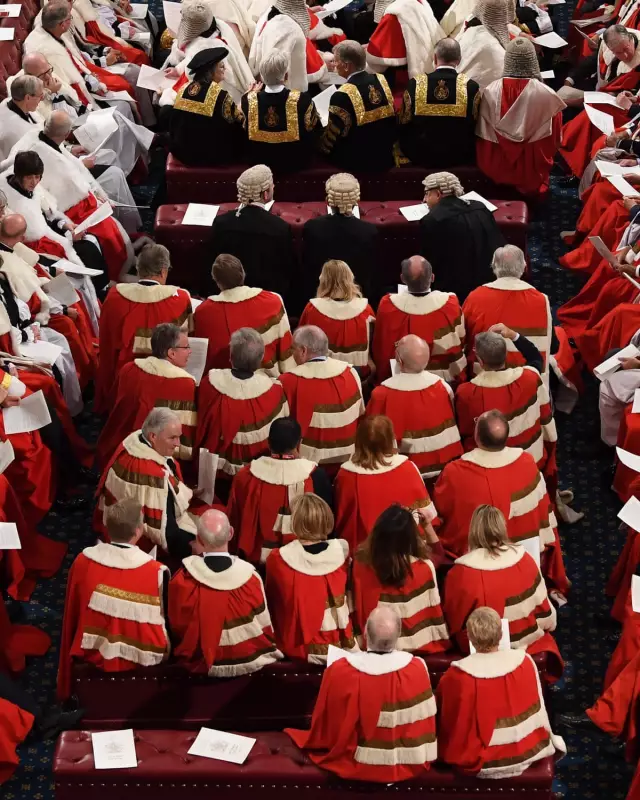
The Labour government, despite its commanding majority in the House of Commons, is facing an unprecedented level of obstruction in the House of Lords, with peers reporting that virtually every piece of legislation is being deliberately slowed down.
A Strategy of Disruption
Shortly after the election, a Labour adviser overheard two Conservative peers in the Lords canteen agreeing on a deliberate strategy to undermine the government on all its legislation. The pair were angered by Labour's manifesto pledge to abolish hereditary peers. Another new Labour appointee was reportedly told by a Tory peer: "We are going to grind you down."
This sentiment has translated into action. Labour has already suffered 111 defeats in the Lords with at least four months of the parliamentary session remaining. The record, set under Boris Johnson between 2021-22, is 128 defeats. Labour peers state that key manifesto bills on water regulation, rail nationalisation, Great British Energy, and the football regulator have all been hampered.

Eroding Conventions and 'Dirty Tricks'
The usual channels and unwritten conventions that smooth parliamentary business have broken down. A particular group of former Conservative MPs, now peers, are identified as the main disruptors. They are accused of making repetitive speeches, de-grouping amendments to prolong debates for hours, and pushing every issue to a vote.
Alice Lilly, a senior researcher at the Institute for Government, notes a trend of the Lords becoming more assertive, but points out that governments often still get their way through concessions. A significant example was the employment rights bill, where the government conceded on 'day-one' rights to secure its passage.
The move to abolish the remaining 92 hereditary peers has been a flashpoint. Half sit as Conservatives. The bill's progress has been met with considerable disruption, including a sponsor spending £20,000 on a dinner in the Cholmondeley Room to keep peers on the estate to vote against the first stage.
The Numbers Game and Reform Pressures
The electoral arithmetic remains challenging. Even after recent appointments, the Conservatives will have 285 peers to Labour's 234. The Tories can also rely on some crossbenchers, potentially bolstering their numbers by 15-20 on crucial votes. The Liberal Democrats, with 78 peers, have also voted against the government on issues like employment rights.
In response to the relentless pressure, Labour has accelerated its own peerage appointments, awarding seats to close allies and former staff, a tactic it previously criticised the Conservatives for using. A senior Labour source grumbled about handing them out as "consolation prizes."
The disruption has intensified calls for reform beyond abolishing hereditary peers. Campaign group Unlock Democracy will focus on Lords reform, highlighting a small number of influential peers blocking bills like the assisted dying bill, which has over 1,000 amendments submitted.
Last week, Lords Leader Angela Smith announced a committee to consider the next stage of Labour's reform promises: a retirement age of 80 and potential participation requirements. The committee, with equal Labour and Tory representation, will report in six months.
As Paul Nowak, TUC General Secretary, stated regarding the held-up employment rights bill, it feels "absolutely untenable that you had unelected peers holding up what was a clear manifesto commitment from a government that won a majority of 170 seats." The ongoing battle in the Lords ensures that constitutional reform will remain a central and contentious feature of this parliament.






