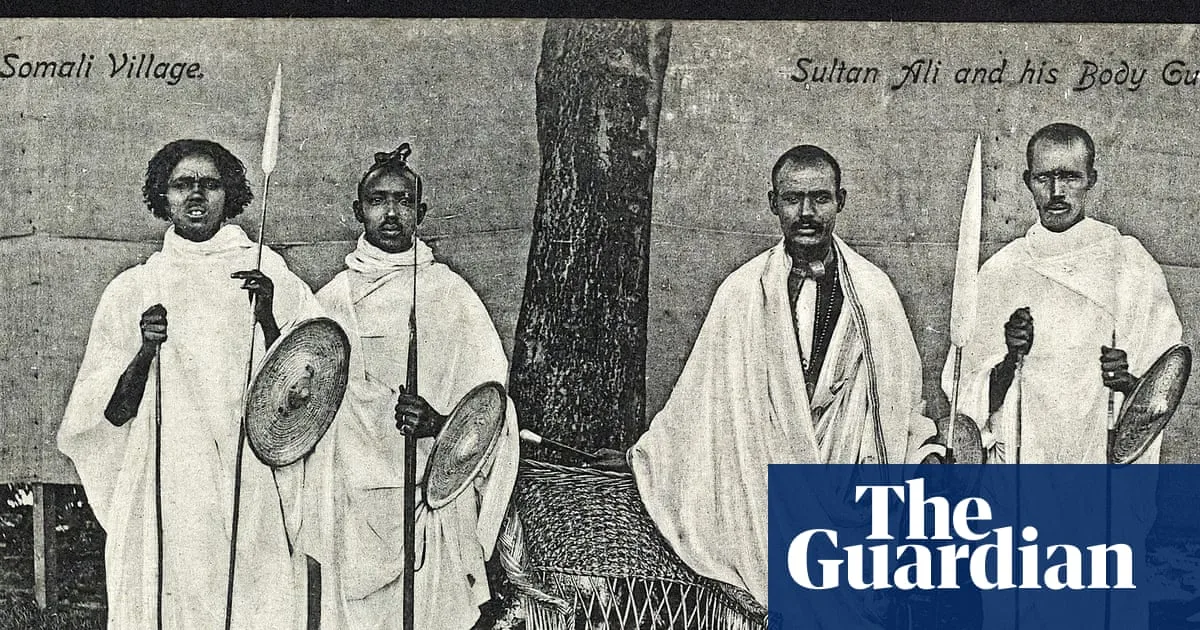
More than 120 years after 57 Somali men, women, and children were displayed in a live exhibit at Bradford's Great Exhibition of 1904, a new exhibition at Cartwright Hall is revisiting the controversial show, putting Britain's colonial legacy under the spotlight.
Popular and Profitable Attraction
The Somali village was one of the most popular and profitable attractions at the Great Exhibition, drawing over 350,000 visitors. The proceeds helped fund Cartwright Hall's civic art collection for decades. In the original display, visitors observed the Somalis from May to October as they went about daily life, slaughtering sheep, attending school, and learning Arabic and the Qur'an.
Complex Reality Beyond 'Human Zoo'
Curators of the new exhibition, opening Saturday, argue that the phrase 'human zoo' oversimplifies the village's complicated reality. Abira Hussein, guest curator, said that while the phrase captures the violence of colonial display, it can flatten 'the conditions of recruitment, labour and negotiation that shaped the Somali village.'
Members of the Somali troupe, led by Sultan Ali, negotiated contracts and wages, sold crafts, and even staged a protest after receiving what they considered inadequate compensation following a fire that destroyed four huts. Some chose to return to Somalia, while others continued on tours in Germany, Europe, and North America.
Centering Somali Lives and Experiences
The project does not recreate the spectacle but instead centers the lives and experiences of the Somali people, confronting how empire shaped Bradford's cultural institutions and wealth. 'This is not a redisplay,' Hussein said. 'It's about thinking critically about why this display happened, the framing of these people, and the wider colonial systems that made it possible.'
Similar touring exhibitions appeared across Europe and North America during the Victorian and Edwardian eras, including the 1895 African Exhibition at Crystal Palace in London.
Yorkshire's Colonial Role
Hussein noted that the Somali village is often treated as an unusual footnote in Yorkshire's history. 'Yorkshire's involvement in colonialism is not something that has been fully discussed or acknowledged.' Yahya Birt, another guest curator who discovered his grandmother attended the 1904 exhibition, added: 'The story of wool as a colonial commodity, and the wealth it generated in Yorkshire, is largely untold.'
The exhibition identifies specific artworks funded by profits from the Somali village, including a 1906 marble bust of Lister (Baron Masham) and a 1907 children's book, The Magic Carpet by Arthur Rackham.
Recognizing Institutional Role
'It's about us, as an organisation, recognising our role in history,' said Lizzie Cartwright, collections manager at Bradford District Museums and Galleries. 'And the relevance of the Somali village as the first Muslim community in Bradford.'
Part of the exhibition examines how postcards and photography shaped the 'white gaze' during the Edwardian era. 'People had to be acculturated into seeing other people in this particular way,' Birt said.
Exhibition Artifacts
The new exhibition brings together season tickets, commemorative badges, postcards, and archaeological finds from Lister Park, alongside Somali textile cloth, mats, fans, and baskets loaned by Culture House and Koor Archives, many never before displayed in a British institution. 'We're not trying to paint a rosy picture,' Birt said. 'There was exploitation and unequal power, but there was also resistance and negotiation,' Hussein added.
The exhibition also explores the stories of Halimo Abdi Badal and Khadija Yorkshire, believed to be the first recorded Muslim burial and birth in Bradford, highlighting one of the oldest Black and Muslim communities in the region.
Researchers hope descendants of those in the village may come forward. 'We know there's still more history to uncover,' Hussein said. 'People may still have memories, photographs, stories or poetry passed down through oral history.'






