
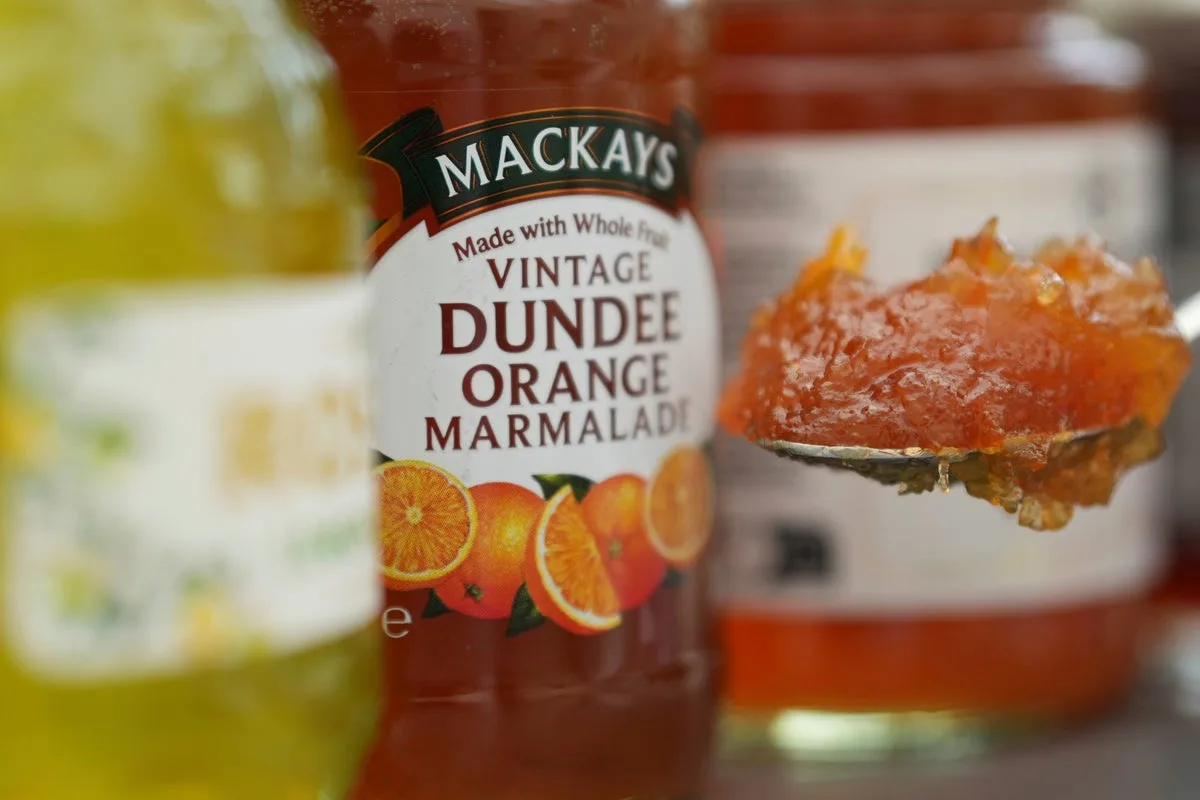
British lawmakers have expressed concern over potential changes to the legal definition of marmalade, amid reports that closer ties with the European Union could force a relabeling of the traditional citrus preserve. The debate, held in the House of Commons on Wednesday, saw MPs from multiple parties weigh in on the future of the breakfast staple, which holds a special place in British culture as the favourite food of Paddington Bear and a link to the late Queen Elizabeth II.
Media reports have suggested that under a food and drink deal with the EU, marmalade would need to be labelled as “citrus marmalade”. The EU recently relaxed a rule, originally introduced at Britain’s request, that only preserves made from citrus fruit could be called marmalade. Other preserves had to be labelled as jam, despite the term “marmalade” being used for all fruit conserves in some European countries, such as Germany.
With the UK planning to align its food rules with the bloc to ease post-Brexit trade, the change has sparked concern. Democratic Unionist Party MP Jim Shannon lamented “EU labelling interfering with our produce”, while Conservative foreign affairs spokeswoman Priti Patel accused the government of “attacking the great British marmalade”.
Food Security Minister Angela Eagle assured MPs that the change would be minimal, stating: “There will be a small change to our marmalade description rules, but the real-world impact would be minimal and consumers are unlikely to notice any difference.” She noted that marmalade sold in Britain is usually labelled as “orange marmalade” or “Seville orange marmalade”, already in compliance with EU rules.
Liberal Democrat MP Tessa Munt, who called for the debate, urged the government to protect the integrity of the “distinctly British product”. She expressed dismay at seeing “strawberry marmalade” and “pear marmalade” in shops, calling it “rubbish” and insisting that only citrus fruits should precede the word marmalade on labels.




