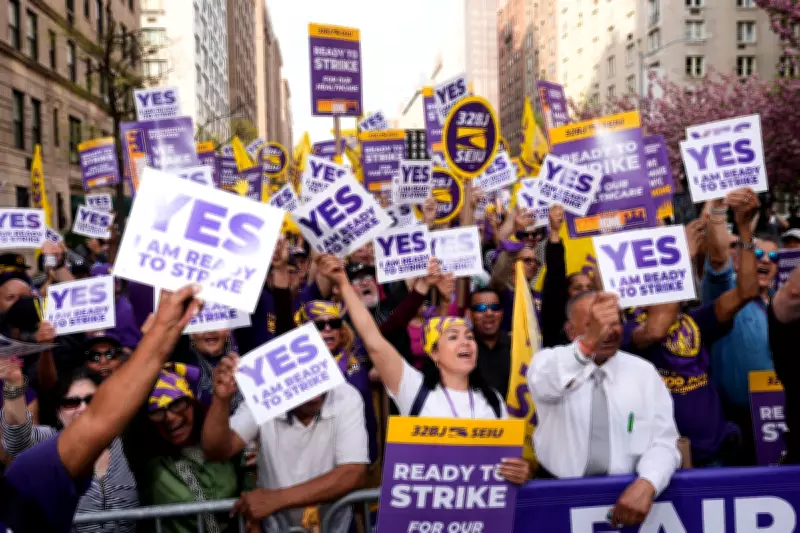
Thousands of apartment building workers across New York City, encompassing doorpersons, superintendents, and other essential staff, are poised to cast their votes on whether to initiate a strike in the coming days. This critical decision follows stalled contract negotiations, with key sticking points revolving around health care benefits and pension provisions.
Potential First Strike in 35 Years
If authorized, this industrial action would mark the first such strike in thirty-five years, with far-reaching consequences for the city's housing landscape. According to the workers' union, 32BJ SEIU, approximately 1.5 million renters, cooperative owners, and condominium dwellers could be directly affected. Residents might be compelled to assume duties typically handled by staff, including manning building entrances, sorting packages, mopping hallways, sweeping sidewalks, and managing trash disposal.
Contract Expiry and Strike Timeline
The current contract is set to expire at midnight on Monday. Should the vote favour strike action, walkouts could commence immediately thereafter, plunging many of the city's residential buildings into operational uncertainty.

Core Disputes: Healthcare and Wages
The union asserts that building owners, represented by the Realty Advisory Board on Labor Relations, are attempting to impose significant financial burdens on the 34,000 workers. These employees, who already grapple with the high cost of living in the metropolitan area, earn an average annual salary of around $62,000 for doorpersons, with variations for other roles.
Key owner proposals include requiring workers to begin paying health insurance premiums and introducing a new, lower-paying job classification for future hires. Union President Manny Pastreich has condemned these moves, stating the owners' association "wants to cut costs on the backs of workers," and vowing, "We won't allow it!" He highlighted the increasing unaffordability of New York City for working people, contrasting it with rising rents in market-rate apartments, particularly in Manhattan.
Union Demands and Counter-Proposals
In response, the union is advocating for enhanced pension benefits and wage increases, although specific pay proposals remain under development. The negotiations are thus locked in a tense standoff, with both sides presenting starkly different views on economic sustainability.
Building Owners Cite Financial Pressures
The Realty Advisory Board contends that property owners are themselves under financial strain, exacerbated by Mayor Zohran Mamdani's initiatives to freeze rents on the city's roughly one million rent-stabilised apartments. The board notes that few American workers receive health benefits without premium contributions.
Board President Howard Rothschild emphasised the need for a contract that addresses cost concerns, warning, "Without meaningful movement to address costs ... the long-term sustainability of the industry and its workforce is at risk." He called for negotiations that support a viable future for all parties involved.
Political Support and Worker Roles
Mayor Mamdani and other Democratic elected officials were anticipated to join a union demonstration on Manhattan's Park Avenue, an area renowned for its upscale apartment buildings with dedicated staff. The role of doorpersons, often still colloquially referred to as "doormen," extends beyond ceremonial duties. These workers provide basic security in buildings housing hundreds, manage the surge in package and food deliveries post-pandemic, and assist residents with mobility challenges.
Superintendents, meanwhile, oversee maintenance and repairs in structures that can be over a century old. Their expertise is crucial for the upkeep of aging infrastructure.
Preparations and Historical Context
Some building managers have already advised residents to potentially postpone renovations, moves, and major deliveries, and to minimise general deliveries and visitors in the event of a strike. The union's last strike occurred in 1991 and lasted twelve days. Since then, while strike authorisations have been voted on periodically, contracts have ultimately been settled without prolonged industrial action.

The outcome of this vote will therefore determine whether New York City faces a significant disruption to its residential services, testing the resilience of its housing sector and the resolve of its workforce.