

Trump's Greenland Ambitions Melt Away Amid Market Pressure and Political Backlash
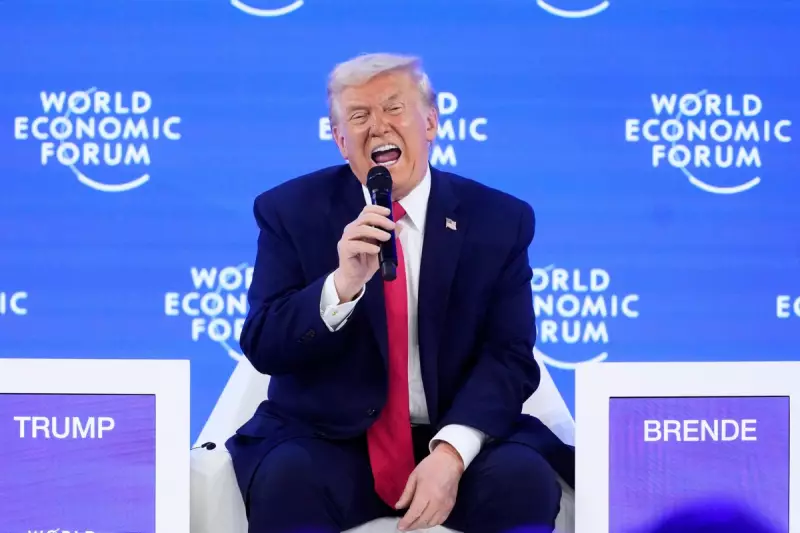
In a striking reversal that has become characteristic of his presidency, Donald Trump has once again backed away from aggressive threats, this time regarding the potential annexation of Greenland. The dramatic U-turn came just hours after the president delivered a fiery speech at the Davos meeting, where he confusingly referenced both Greenland and Iceland while reiterating his controversial territorial ambitions.
The Davos Declaration and Swift Retreat
During what observers described as an unusually repetitive and soporific address at the international forum, Trump made one significant declaration regarding Greenland: "I don't have to use force. I don't want to use force. I won't use force." Yet within hours, the administration had completely rowed back on tariff threats tied to the territory, announcing instead a "framework of a future deal" that effectively shelved immediate confrontation.
The rapid climbdown prompted audible relief from Arctic observers to conference attendees, with Trump himself making a quip about confounding expectations to underline the policy reversal. Notably absent from his subsequent statements were previous threats of punitive tariffs scheduled to begin on 1 February, replaced instead with calls for "immediate negotiations" while maintaining the ultimate goal of acquiring what he termed this "piece of ice."

Market Forces and Political Calculations
This episode represents another instance of what financial markets have dubbed "Taco" – Trump Always Chickens Out – a pattern that reveals the president's sensitivity to economic indicators and political realities. The timing of the retreat coincided with significant market turbulence, as US markets reopened after Martin Luther King Jr Day to experience their worst day since October, falling approximately 2 percent immediately.
This market reaction served as a clear rebuke to Trump's military and economic threats toward NATO allies, creating a warning signal the president could neither ignore nor bully into submission. The pattern echoes previous market responses to Trump's trade policies, particularly the "reciprocal tariff" schedules announced last year on 2 April – a date Trump ironically termed "Independence Day" despite demonstrating America's continued dependence on foreign capital.
Legal and Political Constraints Mount
Beyond market pressures, Trump faces growing constraints from multiple directions:
- Supreme Court scrutiny approaching on previous tariff implementations, with expert predictions suggesting some will be struck down as unlawful
- Congressional resistance from within his own party, with rumors suggesting Republican senators were prepared to consider impeachment if Greenland invasion collapsed NATO
- International pushback from allies adopting more assertive language and threatening economic retaliation, including what Emmanuel Macron termed the EU "bazooka"
Even UK opposition leader Keir Starmer told parliament that Trump had attempted pressure tactics but "I will not yield," indicating broader international resistance than the administration anticipated.
Domestic Politics and Legacy Concerns
Ultimately, domestic political calculations appear to have driven the retreat. Polling suggests the American public showed little enthusiasm for Greenland annexation, with the issue being largely irrelevant to pressing affordability crises affecting voters. Had Trump proceeded with annexation attempts, his approval ratings would likely have sunk further ahead of crucial mid-term elections.
Military planners also reportedly expressed doubts about the legality of invasion operations, potentially requiring them to break constitutional oaths – a safeguard that remains in place despite Trump's previous attempts to exact personal loyalty pledges.

The Thawing Crisis and Future Implications
Like the summer melting of Arctic ice, the Greenland crisis has receded, likely to fade further as election politics dominate the domestic agenda. The administration appears to have recognized that simultaneous trade wars, military conflicts in Greenland, and deteriorating relations with allies would make America less secure and Americans poorer – hardly a winning platform for congressional elections.
This episode reinforces that despite bold rhetoric and unconventional approaches, Trump remains constrained by market realities, legal boundaries, political calculations, and international relationships. The domestic political map ultimately dictates presidential actions, even regarding seemingly remote territorial ambitions in the Arctic north.





