Trump's Davos Drama: Greenland Demands, Tariff Retreats, and Vague Deals
Trump's Davos Drama: Greenland Demands and Tariff Retreats

Trump's Davos Performance: From Greenland Demands to Tariff Retreat

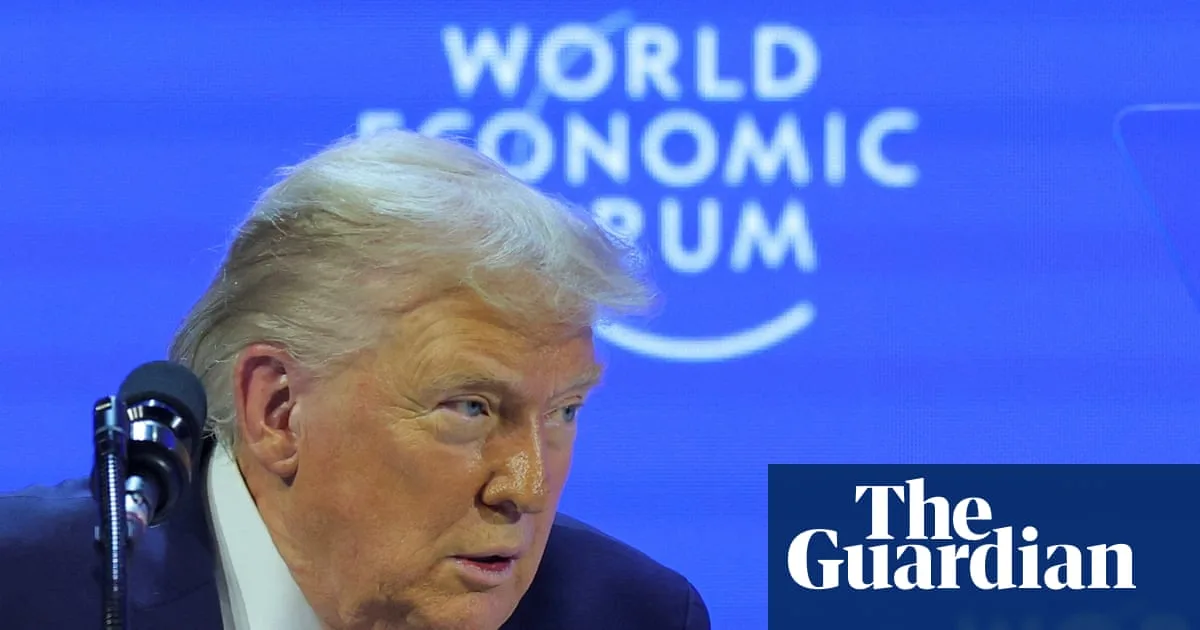
Donald Trump's participation at the World Economic Forum in Davos, Switzerland, on Wednesday 21 January was marked by a series of contradictory statements and diplomatic manoeuvres that left European leaders both baffled and concerned. The US president began his day with a lengthy and often rambling address that contained racially charged language and renewed his controversial demand for the United States to acquire Greenland from Denmark.

A Speech That Rattled European Sensibilities

In his opening remarks to the international gathering, Trump launched attacks on several European leaders while reasserting what has become something of an obsession: American ownership of Greenland. The president claimed that Denmark "owes" the territory to the United States due to American defence of Greenland during the Second World War, a historical interpretation that has been widely debunked by historians and political analysts.

The speech prompted immediate criticism from senior European politicians, with several declaring they "will not allow ourselves to be blackmailed" by American demands. Economists attending the forum warned that Trump's approach could destabilise transatlantic trade relationships that have been carefully cultivated over decades.

The Sudden Pivot: Tariff Threats Withdrawn

Hours after his inflammatory speech, Trump performed a remarkable about-face on his economic threats. The president announced via his Truth Social platform that the United States would not, after all, impose 10% tariffs on several allied nations including Denmark, Norway, Sweden, France, Germany, the United Kingdom, the Netherlands and Finland from 1 February as previously threatened.

Instead, Trump claimed to have reached "the framework of a future deal" concerning American involvement in Greenland, though he provided few concrete details about what this arrangement might entail. The president cited a "very productive" meeting with NATO Secretary General Mark Rutte as instrumental in this development, though European officials remained sceptical about what had actually been agreed.

The Vague "Deal" and Military Implications

In an interview with CNBC later that same day, Trump offered slightly more insight into his thinking, suggesting that any agreement would involve NATO's participation in his proposed missile defence system known as the "Golden Dome", along with "mineral rights" for the United States in Greenland. However, official details remained conspicuously absent, with administration officials refusing to elaborate on the president's claims.

The New York Times, citing unnamed senior officials, reported that military officers from transatlantic alliance member states had discussed a potential compromise through which the United States would be granted sovereignty over small, specific areas of Greenland rather than the entire territory. This would represent a significant scaling back of Trump's original demands while still providing the United States with strategic military positioning in the Arctic region.

European Pushback and Diplomatic Reality

Danish and Greenlandic officials quickly pushed back against Trump's narrative of progress. Sascha Faxe, a member of Denmark's parliament, told Sky News that "there can't be a deal without having Greenland as part of the negotiations", adding pointedly that "it's not real negotiations. It's two men who have had a conversation."

This sentiment reflects broader European concerns about Trump's unilateral approach to diplomacy, which often bypasses established channels and protocols. The president's tendency to make dramatic announcements without consulting allies or even his own State Department has created persistent uncertainty in transatlantic relations.

Broader Context: A Pattern of Controversial Moves

Trump's Davos appearance occurred against a backdrop of numerous other controversial developments within his administration. These included acknowledgement that employees working for Elon Musk's cost-cutting operation had improperly accessed and shared Americans' sensitive social security data, despite months of denials from the administration.

Additionally, Israel's Prime Minister Benjamin Netanyahu announced he would join a US-backed "board of peace" proposed by Trump, despite previous objections from his office about the composition of its executive committee. Meanwhile, immigration authorities targeted Somali communities in Maine in a new crackdown dubbed "Operation Catch of the Day" by the government.

Legal Challenges and Political Maneuvering

The day also saw significant legal developments, including Supreme Court justices appearing sceptical of Trump's case for firing a Federal Reserve governor, testing the limits of presidential power over the central bank. In another victory for the administration, the eighth US circuit court of appeals granted the justice department's request for a stay that would allow ICE agents to continue certain controversial tactics during protests.

On the domestic political front, the California Republican party asked the Supreme Court to block a redistricting measure approved by voters, while a New York judge ruled the state must redraw its congressional map, potentially affecting the balance of power in the House of Representatives.

Trump's Davos performance ultimately highlighted his distinctive approach to international diplomacy: dramatic demands followed by partial retreats, vague claims of progress, and persistent tension with traditional allies. As European leaders return from Switzerland, they face the ongoing challenge of navigating a relationship with an American president whose methods continue to defy conventional diplomatic practice.




