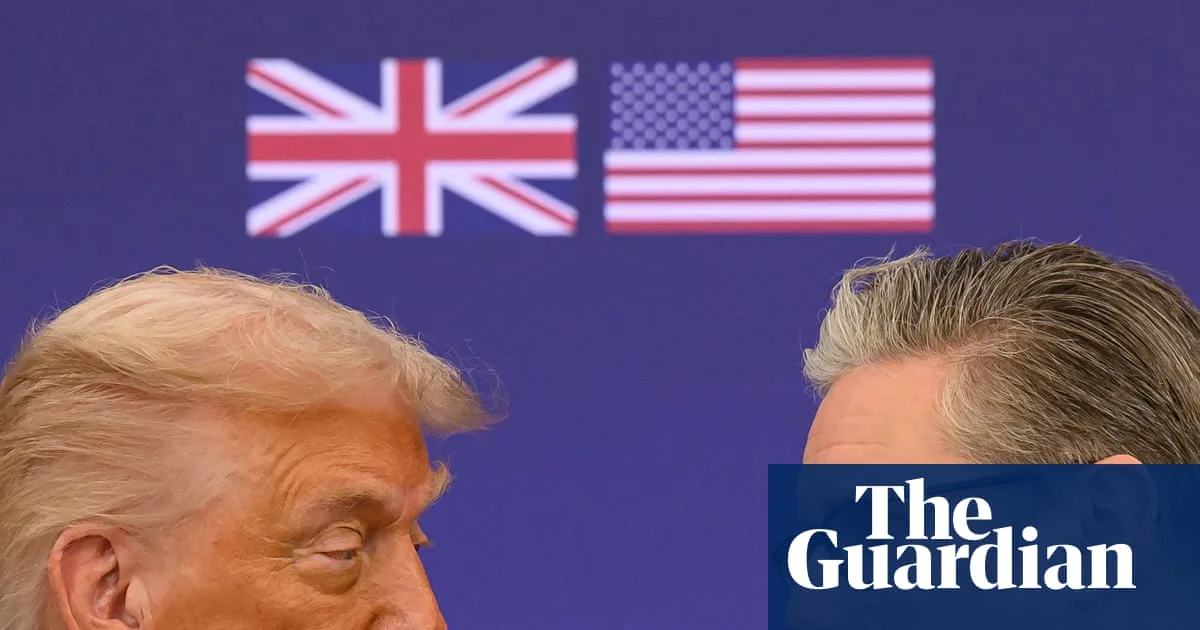
As the world finally begins to push back, many are asking: was this the week Donald Trump crossed a line from which there is no return? The US president, known for his confrontational style, took his doctrine of bullying to the global stage at Davos, only to encounter a formidable wall of opposition. If this moment galvanises a new western alliance against his disruptive tactics, it could mark a turning point for international stability.
A World Transformed by Presidential Threats
The temptation to breathe a sigh of relief is understandable. After a week that opened with alarming US threats to seize European territory, whether through military force or economic coercion, the eventual shift towards negotiation might suggest a return to normalcy. However, this perspective is dangerously naive. The familiar world order we once relied upon has irrevocably shattered. The critical question now is what will emerge in its place—a dilemma fraught with peril, yet surprisingly tinged with a glimmer of hope.
Setting aside Trump's eventual retreat from his ambitions regarding Greenland, where he holstered the economic weapon aimed at nations like the UK, the mere issuance of such threats reveals a stark reality. It confirms what has been evident since his return to office: under his leadership, the United States has morphed from a steadfast ally into an unpredictable entity, if not an outright adversary to its traditional friends.
Insults and Institutional Overhauls
This transformation has been articulated in both crude and deeply offensive terms. In the latter category, Trump's recent comment dismissing NATO allies as "a little off the frontlines" in Afghanistan stands as a despicable insult to the families of the 457 British service personnel and countless others from the alliance who sacrificed their lives.
More broadly, his unveiling of a so-called "board of peace" at Davos epitomised his approach. As observers noted, its logo resembled a gilded, America-centric version of the UN emblem, symbolising an attempt to monetise and replace the post-1945 international framework. This proposed body, with a $1 billion price tag for a permanent seat and decision-making power vested in Trump himself, even beyond his presidency, signals a radical shift. The inclusion of figures like Vladimir Putin and exclusion of others like Mark Carney speaks volumes about its direction.
The End of American Reliability
For a time, allies clung to the hope that Trump was a temporary aberration, after which the old order would resume. That illusion has now been dispelled. When Trump pressed forward with his Greenland ambitions, there was no visible internal mechanism within the US to halt him. Over the past year, he has demonstrated that the constitutional checks designed to restrain a president can be easily bypassed. This precedent means the unreliability extends beyond Trump to the United States as a nation, casting a long shadow over future alliances.
Lessons in Resistance and Independence
Key insights have emerged from this tumultuous period. Firstly, Trump's strategy, as described by former adviser Steve Bannon, is "maximalist"—pushing boundaries until met with resistance. The Greenland episode triggered a stock market downturn and overwhelming domestic opposition, with 86% of Americans against an armed conquest. Crucially, it also spurred a united European front with serious economic counter-threats, prompting Trump to back down.
This underscores a vital lesson for long-standing US friends: dependency, whether economic or military, must be reduced to avoid capitulation to unreasonable demands. Mark Carney highlighted this point starkly in Davos, receiving a standing ovation for his speech that may define this era. He asserted, "The old order is not coming back. We shouldn't mourn it. Nostalgia is not a strategy." Instead, he called for a new formation among democratic nations outside the US.
Forging a New Democratic Alliance
Carney advocates for a "third path", where middle powers collaborate rather than compete to appease the US. This could manifest as a strengthened constellation involving the European Union, the UK, and Canada—forming both a robust economic bloc and a muscular security alliance. The ultimate aim is to address the pressing question: can Europe defend Ukraine and itself without US support? Currently, the answer is a resounding no, as noted by Volodymyr Zelenskyy, who described Europe as a fragmented entity struggling to influence an unchangeable US president.
The goal is ambitious: a new alliance of western democracies, self-reliant in defence. While this may take a decade or more to achieve, as former foreign secretary Jeremy Hunt emphasised, failing to start this work now would be a "major dereliction of duty". In the interim, practical steps are necessary. NATO must be maintained, even as its dominant member undermines it, while a new grouping—perhaps framed as a "European arm of NATO"—gains strength behind the scenes.
Political and Economic Implications
Central to this plan is a significant increase in defence spending, reshaping politics in nations accustomed to a post-Cold War peace dividend. This shift will also reignite debates over Britain's relationship with Europe, necessitating moves from both sides. Britain may need to abandon Brexit illusions, while the EU could offer closer trade ties in exchange for the UK's substantial contribution to European defence.
Opportunities arise for leaders like Keir Starmer. He could frame tax increases for defence as a national security imperative and present enhanced European cooperation in the same light. This strategy might isolate figures like Nigel Farage, aligning them with Trump's insulting rhetoric, and position opponents as true guardians of British sovereignty.
The familiar world is fading, challenged by actions from the Potomac. Yet, this week has also revealed the nascent contours of a new order—one that demands courage and collaboration to bring to fruition.




