Trump's 'Board of Peace' Evolves into Global Power Grab, Experts Warn
Trump's 'Board of Peace' Shifts to Global Control Mechanism

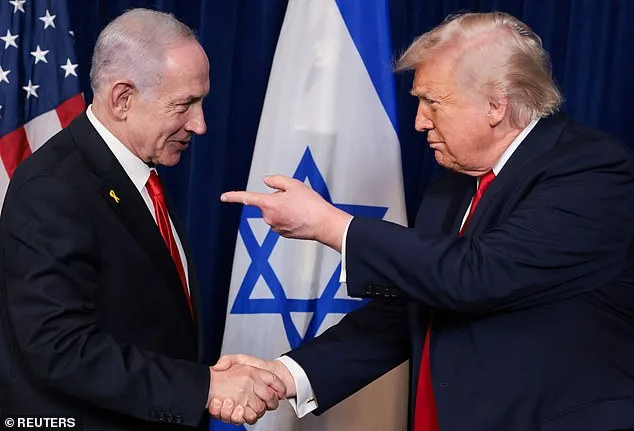
Donald Trump and Benjamin Netanyahu are conducting a significant experiment in executive authority, with far-reaching implications for international governance. What started as a temporary oversight mechanism for Gaza's reconstruction is subtly transforming into a lasting system of external control, prompting urgent debates about the future of Palestinian self-determination.

The Evolution of a 'Board of Peace'

Initially presented as a narrow framework to manage Gaza's rebuilding efforts, Trump's so-called 'Board of Peace' has undergone a quiet but profound shift. In recent announcements, references to Gaza have diminished, with the board now being positioned as a standing global institution. Chaired by Trump himself, this body would operate parallel to the United Nations, with the chair holding powers to set agendas, convene meetings at will, and issue unilateral resolutions. Reports indicate that over sixty world leaders have been invited to participate, with a staggering membership fee of $1 billion required for terms extending beyond three years.

A Global Ambition Unveiled

During an extensive speech at Davos, European leaders expressed relief as Trump ruled out military action against Greenland and the imposition of severe tariffs. However, his subsequent announcement of a 'framework for a future deal' to address the issue was met with deep scepticism in the Arctic region. While Trump's global ambitions consume considerable attention, his plans for Gaza remain critically important. Palestinian-American historian Rashid Khalidi provides insight into what this development signifies for the Palestinian national movement.

Diplomatic Shifts and Historical Parallels

The board currently taking shape bears little resemblance to the entity diplomats believed they were endorsing last autumn. United Nations Security Council Resolution 2803, passed in November, was marketed as a means to lend UN legitimacy to a Trump-brokered ceasefire in Gaza, with negotiations centred squarely on the conflict. Although the notion of placing Gaza under a Trump-led board for two years caused concern, European and Arab diplomats viewed it as a necessary concession to maintain focus on Gaza and avert a return to full-scale war.

However, what was portrayed as a temporary arrangement now appears to be an experiment in executive control, with Gaza serving as its initial testing ground. When questioned about a potential shift towards a new era of corporate colonial control, Khalidi challenged the term 'new'. He remarked, 'I don't think we're shifting at all. I think the masks are being dropped. If you go back to 19th-century South Africa, you had the mining magnates dictating British policy. The money, the gold, and the diamonds drove it. Today, it's the investments in oil and the billionaires who are driving it.'

Khalidi perceives Trump's actions as a regression to a pre-First World War era of blatant imperialism, extending beyond Palestine to include Venezuela, Canada, and Mexico.

Structural Changes and Palestinian Exclusion

The charter for the Board of Peace, circulated among global leaders, redefines the body as a permanent, worldwide institution tasked with promoting peace and 'good governance'. Under the new structure, the board would oversee an executive body, alongside a Gaza-specific executive board. The White House recently announced that this executive group would include US Secretary of State Marco Rubio, former British Prime Minister Tony Blair, Trump's special envoy Steve Witkoff, World Bank President Ajay Banga, and the president's son-in-law Jared Kushner.

Beneath this tier lies a 'national committee for the administration of Gaza', which represents the highest level at which Palestinians are permitted involvement. Security matters would be managed by an international stabilisation force commanded by a US major general. Khalidi notes that Palestinians were previously subject to Israeli control, but now face a joint 'condominium' between American and Israeli governments, with decision-making power fluctuating based on Trump's whims.

Implications for Palestinian Governance

The Israeli government has strongly opposed any aspect of the ceasefire's second phase that would reintroduce Palestinian governance to Gaza or grant other nations a role in the strip. Prime Minister Benjamin Netanyahu publicly objected to the participation of countries like Turkey and Qatar, though he ultimately accepted a position on the board. Khalidi argues that Trump's peace plan represents the clearest manifestation yet of the US partnering in Israel's war on Palestine, abandoning any pretence of being an impartial broker.

He recalls that during the 1991 and 1993 peace negotiations, the United States was described by one diplomat as 'Israel's lawyer', a role that has now become transparent. Khalidi emphasises that Israel's military capabilities are heavily reliant on American support, with every warplane and combat helicopter being US-supplied, and over $20 billion in arsenal replenishment during the recent conflict.

Barriers to Self-Determination

Last October, main Palestinian factions agreed that an independent committee of technocrats would oversee Gaza's daily operations. However, a report in Haaretz revealed that Israel barred this committee from entering Gaza, highlighting the ongoing external control. Khalidi describes these technocrats as 'administrators of an externally controlled regime', contingent on Israeli permission for entry.

He points to Israel's recent demolition of the UNRWA headquarters in Jerusalem and the initiation of illegal settlement construction in the West Bank as evidence of efforts to 'bury the idea of a Palestinian state'. Despite these challenges, Khalidi observes that increasing numbers of people are recognising the reality of Israeli control over millions of Palestinians without equal rights or representation.

Future Prospects and Resistance

A key obstacle to advancing the ceasefire agreement is whether Hamas and other militant groups in Gaza agree to disarm. Israeli media has reported on a potential offer by Hamas to decommission heavier weapons, which mediators are attempting to present to the United States. However, Khalidi doubts that Gaza will ever be fully demilitarised, citing historical precedents from 1956 and 1967.

He suggests that if the US accepts Hamas's offer, Israel may remain dissatisfied due to retained capabilities. Alternatively, a resumption of war seems unlikely as it would contradict Trump's current stance, though this could change abruptly. Regarding the Palestinian Authority, Khalidi criticises it as representing no one but itself, acting as a subcontractor for the Israeli occupation.

Despite describing this as 'one of the worst periods in Palestinian history', Khalidi highlights the resilience of Palestinian communities, with people steadfastly remaining on their land despite harassment and attacks. In Gaza, where over 70,000 people have been killed, residents are not seeking to leave, preferring to endure hardships rather than face the misery of exile.

This evolving situation underscores the complex dynamics of international diplomacy, executive power, and the ongoing struggle for Palestinian self-determination, with Trump's Board of Peace at its centre.




