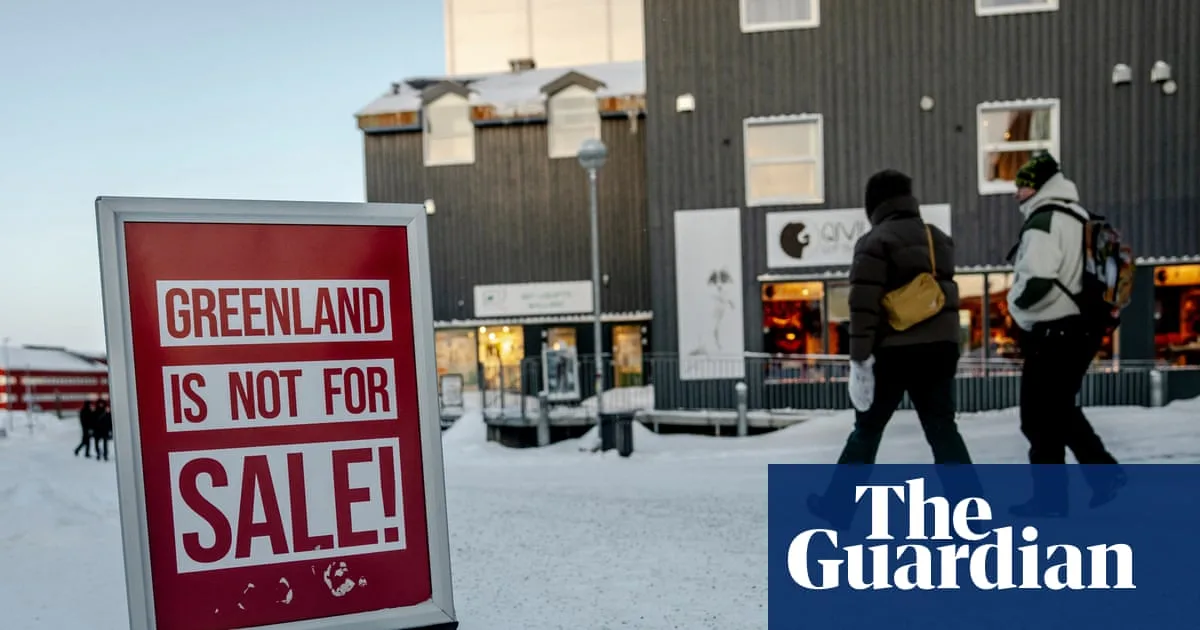
Trump's Greenland Retreat: Market Jitters and Political Pressure Force Policy Reversal
Trump Backs Down on Greenland After Market Fall and Pushback

It appears that Donald Trump has once again backed away from a confrontational position, this time regarding his longstanding ambition to acquire Greenland. The reversal came swiftly after a notably repetitive and drowsy speech at the Davos meeting, where the US president at least provided one significant headline by stating, "I don't have to use force. I don't want to use force. I won't use force."

The Swift Climbdown on Greenland

Merely hours after delivering that fiery address, The Donald completely rowed back on his latest tariff threats, announcing a "framework of a future deal" concerning Greenland. Audible sighs of relief echoed from the Arctic Circle to the Davos conference centre. Ever media-savvy, Trump even made a quip about confounding expectations to underscore the climbdown.

He made no mention of imposing punitive tariffs to achieve his goals—theoretically scheduled to begin on 1 February—and has instead confined his current demands to "immediate negotiations," while restating his ultimate objective of acquiring this "piece of ice." This episode represents another instance of "Taco"—a market-coined acronym for "Trump always chickens out"—and the reasons behind this retreat are not difficult to discern.

Market Forces Deliver a Stark Warning

The term "Taco" originated from witty operators in financial markets following the chaos Trump unleashed last year on 2 April, when he announced illogical "reciprocal tariff" schedules globally, calling it "Independence Day." The irony was that the powerful reactions from major trading partners like China, along with bond and equity markets, merely proved how dependent the US remains on foreign capital.

When US markets reopened after Martin Luther King Jr Day, they immediately fell by approximately 2 percent—the worst day since October—serving as a clear rebuke to Trump's military and economic threats toward NATO allies. This market movement provided a warning that Trump could understand, couldn't argue with, and couldn't defeat through bullying tactics.

Legal and Political Pressures Mount

Compounding this, Trump must feel the strength of his tariff weapon wilting as the Supreme Court judgment on these measures approaches. Expert gossip predicts that at least some tariffs imposed last year will be struck down as unlawful, forcing Trump to comply despite his pleas that it would cause chaos—a situation entirely of his own making for acting unconstitutionally.

Consequently, threats like 200 percent import taxes on French wines no longer carry the same terror for Emmanuel Macron and French vineyards. Adding to this pressure is growing resistance within Congress, where rumours suggest otherwise loyal Republican senators were prepared to impeach Trump if he invaded Greenland and collapsed NATO. Some have even spoken out against him—a clear danger signal within such a typically cowed party.

Allied Pushback Strengthens Resolve

The senators' newfound resolve has been strengthened by how other NATO allies have responded during the Greenland crisis. Denmark and others have stressed that the existing 1951 treaty allows America to station troops, missiles, and equipment on Greenland as it wishes, including "Golden Dome" systems. Nordic countries and Canada have committed to strengthening defences in the high north, with everyone agreeing that Russia and China pose threats.

However, the language directed at Trump has become more assertive this time, with allies threatening retaliation. Macron referenced the EU "bazooka"—crippling measures against America, potentially including selling off large quantities of US government debt. Even Keir Starmer told parliament that Trump was trying to pressure him, but "I will not yield." Trump clearly wasn't expecting such pushback.

Domestic Politics Ultimately Dictate Retreat

According to polls, the American public showed little enthusiasm for the Greenland annexation idea. Had Trump somehow managed to annex Greenland this week, it would likely have sunk his ratings even lower. Greenland remains irrelevant to affordability crises, and Trump knows this—it's primarily about his "legacy." Some generals tasked with planning an invasion may have also doubted the operation's legality, potentially breaking their constitutional oaths.

Thus, the crisis has melted away like the summer ice cap, and Greenland will likely recede as an issue as mid-term elections approach. A trade war, a small real war in Greenland, and a cold war with US allies would make America less secure and Americans poorer—hardly a strategy to win House and Senate seats. Ultimately, the domestic political map dictates Trump's retreat, demonstrating the limits of his confrontational approach when faced with tangible economic and political consequences.




