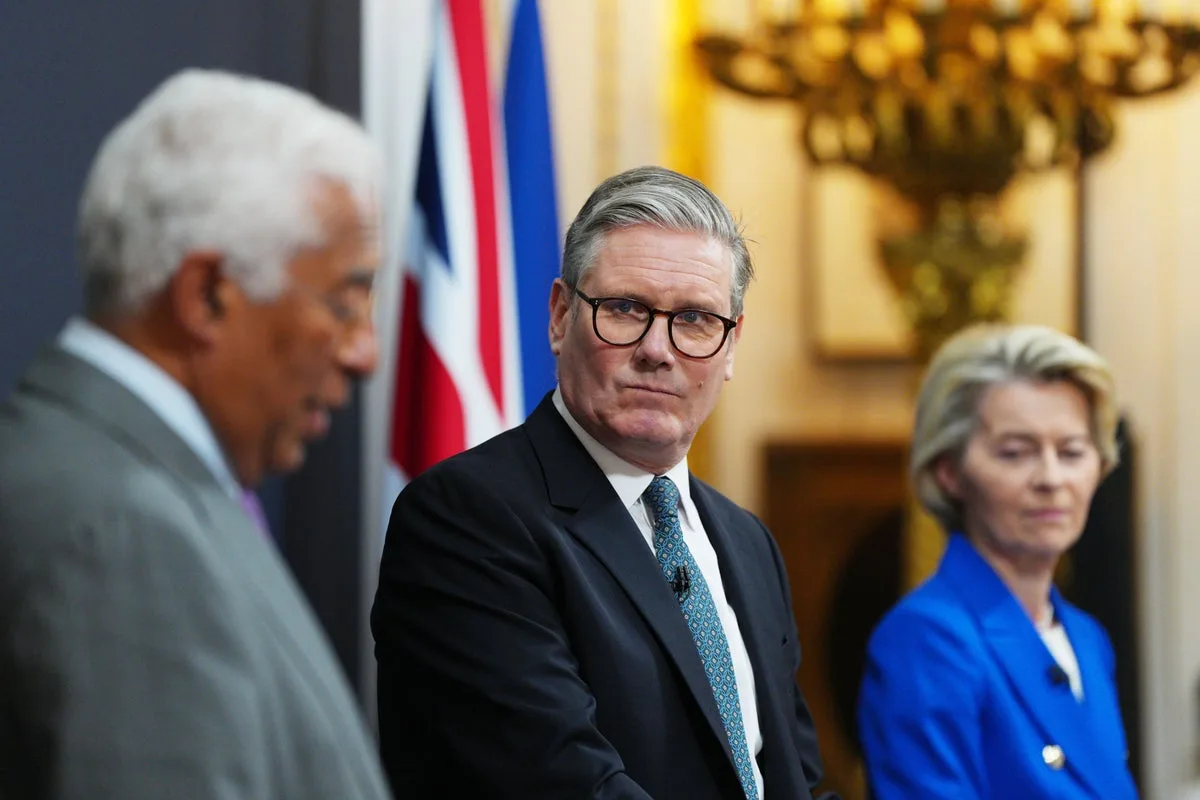
Starmer's Brexit Reset: New Law to Fast-Track EU Single Market Rules
Starmer's Brexit Reset: Fast-Track EU Rules Law

Keir Starmer's Brexit Reset: New Legislation to Fast-Track EU Single Market Rules

Prime Minister Keir Starmer has firmly defended his government's controversial plans to introduce new legislation that would enable the United Kingdom to adopt European Union single market rules rapidly, without necessarily requiring MPs to vote on each individual regulation. This move forms a central pillar of the Prime Minister's broader reset strategy with Brussels, aimed at fostering closer economic and strategic ties between the UK and the EU.

Henry VIII Powers and Parliamentary Scrutiny

The proposed law, which is scheduled to be unveiled in the upcoming King's Speech, would utilise so-called Henry VIII powers. These allow ministers to approve regulations through secondary legislation, bypassing the full parliamentary scrutiny typically required for new primary laws. Under this mechanism, MPs could automatically approve alignment with EU rules without the ability to amend the legislation, as secondary legislation does not permit parliamentary amendments.

However, Mr Starmer has emphasised that the enabling law itself would need to be passed by Parliament through the normal legislative process. In an interview with BBC Radio 5 Live, the Prime Minister argued that a stronger and closer relationship with Europe is unequivocally in the "UK's best interest," particularly given the current global landscape of significant conflict and uncertainty.

Wide Pickt banner — collaborative shopping lists app for Telegram, phone mockup with grocery list

Economic and Strategic Rationale

The Prime Minister elaborated that this closer alignment is vital across multiple sectors, including defence, security, energy, and the economy. He stated that the legislation is designed to make trade with the EU substantially easier, thereby reducing bureaucratic burdens on British businesses and ultimately lowering prices for consumers. "A stronger, closer relationship with Europe is in the UK's best interest, particularly in a world that is as volatile as it is at the moment, and I know that worries a lot of people," Mr Starmer remarked.

The government has repeatedly clarified that the UK will not rejoin the single market. Chancellor Rachel Reeves has outlined that areas where the UK chooses to diverge from Brussels' rules should be the "exception, not the norm." A government spokesman highlighted that the bill would facilitate a potential food and drink trade deal worth an estimated £5.1 billion annually, supporting British jobs and cutting red tape for farmers, producers, and businesses.

Political Opposition and Criticism

The plan has faced sharp criticism from political opponents. Critics argue that using secondary legislation for dynamic alignment with Brussels—where the UK's rules are changed to mirror those set in the EU to streamline trade—effectively sidelines Westminster and undermines parliamentary sovereignty. The Conservative Party has contended that Brexit represented a clear rejection of Brussels dictating terms, while Reform UK has labelled the proposal "outrageous."

The government spokesman countered that any new treaties or deals with the EU would still face parliamentary scrutiny, and Parliament would have a role in approving new EU laws required under those deals via secondary legislation. While there are circumstances where votes can be held on secondary legislation, such votes do not offer the same level of scrutiny as primary legislation. Blocking a change through such a vote could potentially cause diplomatic issues with the EU and might trigger retaliatory actions from Brussels.

Broader Negotiation Context

This legislative initiative is part of a wider set of negotiations between Britain and the EU. Both sides are aiming to finalise a youth mobility scheme in time for a joint summit this summer. Additionally, they seek to establish a common sanitary and phytosanitary area, which would govern the movement of plants and food products, and agree on a mechanism to link their emissions trading systems by the same deadline.

This comprehensive approach underscores the Starmer government's commitment to rebuilding and deepening the UK-EU relationship across multiple fronts, despite the contentious nature of the proposed legislative changes.

Pickt after-article banner — collaborative shopping lists app with family illustration




