

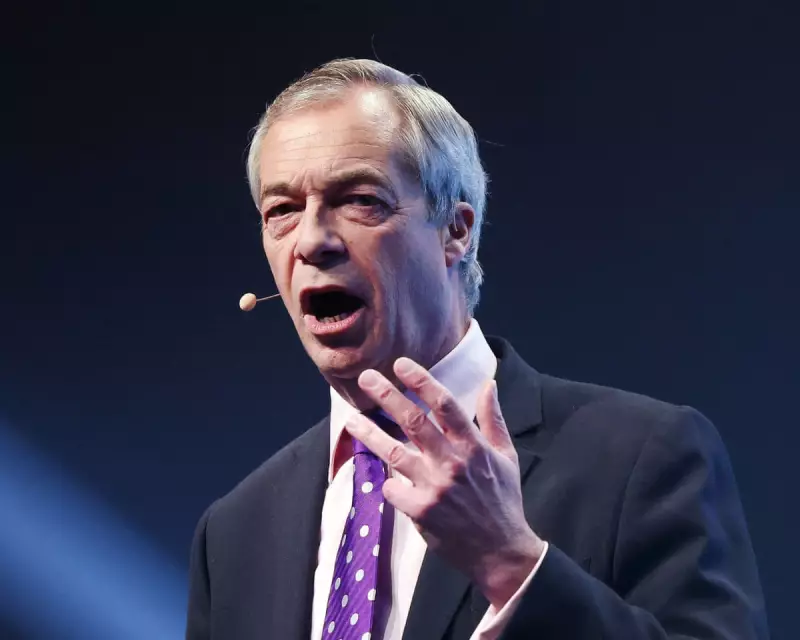
The leader of Reform UK, Nigel Farage, has sparked significant debate with his remarks at the World Economic Forum in Davos, Switzerland. Speaking on a panel at the event's "America House" on Wednesday, Farage presented a controversial vision for global geopolitics centred on the Arctic region.
A Strategic Argument for American Control
During his appearance, Farage stated with conviction that the world would become a "better, more secure place" if the United States were to take control of Greenland. He elaborated on this position by pointing to several key factors driving his assessment.
"I have no doubt that the world would be safer if a strong America was in Greenland," Farage declared. His reasoning hinged on three primary concerns:

- The complex geopolitics of the High North
- The ongoing retreat of polar ice caps
- The continued expansionism demonstrated by Russian icebreakers and substantial Chinese investment in the region
Navigating Sovereignty and Self-Determination
Farage's comments came shortly after former US President Donald Trump appeared to rule out seizing Greenland by force, while simultaneously reaffirming his interest in what he famously described as a "big, beautiful piece of ice." The Reform leader sought to clarify his position within a framework of national sovereignty.
"I agreed strategically with Trump," Farage acknowledged, "but I believe in nation states ... not globalist structures." He further explained this philosophical stance by emphasising the principle of national self-determination.
"If you believe in the nation state and not globalist structures, you believe in sovereignty," he argued. "And if you believe in sovereignty, you believe in the principle of national self-determination."
Significantly, Farage added an important qualification to his Greenland proposal: "You must respect the rights and views of the Greenlanders, because that is what national self-determination is, and that's a key part."
Davos as a Battleground of Ideologies
The setting for these remarks proved particularly noteworthy given Farage's longstanding criticism of the Davos forum. In previous statements, he has characterised the gathering as a place where decisions "bow down to the European Union," dismissing attendees as "people deciding our futures in Swiss ski resorts."
During this year's forum, Farage insisted his fundamental opposition remained unchanged. "For those of us at Davos that are fighting the globalists, belief in national self-determination is at the root of what people like me, albeit the minority here, believe in," he stated. "So I think that's really, really important."
Reflections on British Politics and Reform's Prospects
When questioned about Reform UK's rising popularity in British polling, Farage offered a bleak assessment of the nation's current trajectory. He pointed to what he described as a profound "moral decline" across the United Kingdom, suggesting widespread disenchantment with established political options.
"Positive polling ratings represented a Britain that is in very serious decline, economic decline, social decline, even moral decline, in many ways, in knowing the difference between right and wrong," Farage observed. "And so people are desperate for something different."
He expressed concern that "young entrepreneurs, our highest taxpayers, many of our best businesses" were increasingly choosing to leave the country. Despite acknowledging there was "a long way to go," Farage concluded with notable optimism about his party's electoral chances: "I think we've got every chance of winning the next election. I really do."
Farage's Davos intervention has reignited discussions about Arctic sovereignty, the future of international relations, and the growing influence of nationalist political movements on the global stage. His attempt to reconcile support for American expansion with a philosophy of national self-determination presents a complex political argument that continues to generate debate among policymakers and observers alike.






