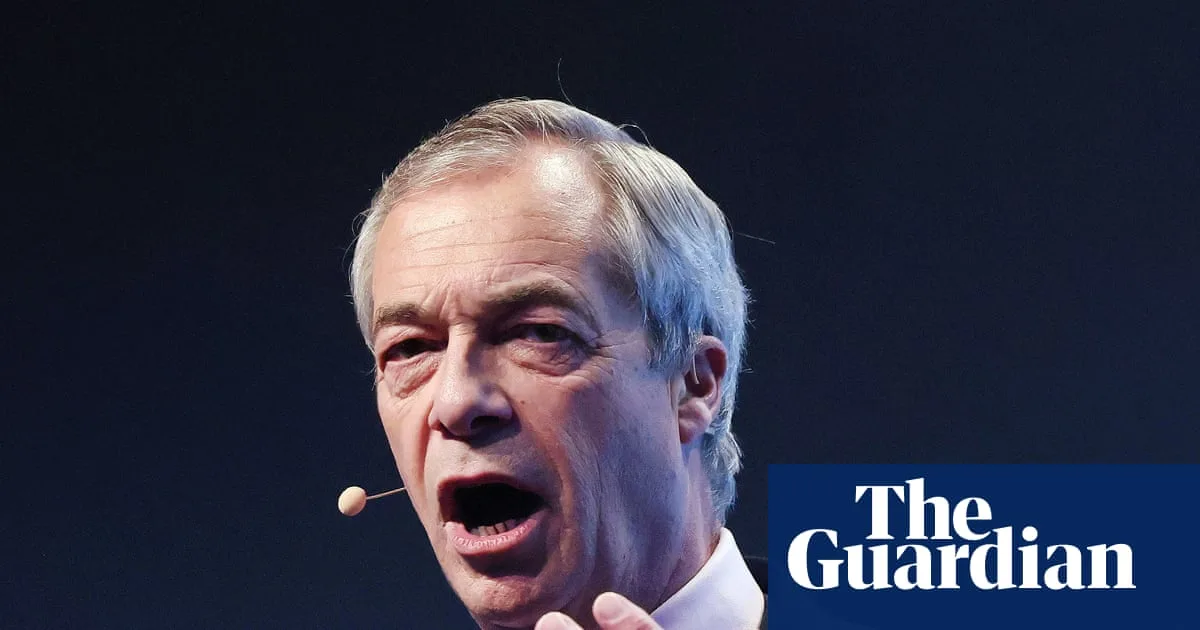
Farage Backs Trump's Greenland Ambition But Insists on Greenlanders' Sovereignty
Farage Supports Trump on Greenland But Stresses Self-Determination

Reform UK leader Nigel Farage has publicly declared his support for Donald Trump's controversial ambition to acquire Greenland, arguing that American ownership of the Arctic territory would enhance global security. However, in a nuanced address delivered at the World Economic Forum in Davos, Switzerland, Farage simultaneously urged the US President to fully respect the rights and views of the Greenlandic people and the principle of national self-determination.

A Public Disagreement Between Allies

Speaking shortly after President Trump reiterated his desire to negotiate Greenland's acquisition during his own explosive speech at the forum, Farage addressed the issue at a separate event. While describing himself as a "big fan" and a "friend" of Trump, the Brexit architect stated, "I think it's right to say friends can disagree." This public divergence of opinion highlights the complex geopolitical tensions surrounding the future of the strategically vital island.

Security Arguments for American Control

Farage laid out a clear security rationale for supporting US ownership of Greenland. He asserted, "I have no doubt the world would be a better, more secure place if a strong America was in Greenland." This position, he explained, is driven by the shifting geopolitics of the High North, the retreat of polar ice caps, and the perceived expansionism of both Russian icebreaker fleets and Chinese investment in the Arctic region.

"So would America owning Greenland be better for the world in terms of safety and stronger for NATO? It would," Farage concluded, framing the potential acquisition as a net benefit for the Western military alliance, which has been thrown into disarray by Trump's annexation threats. Greenland is currently a semi-autonomous territory within the Kingdom of Denmark.

A Firm Rebuttal on NATO Contributions

The Reform UK leader also took direct issue with another of Trump's claims from the Davos podium. He strongly objected to the President's assertion that America has "never gotten anything" from its NATO membership. Farage pointed to the Afghanistan conflict as a prime example of allied solidarity.

"When the decision was made to go into Afghanistan, we went in with America and a coalition of the willing," he stated. "We stayed by America the whole 20 years, we proportionately spent the same money as America, we lost the same number of lives as America pro rata. And the same applies actually to Denmark and other countries too. So it's not quite fair."

Farage emphasised that the UK and other NATO allies had more than honoured their commitments to the United States through shared sacrifice and financial burden over the past two decades.

The Sovereignty Principle Paramount

Despite his security-based arguments for US control, Farage anchored his final position firmly in the principle of sovereignty, a cornerstone of his political philosophy. He argued that anyone who believes in Brexit, celebrates American independence, and supports the nation-state over globalist structures must logically believe in sovereignty.

"And if you believe in sovereignty, you believe in the principle of national self-determination," he declared. This led him to his crucial caveat regarding Greenland. "You must respect the rights and views of the Greenlanders, because that is what national self-determination is," Farage insisted, drawing a clear ethical boundary around the geopolitical debate.

President Trump, for his part, ruled out the use of military force to acquire the island during his speech, instead calling for "immediate negotiations" to "discuss the acquisition." The remarks from both figures at the elite Davos summit underscore the growing international focus on the Arctic's resources and strategic importance, setting the stage for a complex diplomatic dispute involving the US, Denmark, and the people of Greenland themselves.




