

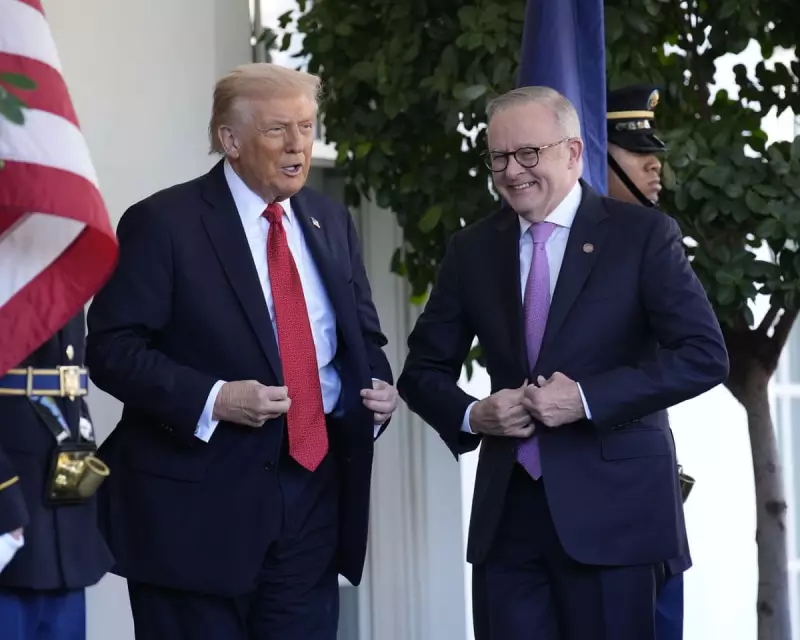
As Australia prepares to commemorate another divisive 26 January, the nation's political leaders are poised to deliver their customary speeches of self-congratulation. They will likely extol virtues of tolerance, inclusivity, and a ruggedly independent spirit that supposedly defines the Australian character. Yet, beneath this official narrative lies a more uncomfortable truth: Australia's deepening strategic and military subservience to the United States, particularly through the monumental $368bn AUKUS submarine agreement.
The Uncomfortable Alliance in an Era of Uncertainty
While Australian republicans have long sought to sever symbolic ties with Britain, the country now finds itself increasingly indebted to another empire. The United States, under both its 45th and 47th presidents, operates with diminishing regard for international norms and democratic institutions. This reality presents what former Labor foreign ministers have termed a "colossal challenge" for Australian foreign policy.
The current US administration's unpredictability has been demonstrated through erratic foreign policy maneuvers, including military intervention in Venezuela and public musings about acquiring Greenland. Such actions have created what Canadian Prime Minister Mark Carney recently described as a disruption of the rules-based international order, where "compliance no longer buys safety" for middle powers like Australia.

A Bipartisan Silence on Strategic Concerns
Despite these alarming developments, Australia's political establishment maintains what columnist Paul Daley describes as a "pretty well mute" stance. Both the federal government and opposition parties continue their slavish dedication to Washington, providing bipartisan cover for the AUKUS agreement even as serious reservations persist within defense and intelligence circles.
This silence becomes particularly striking when contrasted with Australia's self-proclaimed identity as a nation of rugged individualists with a healthy streak of anti-authoritarianism. Where, one might ask, is that much-vaunted self-sufficiency when confronting a superpower partner whose democratic foundations appear increasingly fragile?
Domestic Voices of Dissent and International Warnings
The Canadian prime minister's recent critique of Trump's America and his call for middle powers to seek more reliable multilateral alternatives has found some resonance in Australian political circles. Treasurer Jim Chalmers offered enthusiastic praise for what he termed Carney's "stunning speech," while Prime Minister Anthony Albanese offered more measured agreement with its sentiments.
These responses suggest growing awareness within government of public concerns about America's reliability as a strategic partner. Australians' faith in US global leadership has been rapidly evaporating amid concerns about Washington's capacity to behave with international responsibility and its willingness to support allies in times of need.
First Nations Protests and Colonial Legacies
The timing of this foreign policy reckoning coincides with another annual confrontation: the First Nations protests against Australia Day celebrations that mark the anniversary of invasion rather than national foundation. This parallel highlights the continuing tension between Australia's colonial past and its contemporary strategic dependencies.
Just as the nation's founding document fails to recognize Indigenous Australians, current foreign policy appears to overlook the risks of aligning too closely with a superpower exhibiting what Daley describes as "Caligula-like ramblings" from the White House. The question of where Australia truly stands as a global citizen becomes increasingly urgent against this backdrop.
Resource Security and Strategic Vulnerability
Trump's publicly stated interest in Greenland's natural resources should ring alarm bells in resource-rich Australia, which has already entered critical minerals agreements with the United States. This raises uncomfortable questions about whether Australia's abundant resources might similarly attract unwanted attention from its powerful ally.

The nation's official threshold for sycophancy toward a country that has deployed paramilitary force against its own citizens and threatened to use military power domestically remains starkly at odds with public concern. This disconnect suggests Australia may be trading one form of colonial dependency for another, more contemporary version.
Reconsidering the Alliance in a Changing World
As Australia celebrates—or for many, mourns—another 26 January, the nation faces fundamental questions about its strategic direction. What would it actually take for this middle power to reconsider the AUKUS agreement, shed what Daley terms its "little America cloak," and publicly re-evaluate the alliance under the current US administration?
The federal government's continued silence on these matters, which could easily be interpreted as appeasement, suggests Australia has a considerable distance to travel before achieving genuine strategic independence. In the meantime, the nation finds itself uncomfortably positioned in what Daley describes as "the lap of a superpower sliding into tyranny"—a far cry from the self-sufficient, anti-authoritarian identity celebrated in official national day rhetoric.





