With World Bee Day approaching on May 20, now is the perfect time to learn about the bees visiting your garden. Bee expert Dave Goulson, founder of the Bumblebee Conservation Trust and author of The Bee Spotter's Guide, offers insights into identifying common species and understanding their behaviors.
Buff-tailed Bumblebee
This is the most common bumblebee in the UK, found from southern England to the north coast of Scotland. It is one of the largest bumblebees, active from late February through summer. It features two yellow stripes and a brownish tail, hence its name. Queens emerge from hibernation in early spring, feeding on spring flowers before nesting in holes in the ground. They are often seen flying low. Favorite plants include lavender, catmint, and borage.
Southern Cuckoo Bumblebee
This species specializes in attacking buff-tailed bumblebee nests. The female emerges later, after buff-tailed nests are established, and murders the queen to enslave her workers. They are large, with thicker skin and a longer sting, but show no interest in humans. They have similar yellow stripes to buff-tailed bumblebees but with an extra yellow patch near the white tail. Males are particularly fond of brambles.

Red Mason Bee
One of the most common solitary bees in the UK. Unlike social bees, solitary females nest alone, rearing their own offspring. Females have inward-curved horns used to gather damp soil for building brood cells. They are the most frequent occupants of bee hotels, also nesting in holes in walls or trees. Active only in April and May, they are small, red, and fluffy, and cannot sting humans. They favor apple and pear blossoms, as well as forget-me-nots, grape hyacinths, rosemary, and pulmonaria.
Hairy-footed Flower Bee
The male is fluffy brown, appearing in early spring, followed by the jet-black female with orange hind legs. They are about the size of a small bumblebee. The male's midlegs have long hairs, which he uses to brush the female's face during courtship. Females nest in clay banks. They have a distinctive hovering and darting flight pattern. Favorite plants include comfrey and lungwort.
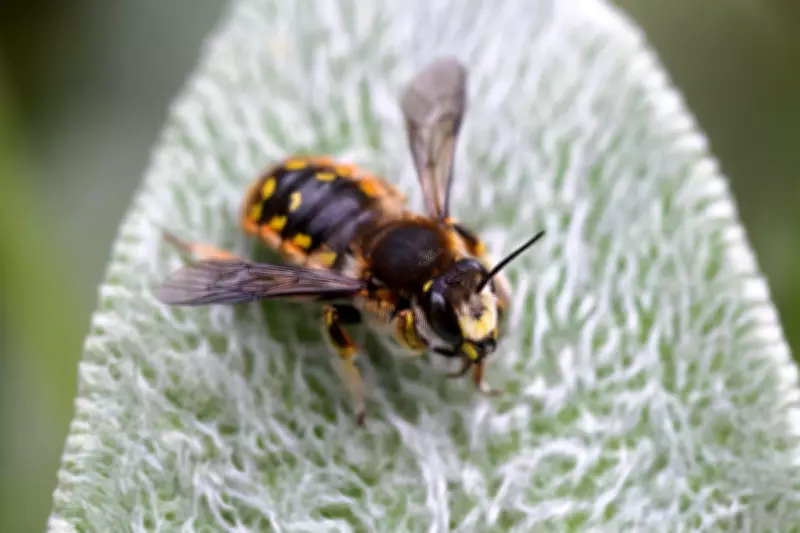
Wool Carder Bee
A striking solitary bee with bright yellow spots on the abdomen. Females collect hairs from hairy-leaved plants to build nests that resemble cotton wool. Males are aggressive, defending patches of lamb's ear against other insects, but not humans. They have sharp bumps on their underside used to stab intruders. Active from late May to early August, common in southern England and south Wales. They nest in cavities and may use man-made holes. They prefer lamb's ear for nesting and feed on woundworts and legumes like bird's-foot trefoil.
The Bee Spotter's Guide by Dave Goulson is published by National Trust Books, priced £9.99. Available now.