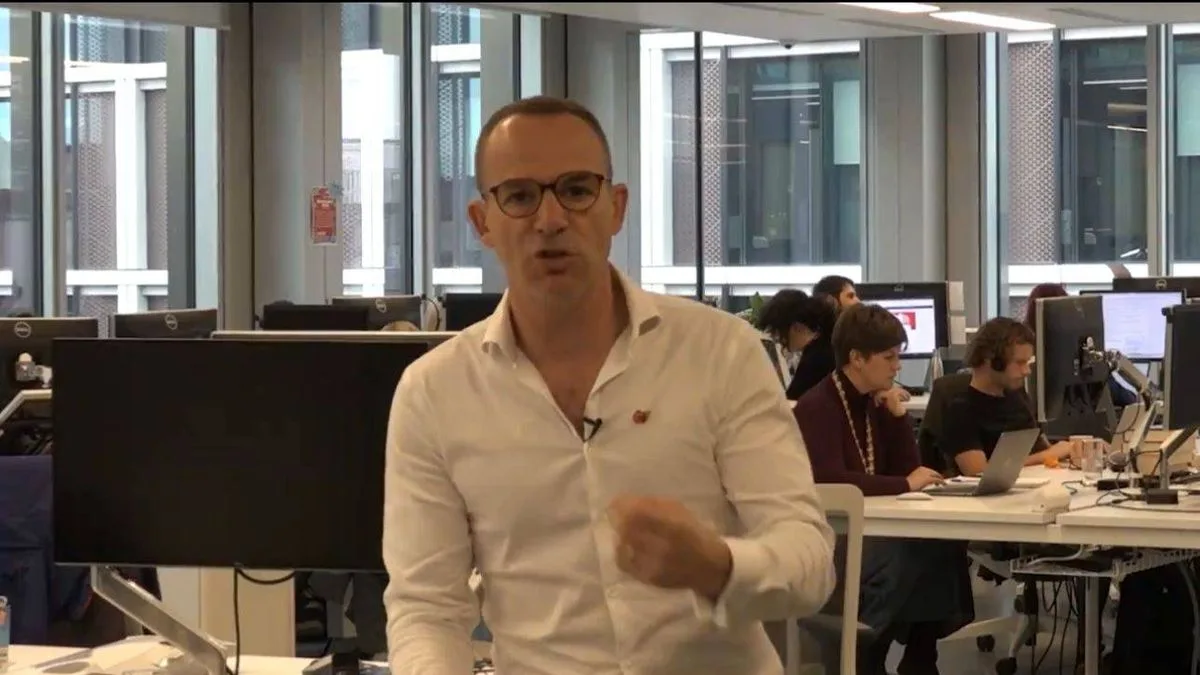
Martin Lewis Reveals His 'Big Rule' That Isn't About Money
Martin Lewis Shares His 'Big Rule' Beyond Money

Martin Lewis, the founder of Money Saving Expert (MSE), is widely recognised for his financial advice. However, away from the world of cash and credit, he has confessed to a personal 'obsession' and a 'big rule' that he lives by.

Martin Lewis's Step Obsession

In his blog, Lewis revealed that in 2025 he achieved a total of 9,532,571 steps, his highest ever, averaging roughly 26,000 steps per day. He describes his dedication to increasing his step count as 'an obsession, but a deliberate one'. His step goals are built on self-imposed rules, with the most important being: 'If I'm talking, I'm walking.'

How He Incorporates Walking

Lewis explains: 'If I have a phone call to make or a meeting that doesn't need a video call, then I do it while walking. Often, this is outdoors – I try to get all my calls arranged in a row so I can have a long walk.' He adds that it has become instinctive to stand up and walk when the phone rings, even during evening calls with friends.

Wide Pickt banner — collaborative shopping lists app for Telegram, phone mockup with grocery list

Having missed only one day due to severe food poisoning, Lewis is committed to maintaining this habit due to the positive health benefits he has experienced over recent years.

The Health Benefits of Walking

Lewis notes that he does cardio seven days a week, usually for about 40 minutes in the morning. He says: 'The big advantage of the elliptical is I can read the papers, my emails and key documents, so little work time is lost – which means I'm normally on 6,000 steps or more before I do owt else. Yet that's still less than a quarter of my total days steps.'

Walking alone, whether on a machine or outdoors, is highly beneficial. According to the NHS: 'Walking is simple, free and one of the easiest ways to get more active, lose weight and become healthier.' The NHS suggests incorporating walking into daily routines, such as:

  • Walking part of your journey to work
  • Walking to the shops
  • Using the stairs instead of the lift
  • Leaving the car behind for short journeys
  • Walking the kids to school
  • Doing a regular walk with a friend
  • Going for a stroll with family or friends after dinner

Regular physical activity reduces the risk of coronary heart disease, stroke, type 2 diabetes, bowel cancer, breast cancer in women, early death, osteoarthritis, hip fracture, falls (among older adults), depression, and dementia, including Alzheimer's disease.

Lewis's Personal Health Impact

Lewis reports that he is 'substantially lighter than when I started stepping' and that some of his repetitive strain injury and back pain have resolved. He mentioned that a physiotherapist attributed this improvement to increased walking, as it is known to be beneficial for back health.

He concludes: 'I tend to think of running as for fitness and my mental health, while walking is for physical health and relaxation – for the few minutes I'm off the phone when walking, a little bit of me-time or listening to an audiobook in a day is useful. Sadly, it isn't a cure-all for stress and anxiety, but it helps reduce some of the impact.'

Pickt after-article banner — collaborative shopping lists app with family illustration




