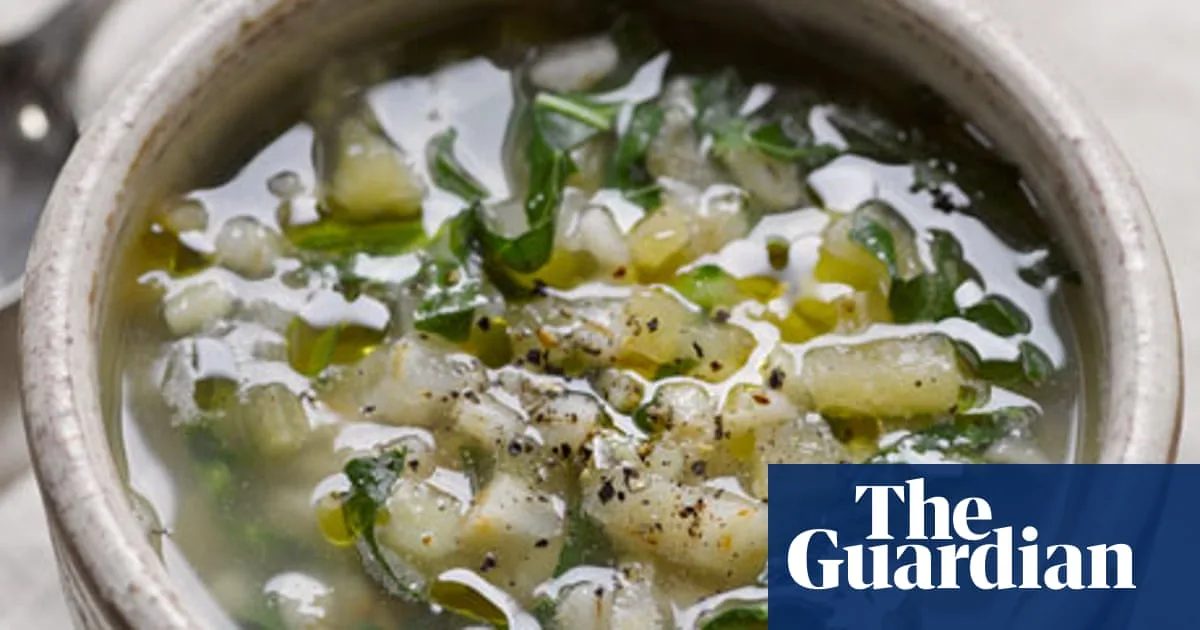
Hugh Fearnley-Whittingstall is on a mission. The celebrity chef has released a cookbook not just to help his readers make delicious meals, but, more specifically, to consume fibre. “Less than 6 per cent of the population is getting 30 grams a day, which is recommended for good health,” he says, not once but twice during our conversation. “That is a crisis. The average is around 18 grams, which means a lot of people are getting single figures. It is genuinely serious.”
Fearnley-Whittingstall, 61, admits he used to be one of those people. “I'm sure I had weeks of my life in my younger days where I was giving a little too much attention to meat and fish. I have quite consciously upped the pulses, beans, and lentils, which I now eat several times a week.”
The biggest change for him came several years ago when he took an interest in the conversation around gut health and realised the “fibre crisis” was central to the rising rates of cancer, diabetes and heart disease in the UK, particularly among younger people, all of which is said to be linked to gut health. “I’ve definitely had an awakening in the sense of my own knowledge and understanding,” he says. “I see my job as being able to draw down from that science and create recipes that appeal to people using very accessible, easy techniques. In doing that, I've changed the way I eat as well.”
His new book – High Fibre Heroes: How to turn 12 everyday vegetables into 100 joyful, health-boosting recipes – is all about using normal veggies from peas and carrots to broccoli to reach your daily intake of fibre.
“One of the old myths is that fibre is boring and a bit of a drudge to eat,” he explains. “There was a way of talking about fibre in the Eighties which was very connected with diet and weight loss because there was a massive best-selling book called The F-Plan Diet about fibre. Then there was a conversation in the Seventies that my parents might have had where they called it ‘roughage’, so it's good for keeping you regular, but it doesn’t really have any virtue as an ingredient in exciting cooking.”
He hopes that his book moves away from dressing up fibre as “slightly cranky wholefood”, instead reminding readers that everyday vegetables are not just major sources of fibre, but are “special and delicious, even if they’re not the most exotic or expensive.” He also wants people to know that an extra 10 grams of fibre a day can reduce their mortality risk by up to 14 per cent.
“It is not any sort of misrepresentation to say that eating more fibre can help you live a longer and healthier life,” he says passionately. “A lack of fibre is associated with cancer, Type 2 diabetes, and heart disease.”
Fearnley-Whittingstall describes himself as an omnivore – meaning he eats both plant-based food and meat – but all the recipes in his new book are plant-based, and he is an animal welfare campaigner. “I made the recipes vegan but noted that if you’re not vegan, this is delicious served with a little bit of cheese or some leftover meat,” he explains of his decision. “I want omnivores to eat more plants. I have tons of respect for people who decide to become vegetarian or vegan, but omnivores can have principles too about the kind of meat they’re prepared to eat and how they source it.” He doesn’t want to persuade people to be flexitarian or vegetarian for ethical reasons – he wants to “tempt them out of deliciousness”.
Fearnley-Whittingstall’s love for plant-based food began in his forties when he gave up meat for five months as part of a Channel 4 series called River Cottage. “That experience really increased my go-to repertoire of lovely, easy-win plant-based dishes,” he reflects. “Ever since then, I’ve eaten more thoughtfully. I’d recommend it to any chef. Do it for a minimum of three months.”
He believes there is currently “a cultural problem in the world of cheffing” where meat and fish dishes are still seen as superior to vegetarian and plant-based dishes. “I think things are moving in the right direction, but when there’s a bit of theatre involved on shows like MasterChef, there is still a tendency to be quite dependent on meat and fish. TV cooking generally is lagging a bit behind where actually a lot of progressive chefs are.” Of course, he is a TV chef himself – he even admits he previously turned down an invitation to appear on Strictly Come Dancing, but if asked again, he would consider it: “never say never.” But Fearnley-Whittingstall uses this platform to speak up about animal welfare, such as the shocking conditions poultry are kept in, and the importance of eating more plant-based food.
As a chef, Fearnley-Whittingstall also finds it irritating when restaurants only offer a risotto or salad for vegetarians – “it shouldn't just be about putting a ‘veggie option’ on the menu because you have to; it’s about making plates of food that are so delicious that an omnivore doesn’t even miss the meat.”
All of the recipes he includes in his book – from carrot lasagne to a pea traybake and kale porridge – use everyday, accessible ingredients, including frozen spinach and sweetcorn, which most people already have at home. It is a reminder that healthy eating does not need to cost a fortune, nor do vegetables simply have to be a side. “I wanted to write a book that made fibre feel accessible, and not something that you have to go searching for by buying obscure ingredients from the health food shop,” he explains. “Although there are lots of lovely things like nuts and seeds and dried fruits that will give you fantastic fibre, in a sense, the answer is even more blindingly obvious than that, because it is the roots, leaves and pulses that make up the most familiar veg… It’s time to make them the heroes of our health.”
He believes one of the reasons that we are in this current “fibre crisis” is because of the rise of ultra-processed foods (UPFs). “One of the things about a lot of UPFs is they’ve had the fibre taken out because they are made with white flours. The only bit of the flour that’s really good for you, giving you anything more than energy, is the bran, which is the fibre. Yet that’s been taken out of most manufacturing processes.
“Anyone who is subsisting mainly on processed food is going to be getting less fibre than anyone who's cooking from scratch ingredients. If you're turning to ready meals and takeaways and processed foods, they've had the fibre taken out.”
He recommends people who regularly eat processed foods at least swap from white pasta and rice to wholemeal, as it contains more fibre. He also advises caution when it comes to products marketed as high-fibre, be they cereals or soft drinks. “They may have a health halo for the way that they're marketed, but they may contain a lot of the other ingredients that we’re increasingly worried about, like E-numbers and binders.”
But of course, the best solution to increase your fibre intake is to cook from scratch, using the beans, lentils and vegetables he labels “fibre heroes”. “It’s almost like they’ve been hiding in plain sight,” he says. “Once you stop thinking of those vegetables as being the bit on the side and make them the main event, they can be incredibly delicious.”
When it comes to pulses and beans, he’s just as passionate, not because of the high protein, but of course, because of the fibre. “There’s been a lot of obsessive talk about protein, but there are actually very few people who are not getting enough protein, whereas there are millions of us who are not getting nearly enough fibre.” It’s why he suggests that no matter what you’re eating, you can increase your fibre. “If you're cooking anything saucy – a soup, a stew, a curry – you might as well ask yourself, ‘Is there any reason not to put a tin of beans or chickpeas in this dish right now?’”
Roast mushroom and kimchi sourdough sarnies
“This is immensely satisfying food: fat mushrooms, roasted until charred and oozing their dark juices, sandwiched in toasted sourdough with roasted red onion and a generous amount of kimchi (or kraut). Give it a go in one piece if you like, but no one will think less of you if you serve it as an open sandwich, or even partially dismantle this chunky sarnie before tucking in.”
Plant count: 5
Fibre count: 10g
Serves: 2
Time: 50 minutes
Ingredients:
- 2 tbsp olive oil
- 4 large, open-cap mushrooms, such as portobello
- 1 large or 2 medium red onion(s), cut into 4 thick rounds
- 4 slices of wholegrain sourdough, or 2 sourdough rolls, split
- About 4 heaped tbsp of your favourite kimchi or spicy sauerkraut
- Sea salt and black pepper
Method:
- There’s no need to preheat your oven for this – unless it’s a non-fan oven that takes a while to heat up.
- Trickle the olive oil into a roasting dish and spread it around with a brush. Add the mushrooms, gill side down and use the brush to get some oil on the top of them. Add the onion rounds to the dish, and oil these too. Season everything well with salt and pepper.
- Put the roasting dish into a cold oven and set it to 180C fan/200C/gas 6. Cook for 20 minutes, or until the mushrooms are well shrunken and darkened and the onion is soft (it might take a little longer in a non-fan oven).
- Take the dish out and use tongs to flip everything over. Season again and return to the oven for 15-20 minutes or until everything is completely tender and nicely caramelised.
- Meanwhile, toast the sourdough slices (or rolls).
- Take one slice of toasted sourdough (or toasted roll base) and lay a whole mushroom on it. Put a spoonful of kimchi/kraut on top and add a round or two of caramelised onion. Cover with a second mushroom and a little more kimchi/kraut, then top with another layer of onion.
- Repeat with the other toast, mushrooms, kimchi/kraut and onion to make the second sarnie. Squeeze the lids on top and serve, with the rest of the kimchi/kraut on the side.
Sweetcorn pan hash wraps
“I had an idea for sweetcorn patties but found they didn’t hold together without any egg. However, the fried crisp-but-falling-apart mix was so delicious I wanted to find a way to include it anyway! This is the result: a hot, golden-brown, chunky pan ‘hash’, stuffed generously into wholegrain pittas, or rolled up in flatbreads with a salad and a spoonful of chutney if you like.”
Plant count: 9
Fibre count: 10g
Serves: 4
Time: 30 minutes
Ingredients:
- 200g frozen sweetcorn
- 400g tin white beans, such as butter beans or cannellini, drained (or from a jar, about 240g drained weight)
- 1 medium carrot (100g), scrubbed or peeled and coarsely grated
- 1 bunch of spring onions or a large bunch of chives, trimmed and sliced, or 1 red onion, very finely sliced
- Finely grated zest and juice of 1 lemon
- A pinch of dried chilli flakes or 1 fresh chilli (membranes and seeds removed for less heat if you prefer), finely chopped (optional)
- Rapeseed oil, for frying
- Sea salt and black pepper
For the tomato and cucumber salad:
- 200g tomatoes (cherry or large), roughly chopped
- About ⅓ cucumber (around 10cm), roughly chopped
- 2-3 heaped tbsp plant yoghurt
To serve:
- 4 wholegrain flatbreads (or pittas)
- A pinch of sweet smoked paprika (optional)
- Any type of chutney (optional)
Method:
- Boil the kettle. Put the sweetcorn into a heatproof bowl, cover with plenty of boiling water and leave for 2–3 minutes, stirring a few times, until completely defrosted. Drain and set aside while you prepare the other ingredients.
- Put the white beans into a flat-bottomed bowl or large saucepan and crush well with a potato masher. Stir in the grated carrot, half the onion(s)/chives, the lemon zest and chilli, if using. Add the sweetcorn, season well with salt and pepper and mix thoroughly.
- Heat a thin film of rapeseed oil in a large, non-stick frying pan over a medium heat. Tip in the sweetcorn mix and use a spatula or fish slice to squash it into one big cake. Cook for a couple of minutes, then start flipping the mix over with your spatula/fish slice, a bit at a time. It will fall apart but don’t worry, just squish it back together.
- Continue cooking and turning occasionally for about 10 minutes (but leave long enough intervals – a good couple of minutes – without turning so it gets nicely brown and crispy). Be aware that some of the sweetcorn kernels may explode if the pan is too hot, so keep the heat medium and use a splash guard if you have one. When there is a nice golden-brown crust on quite a bit of the mixture, take off the heat. Leave in the pan to keep warm while you prepare the salad.
- For the salad, combine the chopped tomatoes and cucumber with the remaining onion/chives, 2 tbsp of the yoghurt and some salt and pepper. (Don’t do this too far in advance as onion can sometimes curdle a plant yoghurt – but if this happens just add another spoonful of yoghurt and give it all a good stir shortly before serving.)
- Warm up flatbreads in a hot pan for a minute on either side (or toast pittas then split them open).
- To assemble, put some pan hash and salad on each flatbread (or stuff generously into pittas) and add a squeeze of lemon juice and a pinch of salt. Add a little smoked paprika and/or a dollop of chutney if you like. If using flatbreads, either roll up as a wrap, or fold over.
Tomato dhal with greens
“This is based on a delicious dhal recipe from my book, Much More Veg, with some lovely fresh greens stirred in at the end, turning a classic side dish into a hearty meal.”
Plant count: 12
Fibre count: 9g
Serves: 4
Time: 1 hour
Ingredients:
- 2 tbsp rapeseed oil
- 1 black cardamom pod or 3 green cardamom pods, bashed to split open
- 1 tsp brown mustard seeds
- 1 tsp cumin seeds
- 1 bay leaf (optional)
- 1 large red or brown onion, sliced
- 2 garlic cloves, grated, plus 2–3cm piece of fresh root ginger, grated, or 1 blob of garlic and ginger paste
- 2 tsp ground turmeric, or a 2–3cm piece of fresh turmeric, grated
- 400g tin whole plum tomatoes
- 200g dried red lentils, rinsed
- About 200g greens, such as spring greens, kale or chard
- ½-1 tbsp soy sauce or tamari
- A squeeze of lemon or lime juice
- Sea salt and black pepper
- Chilli oil, to finish (optional)
- Brown rice or wholegrain flatbreads, to serve (optional)
Method:
- Heat the rapeseed oil in a large saucepan over a medium heat then add the cardamom, mustard and cumin seeds, and the bay leaf if using. When the seeds start to pop, add the onion and lower the heat. Cook, stirring now and then, for 5-7 minutes, until the onion starts to soften. Add the grated garlic and ginger (or garlic and ginger paste) and turmeric, stir well and cook for a minute or two.
- Now add the tinned tomatoes, mashing them with a potato masher as they go in. Bring to a brisk simmer and cook for about 10 minutes, stirring now and then, to reduce and concentrate the tomatoes.
- Add the rinsed red lentils and 800ml of water. Stir well and bring back to a simmer. Cook for about 20 minutes, until the lentils are tender, stirring often to prevent sticking. You can add a little more water if the mixture gets a bit thick.
- Meanwhile, tear spring greens or kale off the stalk (chard doesn’t need to be de-stalked) and roughly shred the greens.
- Add the greens to the almost-cooked dhal with ½ tsp salt. Stir in well then continue to cook at a low simmer for 10 minutes, or until the greens are tender and the lentils have broken down to a creamy purée. Take off the heat and stir in ½ tbsp soy/tamari, a few twists of pepper and a squeeze of lemon or lime juice. Taste and adjust the seasoning with more salt, soy or lemon/lime juice as needed.
- Ladle the dhal into warmed bowls, trickle with chilli oil if you like, and serve straight away. This is a meal in itself, but brown rice alongside, or wholegrain flatbreads for scooping, makes it really substantial.
‘High Fibre Heroes’ by Hugh Fearnley-Whittingstall (Bloomsbury Publishing, £26)