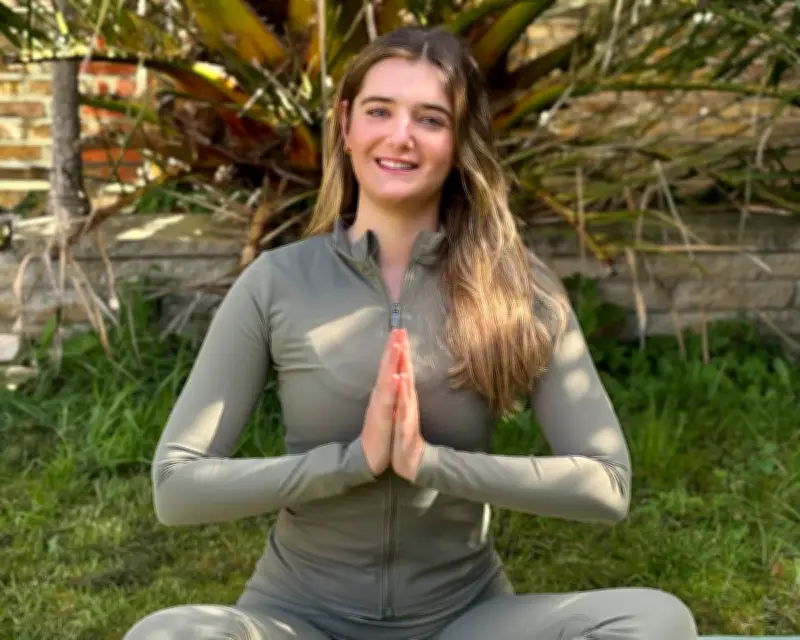
Natasha Livingstone was 13 when a spinal surgeon told her scoliosis would not ruin her life unless she wanted to become a bikini model. The comment stung and made her feel ashamed of her condition, which she had previously experienced only as pain. She declined a risky operation to fuse metal rods with her spine, but for years regretted that decision.
Her scoliosis, a thoracolumbar curve between the chest and lower back, tilted her pelvis and made her hips and legs uneven. Her right hip sat higher than the left, causing her torso to slant like the Leaning Tower of Pisa. The condition created an hourglass shape on the right of her waist and a straight line on the left. Like 80% of cases, the cause was unknown and could not have been prevented by posture, exercise or diet.
A Lifetime of Insecurity
Under loose clothes, the curvature was not hugely obvious, but summer shorts and miniskirts sat lopsidedly on her hips and thighs. Bikinis were the worst: delicate string bottoms slid down the straight side of her waist, requiring a tight, one-sided bow that dug into her flesh. The surgeon's words echoed every time she tied that bow. Social media's filtered silhouettes and her friends' symmetrical waists made her feel lesser and unworthy. The insecurity led to disordered eating and an unhealthy relationship with her body.
She sought validation through academic performance, becoming like Will from The Inbetweeners, forsaking sleep, food and personal hygiene because, as she joked, 'You can't revise in the shower, Jay, the books get wet!'
Yoga as Salvation
A therapist recommended yoga for stress. The first class was love at first sun salutation. The calm, rhythmic movement soothed her frazzled nerves and quieted her mental to-do lists. She found chaturangas, twists and hip-openers far more enjoyable than physiotherapy exercises. Appointments with osteopaths and physios had become routine, with worksheets instructing monotonous daily movements that were strenuous, joyless and time-consuming. Neglecting them meant pain.
Yoga accompanied her through university, the pandemic and a career in journalism. Whether work took her to refugee camps on the Ukrainian border or following King Charles on his state visit to Kenya, her days ended with a downward dog. Armed with YouTube and a mat—or sometimes just a hotel carpet—she could practise anywhere.
Becoming an Instructor
In 2025, she took a break from journalism and yoga was the antidote to burnout. She decided to qualify as an instructor. Her training prized consistent practice above all else. She learned that yoga, originating more than 5,000 years ago in ancient India, was predominantly a philosophical study, with postures developed later to prepare the body for meditation. Seen through this lens, yoga is a lifelong ritual. You work at it day by day.
Thanks to her scoliosis, she had practised daily for more than a decade. For the first time, she felt gratitude towards her wonky spine for welding her to a revered tradition with innumerable mental and physical benefits. Instead of feeling frustrated that certain poses were 'unavailable to me,' the training helped her view scoliosis in a new light: as her motivator, her reason to get on the mat.
Now a qualified instructor at a hot yoga studio, she is free of shame. She has even updated her website with photos of her Lycra-clad body in various postures. 'It's not quite bikini modelling, but it's close enough for me,' she says.