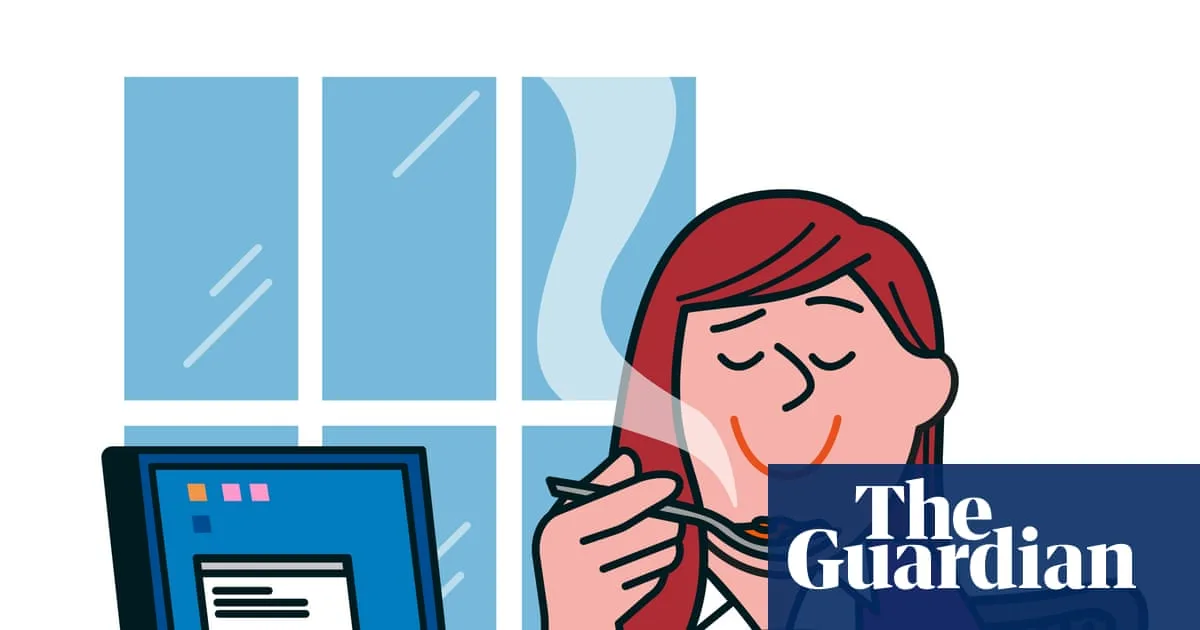
The Perfect Lunch Break: Why Leaving Your Desk Boosts Productivity
How to perfect your lunch break away from your desk

For many British workers, the concept of a proper lunch break has become a distant memory, replaced by sad sandwiches hastily consumed while staring at a screen. However, a growing body of evidence and expert opinion suggests that reclaiming this midday pause is not a luxury, but a critical component of a healthy, productive workday.

The Science Behind Stepping Away

Neuroscientists and occupational psychologists are clear: the brain is not designed for sustained, uninterrupted focus. Professor Barbara Oakley, co-author of 'Learning How to Learn', emphasises that our neural pathways need downtime to consolidate information and solve complex problems. By remaining chained to your workstation, you inhibit this essential cognitive process.

This is supported by research from Hult International Business School, which found that employees who take a proper lunch break report significantly higher levels of job satisfaction and lower levels of burnout. The act of physically leaving your desk sends a powerful signal to your mind that it is time to shift gears, reducing stress and preventing the dreaded afternoon slump.

Crafting Your Ideal Midday Reset

So, what constitutes the perfect lunch break? It is less about the duration and more about the quality of disconnection. Alex Pang, author of 'Rest: Why You Get More Done When You Work Less', advocates for a break that involves a complete change of scenery and activity.

Key strategies include:

  • Get Outside: A short walk, even for ten minutes, provides natural light, fresh air, and gentle exercise, all proven mood enhancers.
  • Change Your Environment: Simply moving to a staff canteen, a park bench, or a different room breaks the association between your desk and constant work.
  • Engage in 'Deep Play': Pursue a briefly absorbing, non-work activity. This could be reading a novel, doing a crossword, or listening to a podcast. The goal is mental immersion in something enjoyable.
  • Socialise Mindfully: Having lunch with colleagues can be restorative, but the conversation should ideally steer clear of shop talk to provide a genuine mental break.

Nutritionist Eve Kalinik also stresses the importance of mindful eating. Eating away from your screen allows you to tune into hunger and fullness cues, improving digestion and satisfaction with your meal.

Overcoming the Cultural Hurdles

Despite the clear benefits, many UK office cultures still implicitly or explicitly discourage proper breaks. The pressure to be seen as constantly busy, or the fear of missing out on important communications, keeps employees rooted to their spots.

Experts suggest a two-pronged approach: individual initiative and organisational change. Workers can start by blocking out their calendar for a 30-minute lunch slot and treating it with the same importance as a meeting. Managers and company leaders play a crucial role by modelling the behaviour themselves and actively encouraging their teams to take proper breaks, recognising that this leads to better output and fewer errors in the long run.

The conclusion is inescapable. Seizing your lunch break is a powerful, accessible tool for enhancing wellbeing, sparking creativity, and safeguarding your long-term productivity. In an era of constant connectivity, the most radical and beneficial act might just be to step away, even for just half an hour, and truly pause.