
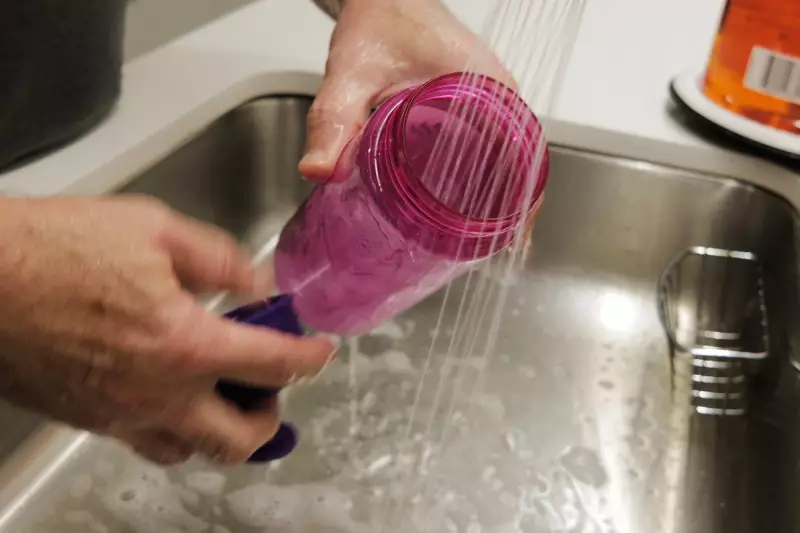
That trusty reusable water bottle you carry everywhere might be doing more harm than good if it's not cleaned regularly. While many assume that filling it with pure water keeps it clean, experts warn that all types of reusable bottles become grubby and require consistent washing to prevent health issues.
The Hidden Dangers in Your Water Bottle
Germs from your mouth and hands transfer to the bottle with every sip and touch, creating an unseen ecosystem of microbes. Nurse practitioner Michele Knepper from the University of Pittsburgh Medical Centre emphasises that despite seeming mundane, this issue is "extremely important."
These containers feature numerous tiny, hard-to-reach nooks and crannies that become perfect breeding grounds for mould, bacteria, and other microorganisms when left unscrubbed. The consequences can range from stomach aches and itchy throats to exacerbating allergies and asthma symptoms.
How to Properly Clean Your Bottle
Experts confirm that material doesn't matter – reusable metal, plastic, and glass bottles all develop germs. However, plastic bottles pose additional risks as they're more likely to develop internal scratches where microbial life can thrive.
The recommended cleaning routine is straightforward: use a sponge or bottle brush with warm, soapy water to scrub inside and out, rinse thoroughly, and allow to dry completely. For straws and tight crevices, narrow or pipe cleaner-shaped tools work effectively.
For deeper cleaning, scientists suggest using dishwasher-safe bottles, dissolving denture or retainer-cleaning tablets overnight, or scrubbing with vinegar or baking soda solutions. Dr Mike Ren, a family medicine physician at Baylor College of Medicine, notes that while daily cleaning might seem excessive, "it's not difficult to just wash your water bottle."
Establishing Your Cleaning Routine
Most experts recommend a simple soapy water clean daily with a deeper clean weekly. If daily washing feels excessive, Dr Ren suggests aiming for at least every other week while maintaining good habits like rinsing the mouthpiece during refills.
The cleaning urgency increases significantly if you use your bottle for sugary drinks like protein shakes or exercise beverages, as the residue provides an ideal feeding ground for bacteria.
Regarding water changes, experts disagree on frequency. Some recommend dumping dregs with every refill, while others suggest every few hours. Dr Ren believes leaving water overnight is likely acceptable but advises emptying old water at least every few days, noting that "guidelines are guidelines – everyone's going to do it a little bit differently."
Ivy Sun, a hospitality expert at Georgia Southern University who has studied water bottle contamination, washes her and her children's bottles with soapy water daily. She describes this as "a very small step that we do, but it can largely help with our health."
Critical warnings include never drinking from bottles with visible mould or strange odours, and avoiding refilling disposable plastic bottles due to chemical leaching risks and their propensity for germ-harbouring cracks.