When a mother receives a breast cancer diagnosis, it is a devastating blow for any family. But what happens when her daughter is diagnosed just months later? This is the stark reality faced by two families in the United States, whose stories reveal the profound psychological toll and complex dynamics of navigating cancer together.
A Double Blow: Celebrations Turned to Fear
In November 2022, Genna Newman Freed's family gathered to celebrate her mother Julie Newman's final round of radiation treatment for breast cancer. Yet Freed, then 30, carried a heavy secret. Prompted by her mother's illness, she had undergone a mammogram which revealed a suspicious spot. Just hours after the family celebration, she quietly returned for further scans.
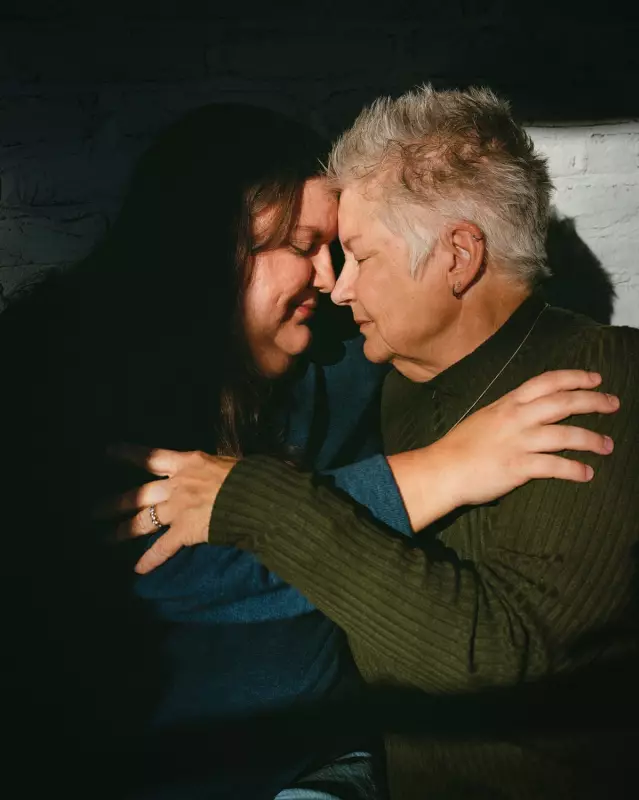
On 9 December 2022, Freed learned she had ductal carcinoma in situ (DCIS), an early form of breast cancer. Telling her mother, who was only three months from her own diagnosis, was agonising. "It was like a kick in the stomach," says Newman, now 68. The roles swiftly reversed, with Newman pivoting from patient to caregiver, helping with Freed's young daughter after her double mastectomy, before Newman herself required a second lumpectomy.

The Genetic Link and Familial Risk
While most breast cancers occur without a family history, having a first-degree relative like a mother or daughter with the disease nearly doubles an individual's risk. Dr Nan Chen, a breast medical oncologist, explains that only 5-10% of cases are directly hereditary, caused by a known gene mutation like BRCA1 or BRCA2 passed from parent to child. A further 15-20% are considered "familial," with a family link but no identified specific gene.
Freed inherited a BRCA-2 mutation from her father's side, a fact that now causes her to worry about her five-year-old daughter's future. Similarly, Janet Parks's diagnosis led her daughter, Alicia Schlossberg, to get tested. Schlossberg discovered she had inherited the BRCA-2 mutation, facing a 45-85% risk of developing breast cancer by age 70. "I'm obviously very nervous that this is going to be their reality someday," Schlossberg says of her own two young daughters.
Different Generations, Divergent Experiences
Being diagnosed in your thirties versus your sixties is "emotionally and psychosocially a completely different experience," says Dr Chen. Younger women often face more aggressive cancers and tougher treatments, alongside unique life-stage challenges.
Lindsey Baker was 35, single, and focused on her career when diagnosed in 2020. Her mother, Shelley Pozez, was diagnosed a week before Baker's double mastectomy in 2021. Baker's treatment forced her into early menopause after ovary removal, a fertility sacrifice her retired mother did not face. Baker also worked through all 16 rounds of chemotherapy.
The generational divide extends to openness. Freed is candid about her experience and her aesthetic flat closure after mastectomy, while she notes her mother would be more private. Sylvia Morrison, 61, initially mirrored her own mother's stoicism during her 2011 diagnosis. It was only when her daughter Monisha Parker was diagnosed at 28 and started a public blog that Morrison saw another way. "I'm still dealing with the mental part of breast cancer," Morrison admits.
The Complex Balance of Grief and Connection
Clinical psychologist Dr Neha Goyal notes that such dual diagnoses can create "a sense of loss of control" for entire families, but can also become "a source of even stronger connection." For Allison Mertzman and her mother Susan Pearlman, diagnosed in quick succession in 2022, it made them "teammates." They traded advice and encouragement, forging an even closer bond.
For Freed, the experience yields conflicting emotions: gratitude for early detection and her mother's support, but grief for her lost breasts, time with her child, and a vanished sense of normalcy. For Janet Parks, there is a painful dichotomy: her own cancer was devastating, but it prompted the screening that likely saved her daughter's life. "I see it as a blessing, honestly," Parks says.
As Schlossberg poignantly reflects on her mother's ordeal: "I hate that my mom had to go through this... But it really did save my life."