Just a few extra minutes of movement each day could significantly extend your life, according to a major new international study. The research, published in The Lancet, provides compelling evidence that small, manageable increases in physical activity deliver powerful health benefits.
The Science Behind Short Bursts of Activity
The study, led by academics from the Norwegian School of Sports Sciences, analysed data from nearly 95,000 middle-aged and older adults in the UK Biobank, plus 40,000 participants from Norway, Sweden, and the US. The findings are striking for their simplicity.
Adding just five minutes of moderate-to-vigorous intensity exercise daily could prevent 6% of deaths among the least active people. For the general population, that small daily increase was linked to a 10% reduction in mortality risk.

Furthermore, figures from the UK cohort showed that reducing daily sedentary time by 30 minutes could cut deaths by 4.5% among most adults, excluding those already highly active. This underscores that both moving more and sitting less are crucial for long-term health.
Five Equipment-Free Exercises for a Longer Life
With this research in mind, fitness expert Tara Riley, a pilates, barre, and strength trainer, shares five simple exercises designed to be seamlessly integrated into any routine, requiring no special equipment.
1. Squats to Reactivate Your Body
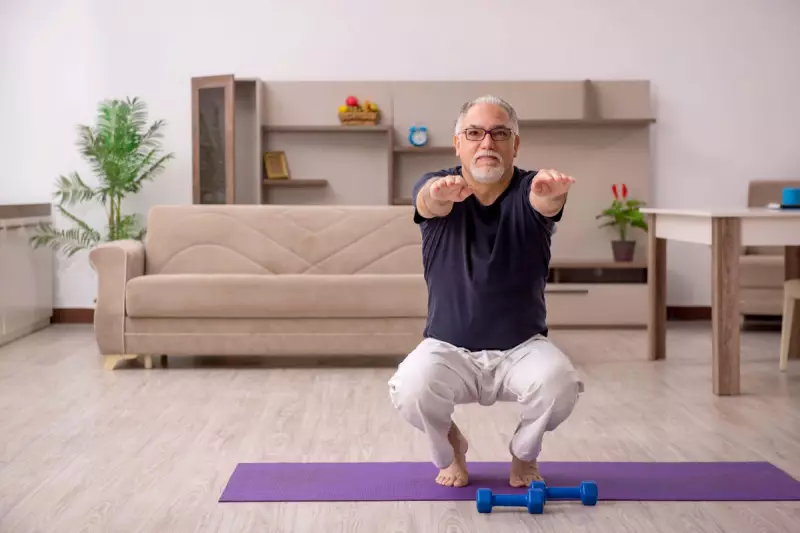
"Squats are fantastic, especially if you've done lots of sitting," says Riley. They reactivate the glutes and legs. For a standard squat, stand with feet hip-width apart, send your hips back, and shift weight into your heels. Beginners can hover over a chair for guidance, while advanced exercisers can add small pulses at the bottom of the movement to increase intensity.
2. Plank Variations for Core Stability
Planks build full-body strength and stability through the shoulders, hips, and core. Riley suggests starting on hands and knees with knee taps—hovering knees off the floor and tapping them down—to build endurance. As strength improves, hold the hover for 20 seconds. Those with wrist discomfort can perform the exercise on their forearms.
3. Hip Mobility for Joint Health
To counteract tightness from prolonged sitting, Riley recommends hip circles. Stand with a hand on a surface for support. Lift one leg straight forward 15-20 times, then repeat lifting it backwards and out to the side. Finally, make large circles with the knee, moving forward, out to the side, and back. This mobilises and strengthens the hip joint.
4. Tabletop Toe Taps for a Stronger Core
This exercise combats hunching by strengthening the core. Lie on your back with legs in a tabletop position (knees bent over hips, shins parallel to the floor). Slowly tap one toe down at a time, returning to the start, without allowing your back to arch. For a greater challenge, keep your head curled off the floor during the movement.
5. Shoulder Glides for Posture and Mobility
Stand with your back against a wall, with your head and shoulder blades touching it. Reach both arms overhead so the backs of your hands also touch the wall. Slowly draw your elbows down towards your waist and then back up, trying to maintain contact with the wall throughout. This improves shoulder mobility and upper back health.
Integrating Movement into Everyday Life
The overarching message from the research is profoundly encouraging: you don't need marathon gym sessions to reap significant health rewards. Consistently weaving short, focused bursts of activity into your day—whether it's a set of squats while waiting for the kettle to boil or a minute of shoulder glides between meetings—can contribute meaningfully to longevity. The key is regularity and making these micro-workouts a habitual part of your daily life.