

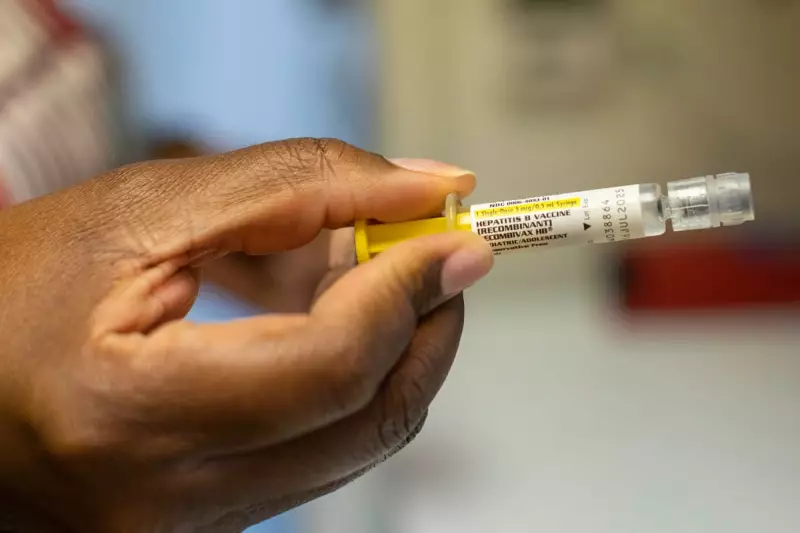
A controversial US-funded medical study that planned to withhold a proven hepatitis B vaccine from thousands of newborns in Guinea-Bissau has been officially cancelled, following intense international criticism over its ethical design.
Ethical Outcry Halts $1.6 Million Study
The $1.6 million study, funded under the purview of US Health and Human Services Secretary and longtime vaccine sceptic Robert F Kennedy Jr, was halted after senior officials at the Africa Centres for Disease Control and Prevention (Africa CDC) intervened. Yap Boum, a senior Africa CDC official, confirmed the cancellation at a press conference, stating the trial's design presented a "big challenge" and raised critical ethical questions.
"It’s of importance for Africa CDC to have evidence that can be translated in policy, but this has to be done within the norm. So we are glad that at this point the study is being cancelled," Boum said. The trial was slated to begin on 5 January.

A 'Damaging' Design and Tuskegee Comparisons
The study, led by Danish researchers Peter Aaby and Christine Stabell Benn, intended to involve 14,000 newborns. Half would receive the hepatitis B vaccine at birth, while the other half would not, ostensibly to study the vaccine's "non-specific effects." Critics argued this meant knowingly depriving 7,000 children of a life-saving intervention in a country where about 11% of children under one have hepatitis B.
Prominent US physician Dr. Paul Offit likened the trial to the infamous Tuskegee experiment, calling its cancellation "extremely heartening." "This administration did not see people in Africa as valuable," Offit stated. "You can’t treat children like this... We were able to stand up for them."
Boghuma Titanji, an assistant professor at Emory University, labelled the proposed study "damaging," arguing it exploited vaccine scarcity. "You are not solving the problem. You’re actually being part of the problem," she said.
Ongoing Conversations and a Path Forward
While officials in Guinea-Bissau—a nation that underwent a coup in November 2023—initially suggested the trial might still proceed, Africa CDC clarified it would only move forward if completely redesigned. Boum noted there are "still some conversations happening" between Guinea-Bissau and US officials to ensure any future study complies with ethical regulations.
The controversy also cast a spotlight on the Danish researchers' prior work. Their earlier studies on vaccine effects have been questioned by other scientists. A new preprint analysis by other Danish researchers found no statistically significant effects for the non-specific benefits they claimed, though it has not yet been peer-reviewed.
Professor Titanji agreed on the need for more randomised controlled trials in Africa but stressed they "should be led by African scientists and powered by questions from Africans." The cancellation, she said, represents "a win for advocacy and upholding the ethics of research" and shows African institutions are growing stronger in pushing back against exploitative studies.
The US Department of Health and Human Services (HHS) did not respond to requests for comment on why the trial was cancelled. The lead researchers, Aaby and Stabell Benn, who have close ties to Trump-era health officials, previously disputed ethical criticisms of their work but did not comment on the cancellation.






