

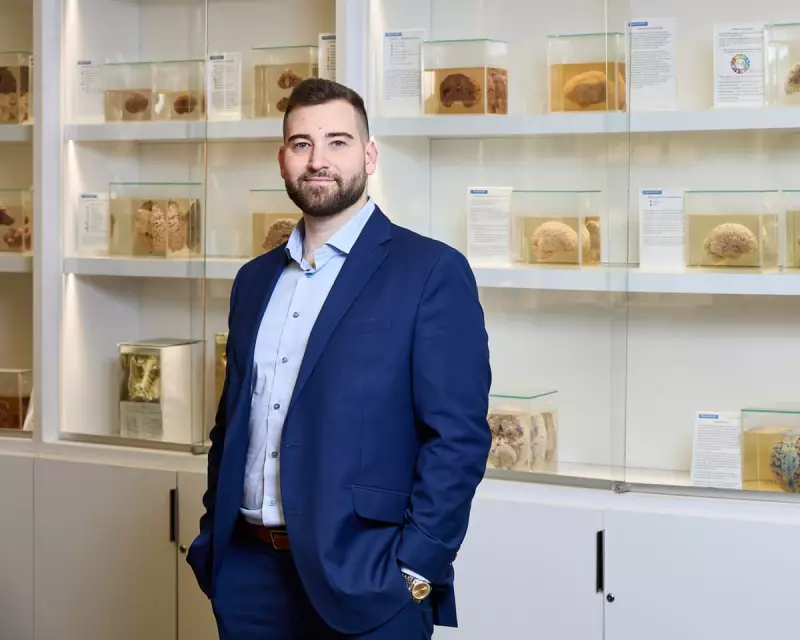
In an era where screens often replace faces, a leading neuroscientist is sounding a powerful alarm: our profound need for human connection is not just a feeling, but a biological imperative for survival. Dr Ben Rein, a Stanford-affiliated researcher and science communicator, argues that socialising is as crucial as vitamin D or sleep, with stark data showing it can dramatically alter our health outcomes.
The Shocking Health Toll of Isolation
Dr Rein's work, detailed in his new book Why Brains Need Friends: The Neuroscience of Social Connection, presents relentless evidence of isolation's dangers. He points to a pivotal study of over 300,000 people, which found those with weaker social relationships had a 50% higher likelihood of dying within a seven-and-a-half-year period. "It's horrifying," Rein admits.
This isn't just a human phenomenon. Research on mice, where scientists induced identical strokes, found that socially isolated mice suffered significantly worse outcomes. "They had more brain damage, were less likely to recover, and more likely to die," Rein explains. The mechanism behind this? A destructive cycle of chronic stress and inflammation.

Popping the Hood: The Brain Chemistry of Loneliness
Rein's mission is to "pop the hood" on our social brains. When we are isolated, he says, it triggers an evolutionary stress response. "The body's alarm is going off and saying: 'Hey, why are you on your own? This is dangerous. Find your community.'" This leads to a sustained release of the stress hormone cortisol.
Initially, cortisol suppresses inflammation to help us face immediate threats. However, with chronic loneliness, the stress doesn't abate, and cortisol loses its effectiveness. "When you have this long-term, chronic stress response, it can lead to a buildup of inflammation," Rein states. This systemic inflammation then taxes our organs and impedes healing.
The mouse study proved this link: when researchers suppressed the inflammation caused by loneliness, the isolated mice no longer suffered worse strokes than their socialised counterparts.
The Healing Power of Oxytocin
The converse is powerfully true. Positive social interaction triggers the release of oxytocin, which Rein calls the "MVP of social bonding." This hormone is anti-inflammatory, suppresses stress, and promotes healing. Its benefits are measurable: a 2013 study found married people, who typically have higher oxytocin levels, showed better survival rates for cancer.
Evolution has hardwired us to seek this reward. When oxytocin is released during connection, it stimulates both serotonin (linked to mood) and dopamine (the brain's reward signal). "The two together are incredibly powerful at making us feel good," Rein notes, creating a natural incentive to be social.
Why We Resist Connection and How to Improve It
Despite the benefits, our brains often hold us back through a built-in "social anxiety." We consistently underestimate how much we'll enjoy an interaction and how much others like us—a phenomenon known as the "liking gap." Rein attributes this to ancient cautions designed to protect our place within a tribe.
This natural hesitation is compounded by the modern prevalence of poor-quality digital interaction. Social media use is correlated with higher anxiety, depression, and loneliness. "Virtual disengagement," where cues like body language and tone are absent, may fuel online hostility. One simple mitigation? Use more emojis, as they can produce similar brain responses to real human faces.
For enriching real-world connection, Rein offers practical advice: wherever possible, "upgrade" your interactions. Choose a call over a text, a video call over a call, and in-person meetings above all. He also highlights the profound bond with pets: dog owners experience a mutual oxytocin rise with their pets and have lower cortisol and cardiovascular risks.
A Prescription for a Healthier Society
While Rein is an extrovert, he stresses there's no one-size-fits-all approach. Everyone, however, benefits from some degree of social connection and suffers from its absence. His argument is both pragmatic and idealistic. By understanding that connection is a health necessity, we gain a personal incentive to reach out.

"When you sleep well or go to the gym, it doesn't make the world a better place," he concludes. "But when you're nice to people in your community, it actually does make a difference." In explaining the neuroscience, Rein hopes to provide not just a personal health hack, but a pathway to healing our fractured social world.





