
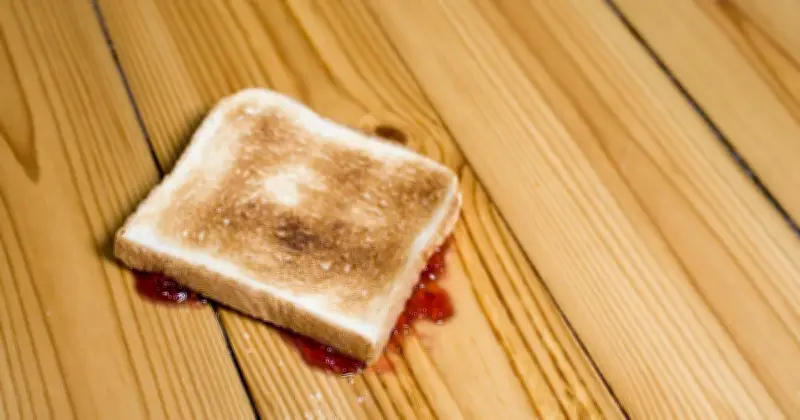
Scientists have finally put an end to the long-running debate over the so-called 'five-second rule' for food dropped on the floor. The rule, which suggests that food is safe to eat if picked up within five seconds, has been a common household belief for generations.
What the Research Shows
John Tregoning, professor of vaccine immunology at Imperial College London, highlighted three key studies that examined the rule. In the first study, bread was dropped on various surfaces—including tile, carpet, steel, and wood—that had been coated with bacteria. The bacteria transferred to the bread almost immediately.
Another study involved dropping cooked sausage onto contaminated surfaces. Even when the surface had been contaminated hours earlier, bacteria still jumped onto the sausage upon contact.
Key Findings from a 2007 Study
A 2007 study published in the National Library of Medicine, titled 'Residence time and food contact time effects on transfer of Salmonella Typhimurium from tile, wood and carpet: testing the five-second rule,' conducted three experiments. It found that more than 99% of bacteria transferred to a piece of bologna sausage after just five seconds on a contaminated tile.
The authors wrote: 'Salmonella Typhimurium can survive for up to 4 weeks on dry surfaces in high-enough populations to be transferred to foods and can be transferred to the foods tested almost immediately on contact.' They added: 'This study demonstrated the ability of bacteria to survive and cross-contaminate other foods even after long periods of time on dry surfaces, thus reinforcing the importance of sanitation on food contact to minimize the risk of foodborne illness.'
Implications for Medical Settings
A third study examined the five-second rule in the context of surgery. It found that surgeons who dropped items on the floor would need to wash them thoroughly before reuse.
Professor Tregoning concluded: 'If you do drop food on the floor, I think you have to accept it's gone. Rinsing it with water won't be enough to guarantee it's clean.'
This research debunks the popular myth and reinforces the importance of food hygiene to prevent illness.




