Every dog owner in the UK cherishes the belief that their four-legged friend is the most adorable. However, new scientific research has pinpointed which breeds genuinely possess the friendliest and happiest-looking faces, and the findings might come as a surprise to many.
The Science Behind the Canine Smile
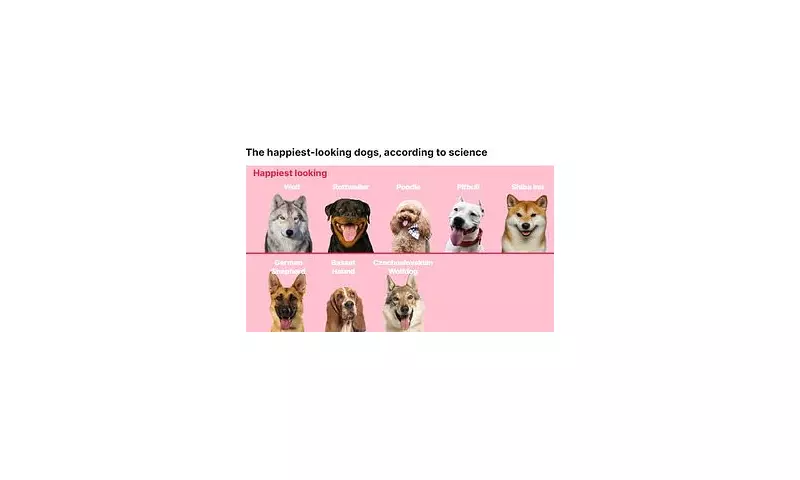
According to experts, some breeds traditionally perceived as more intimidating actually have the happiest expressions. German Shepherds and Rottweilers have been identified as leading the pack. The reason lies in their facial anatomy; these more wolf-like dogs can utilise a greater number of facial muscles to form expressions, making them appear more joyful to human observers.
In contrast, more stoic breeds such as the Shih Tzu might employ only half as many muscle groups during play, resulting in a less expressive demeanour. Dr Veronica Maglieri, an ethologist from the University of Pisa, explained to the Daily Mail that these expressive dogs 'use a larger number of facial muscle movements during play, producing a more elaborate and visually expressive play face.'

How the Research Was Conducted
Dr Maglieri's study focused on the relaxed, open-mouthed expression that dogs and wolves use to signal playful intent, a key communication tool for keeping interactions friendly. The research team meticulously analysed videos of 210 dogs across 29 popular breeds, cataloguing the movement of specific muscles and muscle groups.
While all dogs created the same fundamental play expression, the degree of muscular involvement varied dramatically. The most expressive breeds could engage up to seven different muscle groups to form their 'play face'. At the other end of the spectrum, the Beagle was found to use only two: the lower lip depressor and the mouth stretch.
The findings categorised breeds into four groups based on expressiveness during play:
- Happiest: Rottweiler, Poodle, Pitbull, German Shepherd, Basset Hound, Czechoslovakian Wolfdog, Border Collie, Shiba.
- Happier: Weimaraner, Newfoundland, Greyhound, French Bulldog, English Bulldog, Dobermann, Chihuahua.
- Less Happy: Siberian Husky, Labrador Retriever, Barzoi, Cocker Spaniel.
- Least Happy: Australian Shepherd, Jack Russell, Sharpe.
Implications for Canine Communication and Human Perception
Dr Maglieri emphasised that breeds were not selectively bred to look happier, but 'changes in facial structure can incidentally affect how expressive their play face appears.' This expressiveness has a direct impact on how humans interpret a dog's mood. A smile in humans involves opening the mouth, pulling back the lips, and raising the cheeks. When we see a similar configuration in dogs, we naturally interpret it as happiness.
The critical takeaway is that a more expressive face does not mean a dog is inherently happier. A Beagle may be just as joyful as a German Shepherd; it simply has less muscular capacity to show it. This raises a broader question about canine communication: could limited facial movement in some breeds hinder their ability to communicate intent clearly to other dogs?
The research suggests the play face is a vital, widespread social signal, even understood across species. Dr Maglieri noted that dogs use the expression when playing with horses, and the horses respond in a manner resembling contagious laughter in humans.
This study sheds new light on the complex results of 20,000 to 40,000 years of domestication, which began with wolves living on the outskirts of human camps. The process, which created over 300 distinct breeds from a single canine species, has inadvertently shaped not just their bodies and behaviours, but also the very tools they use to communicate joy and playful intent.