

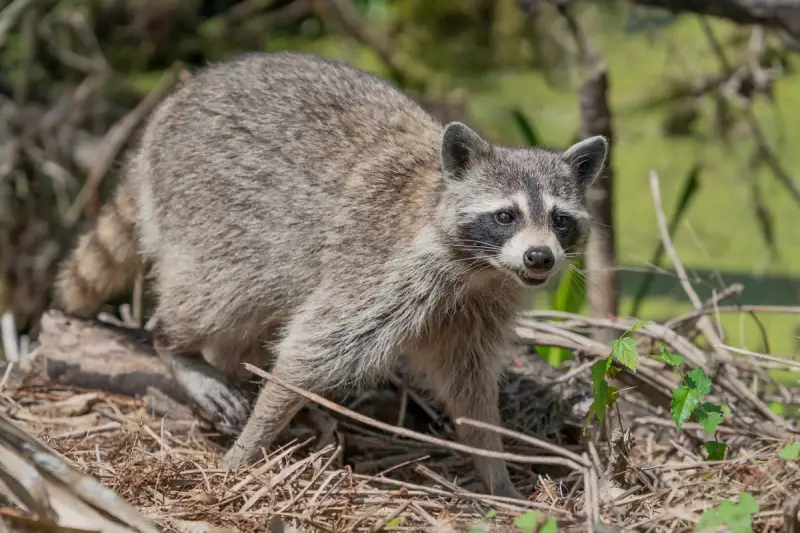
The tale of a raccoon that broke into a Virginia liquor store in December 2025, sampled the wares, and passed out on the bathroom floor, captivated the world. For neuroscientist Kelly Lambert, however, the viral story resonated on a deeper, professional level.
From Lab Staple to Ceiling Escape Artist
Professor Lambert's laboratory, where she began studying raccoon brains some 15 years ago, sits just blocks from the Ashland, Virginia, store that hosted the inebriated bandit. While the species, Procyon lotor, is famed for its cleverness and problem-solving, it remains surprisingly understudied in neuroscience.
In the United States, laboratories use over 100 million rodents like mice and rats annually. Their ease of breeding and adaptability to confinement made them the practical choice for researchers. Yet, raccoons were once leading candidates for studies on intelligence. That changed when scientists encountered their formidable cognitive abilities; in one notable study, every raccoon participant famously escaped via the laboratory ventilation system. As Professor Lambert wryly notes, in her decades of studying rats, none have ever vanished into the ceiling.

The Remarkable Raccoon Brain: Neurons and Neurobiology
So, what makes the raccoon mind so special? In collaboration with neuroscientist Suzana Herculano-Houzel, Lambert's team at the University of Richmond made a startling discovery. Raccoon brains pack a neuron density comparable to primates, meaning a brain scaled to human size would contain a roughly similar number of neurons.
Furthermore, they possess specialised, fast-conducting brain cells known as von Economo neurons, found in humans, great apes, and only a few other large-brained mammals. In raccoons, these neurons are located in the insula, a region processing internal body states, but not in the anterior cingulate involved in emotional regulation. This unique neural architecture may explain their potent mix of ingenious problem-solving and impulsive, sometimes risky, decision-making.
Additional research with ecologist Sara Benson-Abram's team found that raccoons with superior cognitive abilities had more neural cells in the hippocampus, a key area for learning and memory. This mirrors findings in humans, such as London taxi drivers with their detailed mental maps of the city.
Beyond Anthropodenial: What We Can Learn
Lambert argues in her forthcoming book, "Wild Brains," that to truly understand raccoon intelligence, we must observe them in their chosen environments, not confined to simple laboratory spaces. These "living laboratories" could unlock the secrets of a remarkably sophisticated mind.
The global fascination with the "drunken raccoon" stemmed from a sense of familiarity. People saw a reflection of human curiosity and impulsivity. This touches on the concept of "anthropodenial" – the mistaken assumption that animals cannot share cognitive or emotional capacities with humans simply because they are not human. Moving beyond this, while maintaining scientific rigour, may offer profound new insights into both raccoon and human cognition.
Ultimately, the story of the tipsy trespasser is more than a humorous anecdote. It highlights a wild neighbour with a brain far more complex and intriguing than often assumed, offering a unique mirror through which to study the wonderfully complex human brain.






