Ancient Wooden Artefacts Rewrite History of Human Tool Use
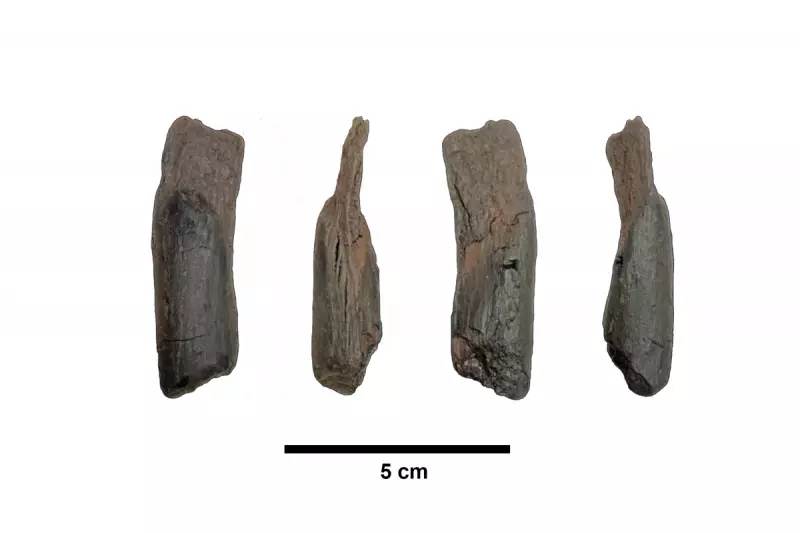
In a groundbreaking archaeological discovery, researchers have uncovered the earliest known examples of wooden hand-held tools, believed to be an astonishing 430,000 years old. The remarkable find was made at the Marathousa 1 site in Greece's central Peloponnese region, near Megalopolis, by a team led by the University of Reading. This discovery significantly predates previous evidence of similar wooden tool use by approximately 40,000 years, offering new insights into early human technological capabilities.
Exceptional Preservation at Lakeside Site
The Marathousa 1 site, first identified in 2013, sits on the edge of what was once a substantial lake. This unique environment provided the special conditions necessary for wooden objects to survive across hundreds of millennia. The research team discovered two wooden artefacts amidst a context rich with archaeological evidence, including stone tools and animal remains that indicate the location was used for butchering activities. Previous excavations at the site have revealed elephant bones alongside remains of turtles and birds, painting a vivid picture of ancient ecosystems.
Detailed Analysis Reveals Human Craftsmanship
Dr Annemieke Milks from the University of Reading, a leading authority on early wooden tools, explained the meticulous examination process. "Unlike stones, wooden objects need special conditions to survive over long periods of time," she noted. "We examined all the wooden remains closely, looking at their surfaces under microscopes. We found marks from chopping and carving on two objects – clear signs that early humans had shaped them."

The primary artefact is a section of alder tree trunk displaying unmistakable signs of intentional shaping and wear patterns. Researchers believe this tool was likely used for digging at the lake's edge or for removing tree bark. A second, smaller piece from either a willow or poplar tree also exhibits evidence of working and potential use, though its specific purpose remains uncertain.
Middle Pleistocene Context and Significance
These tools date to the Middle Pleistocene period, approximately 774,000 to 129,000 years ago, a crucial phase in human evolution. Professor Katerina Harvati from the University of Tübingen in Germany, who leads the long-term research programme at Marathousa 1, emphasised the importance of this era. "The Middle Pleistocene was a critical phase in human evolution, during which more complex behaviours developed," she stated. "The earliest reliable evidence of the targeted technological use of plants also dates from this period."
The discovery followed careful examination of worked stones and bone artefacts at the site, which highlighted the diverse skills and activities of its ancient inhabitants. This prompted researchers to take a closer look at associated wooden finds, leading to this significant breakthrough.
Comparative Archaeological Context
While older wooden material exists – notably a 476,000-year-old piece from Kalambo Falls in Zambia used as structural material – the Greek finds represent the oldest known purpose-made wooden tools. Dr Milks contextualised the discovery: "The oldest wooden tools come from places such as the United Kingdom, Zambia, Germany, and China and include weapons, digging sticks, and tool handles. However, they are all more recent than our finds from Marathousa 1."
This stands in contrast to stone tool use, which dates back 3.3 million years, and regular bone tool use from 1.5 million years ago. The comparative rarity of ancient wooden tools underscores their vulnerability to decay without exceptional preservation conditions.
Carnivore Interactions and Preservation Conditions
During their investigation, the team made a third discovery – a larger alder trunk fragment displaying grooved patterns. Analysis revealed these markings resulted not from human activity but from claw marks left by a large carnivore, possibly a bear. This finding adds another layer to our understanding of the ancient landscape.

Professor Harvati highlighted the significance: "This shows once again how exceptionally good the conditions at the Marathousa 1 site are for preservation. And the fact that large carnivores left their mark near the butchered elephant alongside human activity indicates fierce competition between the two."
Broader Implications for Archaeology
The research, published in the prestigious journal PNAS, represents the first evidence of such ancient wooden tools from southeastern Europe. It challenges previous assumptions about technological development and preservation biases in the archaeological record. The exceptional conditions at Marathousa 1 have provided a rare window into organic material use during the Middle Pleistocene, complementing our existing knowledge from stone and bone artefacts.
These discoveries not only push back the timeline for wooden tool use but also demonstrate the sophisticated understanding early humans had of different material properties and their applications in daily survival activities. The find underscores the importance of wetland and lakeside sites in preserving organic materials that would otherwise be lost to time, offering promising directions for future archaeological investigations in similar environments.