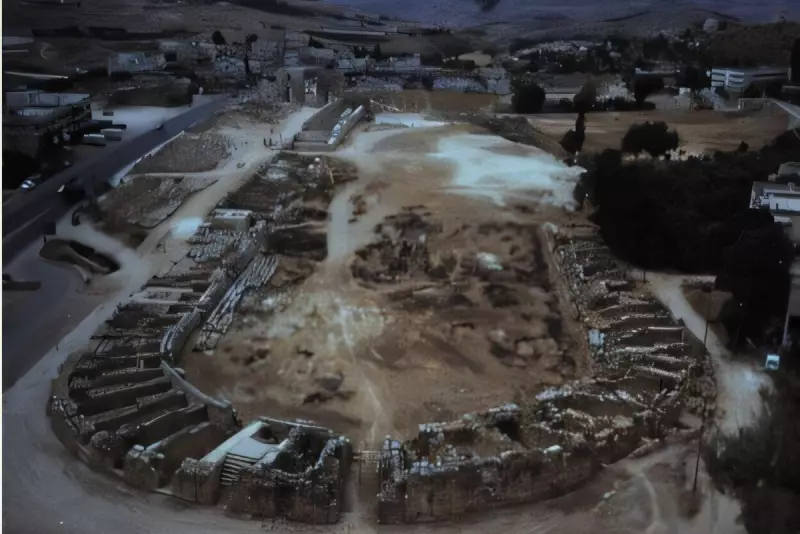
Ancient Roman City's Mass Burial Reveals Desperate Pandemic Response
New archaeological research has uncovered startling evidence about how ancient societies coped with catastrophic disease outbreaks, providing unprecedented insight into humanity's first recorded pandemic. A mass grave discovered in Jordan reveals the desperate measures taken by the Roman city of Jerash during the devastating Plague of Justinian that swept across the Byzantine Empire between 541 and 750 AD.
Burial Capacity Stretched Beyond Limits
Researchers examining the ancient site have revealed that over two hundred bodies were deposited rapidly in succession, layered on top of each other within what appears to have been just days. This represents approximately 1.5 percent of Jerash's estimated population of 15,000 people buried in a single, catastrophic burial episode.
To put this into modern perspective, this would be equivalent to burying 15,000 people simultaneously in a contemporary city of about one million inhabitants. The findings clearly demonstrate how the pandemic pushed the ancient city's burial infrastructure far beyond its normal capacity, creating a crisis situation that would challenge even modern urban centres.

Genetic Confirmation of Pandemic Deaths
Through meticulous analysis of teeth recovered from multiple individuals within the mass grave, researchers have successfully identified the DNA of Yersinia pestis - the flea-borne bacterium responsible for the plague. This genetic evidence confirms that at least five of the buried individuals succumbed to the pandemic, providing crucial biological verification of the historical event.
While historical records have long described widespread plague throughout the Byzantine world during this period, the Jerash site represents the first location where a plague mass grave has been confirmed through both archaeological and genetic evidence. This dual verification makes the discovery particularly significant for understanding ancient pandemic responses.
Revealing Hidden Population Movements
The research has also shed new light on population dynamics within ancient cities, resolving long-standing mysteries about burial patterns and migration. Typically, burial evidence suggests people were born and died in the same location where they were interred, but the Jerash mass grave reveals a more complex reality.
Dr Rays Jiang, a systems biologist from the University of South Florida and study author, explains: "When the plague struck, mobile populations suddenly became concentrated together, allowing long-term patterns of movement to become visible in a single moment. Many buried individuals were part of a mobile population embedded within the broader urban community."
From Pathogen to Human Story
Previous research on the Plague of Justinian has primarily focused on identifying and understanding the causative organism. This new study represents a significant shift toward examining the human experience of pandemic disease.
"The earlier stories identified the plague organism," says Dr Jiang. "The Jerash site turns that genetic signal into a human story about who died and how a city experienced a crisis. We wanted to move beyond identifying the pathogen and focus on the people it affected, who they were, how they lived and what pandemic death looked like inside a real city."
The research, published in the Journal of Archaeological Science, demonstrates how pandemics represent not just biological events but profound social crises. By linking biological evidence from human remains to their archaeological context, researchers can now better understand how disease intersected with daily life, movement patterns, and social vulnerability in ancient urban environments.
This groundbreaking study provides the first direct evidence of deaths on such a large scale during the Plague of Justinian period, offering valuable insights that resonate with contemporary pandemic experiences and highlighting the enduring challenges societies face when confronted with catastrophic disease outbreaks.