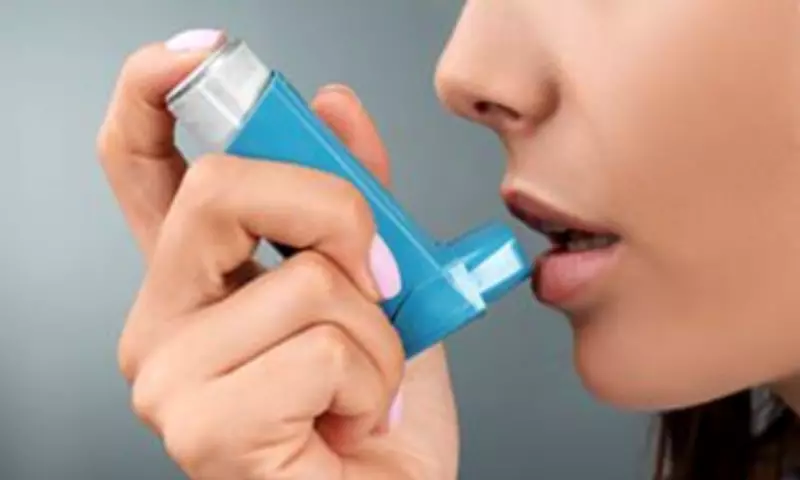
Health officials are calling on all providers to move away from prescribing traditional blue inhalers to asthma patients, in a life-saving shift in how the condition is treated. This change follows scientific discoveries that the little blue pump, once relied on by millions, can actually worsen the condition.
Understanding Blue Inhalers
Medically known as short-acting beta 2 antagonists (SABA), blue inhalers work to relieve symptoms such as wheezing, coughing, and shortness of breath. Crucially, they do not help prevent symptoms. As such, these inhalers are not intended for daily use. According to the NHS, overuse is linked to a higher risk of asthma attacks, hospitalisations, and death. In 2024-25 alone, nearly half of all blue inhaler users in England were prescribed more than two inhalers, a number experts deem concerning.
Dr Amina Al-Yassin, clinical lead for children and young people's services at Brent Integrated Care Partnership, explains: 'They make people feel better, but only briefly. We know now that over time they are likely to make asthma worse. Seeing a blue inhaler used alone is now a dangerous sign to me. This simple intervention can be life-changing and, in some cases, literally save a life.'

New Guidelines and Combination Inhalers
New guidelines published by the National Institute for Health and Care Excellence (NICE) and the British Thoracic Society in 2024 state that patients aged 12 and over who are newly diagnosed with asthma should be prescribed a combination inhaler. The same applies to existing patients who need additional treatment, marking a definitive move away from the traditional blue inhaler. These new inhalers combine a steroid with a longer-acting beta 2 antagonist medicine called formoterol in a single device. Rather than just treating symptoms, combination inhalers work by treating the underlying inflammation that can trigger flare-ups.
Under the latest guidelines, patients will now be offered an anti-inflammatory reliever (AIR) inhaler to be used only when symptoms appear. Those with more severe asthma will be given a maintenance and reliever therapy (MART) inhaler to be used daily to help prevent and treat symptoms. Previously, patients were typically prescribed just a blue reliever inhaler, which resulted in concerning overuse of a medication intended only for occasional use.
Impact on Patients and the NHS
Donna Peat, a respiratory expert at Lancashire Teaching Hospital NHS Trust, said: 'The guideline has led to a significant shift in the management of asthma, focusing on prevention, and that will help reduce the risk of attacks. AIR and MART inhalers are suitable for most people with asthma, not just those with poor control.'
Now, for the first time, more patients are managing their asthma without a blue inhaler than those still relying on it alone, following a 63 per cent increase on 2024 figures. Professor Richard Russell, chair of the British Thoracic Society, added: 'This milestone shows asthma care is moving in the right direction. Relying on blue inhalers alone can increase the risk of serious attacks. These newer treatments address the root cause of asthma and are helping patients achieve better control and fewer emergencies. This is a life-saving cultural shift in asthma care. With continued support for patients, we can further reduce preventable attacks and improve lives.'
Lee Newton-Proctor, 41, is just one of more than a million people in England who have now made the switch from the classic blue inhaler to combination therapy. Lee first started suffering from asthma when he was just three years old. By the time he was reaching his forties, he had been hospitalised 18 times and was using 18 blue inhalers a year, resulting in over 30 lost working days. 'I was dependent on it for day-to-day activities,' he recalls. 'It was my psychological safety net.' Now, having been prescribed a MART inhaler to use twice a day and when symptoms flare up, Lee feels he has been given a second chance at life. 'My life has been completely transformed,' he said. 'I no longer feel asthmatic, I can do what I want – including running and cycling – when I want.'

Broader Benefits and Challenges
Asthma is a common respiratory condition affecting around 6 million people in England. Currently, there is no cure, but with proper treatment, symptoms can be controlled. Research shows that patients who switch to AIR and MART regimes from blue inhalers are less likely to experience flare-ups and attacks. NICE estimates that for every 10,000 people who switch to the new inhalers, there would be 1,133 fewer GP visits per year and over 140 fewer people going to A&E. This would result in 80 fewer hospitalisations annually.
Dr Sunil Gupta, clinical advisor at NICE, said: 'This guideline marks a real turning point for asthma care in England. Seeing more than a million people already using these new inhalers is genuinely encouraging. We know change takes time, but the direction of travel is right. Better asthma control means fewer emergencies, which is good for patients and good for the NHS.'
However, experts warn there are still significant challenges ahead, with many patients reluctant to give up their blue inhalers and misleading claims about the risks of long-term steroid treatment. 'For many patients, SABA remains deeply ingrained as their go-to treatment,' Peat says. 'It is going to take time and a consistent, representative message across all services to change that behaviour. Helping patients understand that these inhalers work just as quickly while delivering better long-term protection is key. The risks of avoiding treatment are far more serious,' Dr Al-Yassin concluded.
Although the new inhalers will benefit most patients, some may not tolerate them. NICE recommends that patients receive information about their inhaler treatments and that their technique is checked at every review or when their device is changed. The team concluded: 'We are still seeing inappropriate SABA prescribing, particularly in urgent and emergency care. Moving away from SABA towards anti-inflammatory therapy is not just a guideline update, it is a life-saving cultural shift.'