
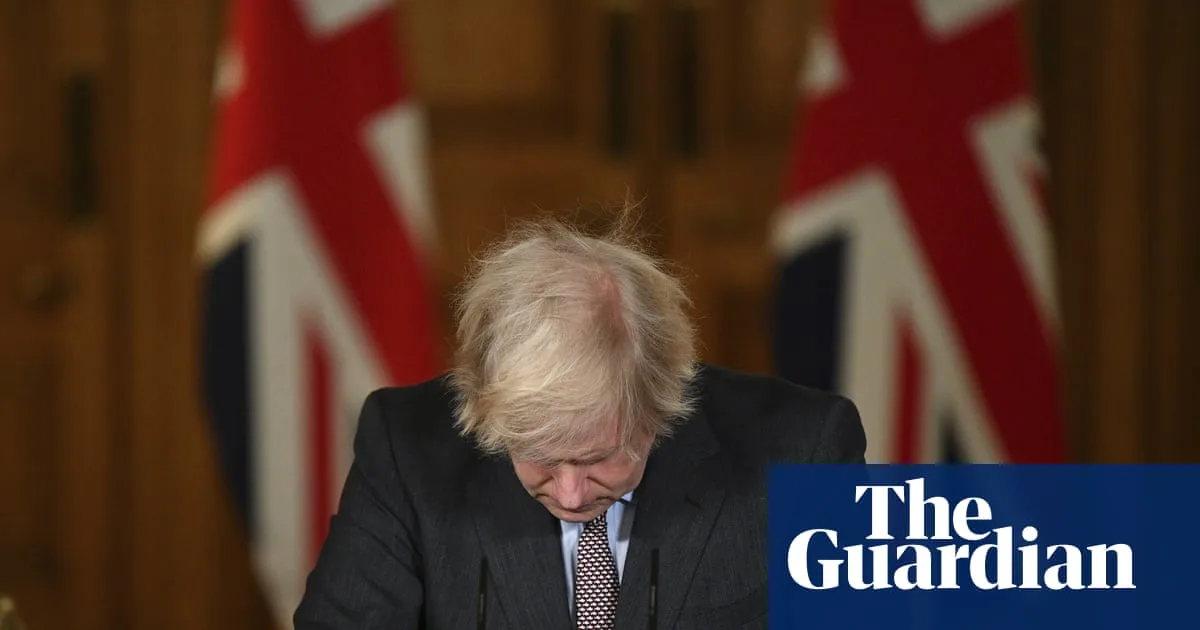
A damning official report into the UK's handling of the Covid-19 pandemic has concluded that the government's response was 'too little, too late', and that introducing a lockdown just one week earlier could have saved more than 20,000 lives. The inquiry's findings paint a picture of delay, indecision, and a 'toxic and chaotic' culture inside Boris Johnson's Downing Street.
The report states that if a lockdown had been imposed on 16 March 2020, a week earlier than it was, modelling suggests that deaths in England during the first wave could have been cut by almost half, equating to 23,000 lives saved. It describes February 2020 as 'a lost month', noting that Johnson did not chair a single Cobra emergency committee meeting and that the response effectively halted during the half-term holiday.
Strong criticism is levelled at Johnson and his then-adviser Dominic Cummings, who is said to have fostered a 'culture of fear' inside No 10. The report also takes aim at the three devolved governments, saying all made errors and that communication with them was poor. The Covid-19 Bereaved Families for Justice UK group said the report showed Johnson had 'put his political reputation ahead of public safety'.
The inquiry found that many of the same mistakes—reacting too slowly and underestimating the speed and impact of Covid's spread—were repeated later in 2020 when restrictions were lifted and then belatedly reimposed in the face of new variants, calling this 'inexcusable'. It also criticised Chris Wormald, then the top civil servant at the Department of Health, for failing to correct the 'over-enthusiastic impression' given by Health Secretary Matt Hancock.
While the report concluded that lockdowns were necessary, it acknowledged they left 'lasting scars' on society, particularly for children. It also noted that if ministers had acted swiftly with other measures, a complete lockdown might have been avoided or been shorter. The first volume of the report provides a stark chronology of inaction despite mounting evidence of a spreading global pandemic.




