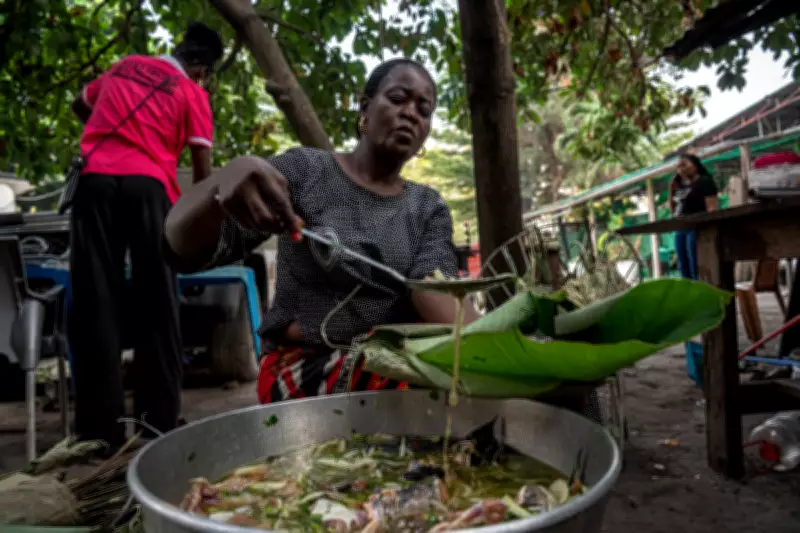
Severe hunger is gripping the Democratic Republic of the Congo (DRC), and urgent action is needed to address rising food prices, according to a food bank in the capital, Kinshasa. Régis Ngudie of Mapendo Banque Alimentaire told The Independent that the climate crisis, prolonged conflict in the east, and a weak economy are driving the crisis, with the food bank able to meet only a fraction of the city's needs.
Root Causes of the Crisis
“Across Kinshasa and the whole country, our brothers are suffering from this terrible problem of hunger, and we desperately need to find solutions,” Mr Ngudie said. He emphasized that the hunger is not due to a lack of food but rather severe economic challenges and the absence of social security for the Congolese people. Kinshasa, one of the world's fastest-growing megacities with a population exceeding 10 million, has seen its population soar from 3.5 million in 1990 to around 18 million today. Public services are under immense pressure, and cuts to foreign aid since last year have further reduced support for residents.
Climate Shocks and Conflict
Climate shocks are exacerbating food insecurity by driving up food prices when harvests fail. Disasters like the Kinshasa floods of 2025 disrupt food supply chains and livelihoods. Conflict in the east threatens supply routes to the capital and has forced many internally displaced people (IDPs) to seek refuge in Kinshasa. Additionally, the US and Israeli-led conflict against Iran in the Middle East has deepened challenges by increasing fuel and fertilizer costs, making it harder to transport goods from rural areas.

Mapendo Banque Alimentaire, established during the Covid-19 pandemic, supports several thousand people with food donations from supermarkets, farms, and individuals. It focuses on the most vulnerable, including families fleeing war, and runs campaigns to reduce food waste and promote solidarity. However, Mr Ngudie acknowledged that the food bank only scratches the surface of the city's food security challenges.
UN Warning and Aid Cuts
Ibrahima Diallo, deputy country director for the UN's World Food Programme (WFP) in the DRC, echoed these concerns. He stressed that plummeting foreign aid from the US and other countries has hindered humanitarian efforts. “In the DRC, needs are rising, but overall support is declining,” he said. Key drivers include the security crisis in the east, economic instability, and climate change, which drive up food prices and disrupt livelihoods.
WFP DRC operates one of the UN agency's largest responses, with ten sub-offices across the country. However, declining aid means WFP will only provide food relief to around one million people this year, despite five million needing assistance, including four million requiring emergency food aid. In Kinshasa, food insecurity is endemic, with many families eating just one meal a day, often of low nutritional value. WFP currently has no programmes in Kinshasa due to budget constraints, focusing instead on conflict-affected areas.
Long-Term Interventions at Risk
WFP also invests in long-term climate resilience programmes, such as climate-smart agriculture and cash transfers before climate shocks. However, the current state of “hyper-prioritised” aid forces a focus on emergency support, potentially prolonging aid dependency. This warning comes as the annual “Hunger Hotspots” report, co-published by the WFP and the EU, shows that the number of people in food crisis globally has doubled over the past decade, while foreign aid has fallen to a 10-year low.
This article is part of The Independent’s Rethinking Global Aid project.