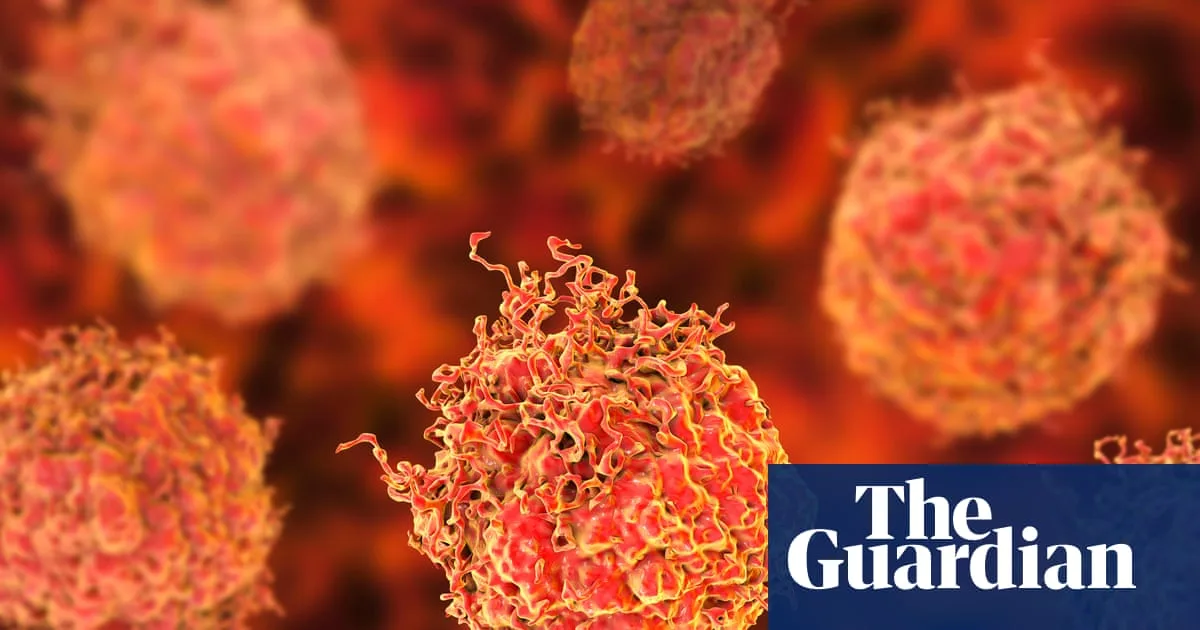
New Prostate Cancer Drug VIR-5500 Shows 'Stunning' Results in Early Trials
Prostate Cancer Drug VIR-5500 Shows 'Stunning' Early Results

Early clinical trials of a new immunotherapy drug for advanced prostate cancer have yielded what researchers are calling "stunning" results, with the treatment showing significant tumour shrinkage in some patients. The drug, known as VIR-5500, represents a promising breakthrough in tackling a disease that affects millions of men globally.

How VIR-5500 Works

The VIR-5500 operates as an engineered antibody, specifically designed as a T-cell engager. It functions by bringing together the body's killer T-cells with tumour cells that are actively trying to evade detection. This mechanism allows the immune system's natural defences to target and destroy cancerous cells more effectively.

Minimising Side-Effects

A key innovation of VIR-5500 is its activation process, which occurs only within the tumour environment. This targeted approach not only reduces potential side-effects but also enables the drug to remain in the bloodstream for longer periods, potentially requiring fewer doses. This is particularly significant as other T-cell engagers have been associated with severe inflammatory responses in prostate cancer patients.

Trial Results and Patient Outcomes

The phase one clinical trial, funded by Vir Biotechnology, involved 58 men with advanced prostate cancer who had ceased responding to conventional treatments. Researchers reported that 88% of participants experienced only very mild side-effects, highlighting the drug's favourable safety profile.

When examining prostate-specific antigen (PSA) levels—a biomarker for prostate conditions—the results were particularly encouraging. Among 17 patients receiving the highest dose, 82% saw their PSA levels drop by at least half, 53% experienced a reduction of at least 90%, and 29% recorded a fall of at least 99%.

Tumour Shrinkage Observed

In measurable tumours among 11 high-dose patients, five demonstrated noticeable shrinkage. One remarkable case involved a 63-year-old man with liver metastases, where 14 cancerous lesions were completely resolved after six treatment cycles.

Expert Commentary and Future Directions

Professor Johann de Bono of the Institute of Cancer Research and the Royal Marsden NHS Foundation Trust, who led the study, described these findings as unprecedented for a disease previously considered "immune-cold" or resistant to immunotherapy. "We believe that such treatments may in the long term lead to cures," he stated, while acknowledging that further data is needed.

Charlotte Bevan, Professor of Cancer Biology at Imperial College London, emphasised the potential excitement of this advance but stressed the importance of including diverse ethnicities in future studies due to existing disparities in prostate cancer outcomes.

Simon Grieveson, Assistant Director of Research at Prostate Cancer UK, welcomed the early-phase results as extremely promising. "With over 12,000 men dying from prostate cancer each year in the UK, we urgently need new and innovative ways to treat the disease," he remarked, expressing hope that larger trials will confirm these positive outcomes.

The preliminary findings were presented at the American Society of Clinical Oncology Genitourinary Cancers Symposium in San Francisco and are pending peer review. Further clinical trials are now in planning stages to build upon these initial successes.




