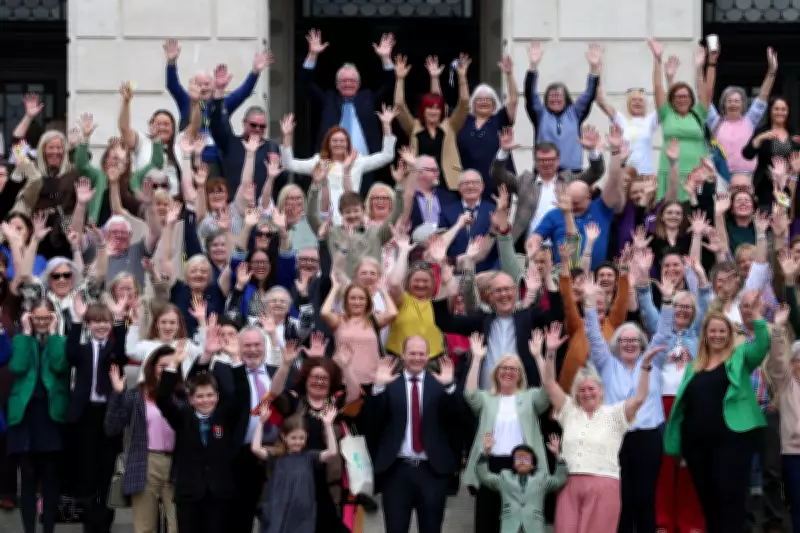
The Northern Ireland Assembly has passed the long-awaited Sign Language Bill, a moment hailed as historic by campaigners and politicians alike. Scores of deaf community members travelled to Parliament Buildings in Belfast to witness the event, cheering the Bill's passage on the steps of Stormont.
Recognition and Duties
The legislation officially recognises and promotes both British Sign Language (BSL) and Irish Sign Language (ISL). It imposes duties on public bodies to take reasonable steps ensuring their information and services are fully accessible. This includes providing free sign language classes to deaf children and their families.
Unanimous Approval
The Bill passed unanimously by MLAs on Tuesday afternoon, drawing applause from the public gallery. Communities Minister Gordon Lyons began his final stage speech in sign language, directed at the gallery, and was met with applause. He described the moment as historic and a "long time coming," noting the exceptional turnout.

"I am absolutely delighted at such a strong turnout that we have here today, and I think that that speaks to the importance of this legislation for the community represented here today," Lyons said. He added, "I know that this is a day that has been much anticipated by the deaf and deaf-blind signing community. For them and for the whole of our society in Northern Ireland, this is a day that truly merits being described as historic."
Generations of Exclusion
Lyons highlighted that for generations, deaf people have built rich linguistic, cultural, and social communities through sign language, yet their history has often been marked by exclusion. "Legal recognition of sign languages has lagged far behind lived reality," he said.
Colm Gildernew, Chairman of the Stormont Communities Committee, described the moment as "significant and long-awaited." He addressed the community directly: "We see you, hear you, and we will continue to work on your behalf." Gildernew emphasised that recognition alone is not sufficient and that the legislation must lead to tangible improvements in access to services, information, education, and participation in public life.
Impact on Families and Employment
Rebecca Mansell, chief executive of the British Deaf Association, called the legislation crucial. She said access to sign language education will make a huge impact for families and improve employment opportunities. "Today is such an exciting day for the deaf community. We have been working on this Bill for such a long time, over 20 years, and today we have the chance for legislation for two sign languages," she said. "At some point I thought we might not get here, but we're here now. After that, the hard work starts to ensure meaningful implementation."
Next Steps
The Bill is set to proceed to Royal Assent and can then be implemented. The Department for Communities said work continues on statutory guidance, engagement with the deaf community, and arrangements to support public bodies in meeting their new responsibilities.