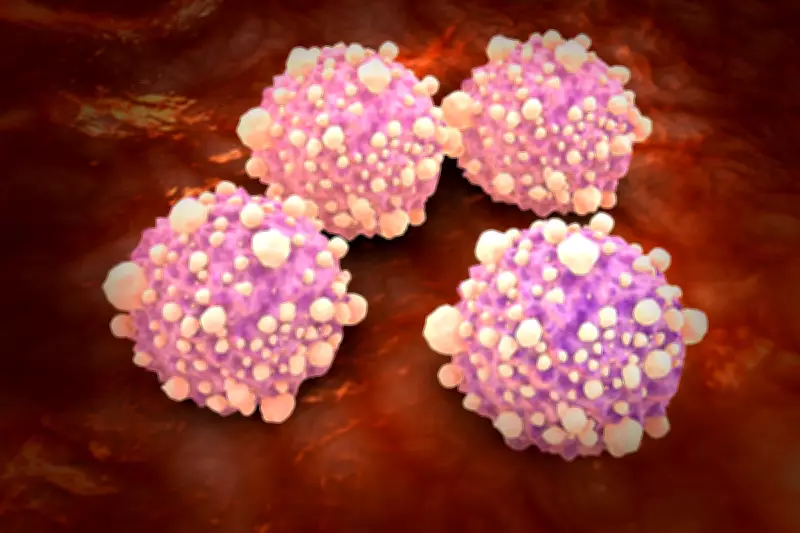
A groundbreaking new blood test combining four distinct biomarkers could significantly improve survival rates for pancreatic cancer, a disease notorious for late diagnosis and poor outcomes. This medical advancement represents a potential breakthrough in detecting one of the UK's deadliest cancers at earlier, more treatable stages.
The Pancreatic Cancer Challenge in the UK
Pancreatic cancer remains the fifth most common cause of cancer deaths across the United Kingdom, according to official NHS statistics. Each year, approximately 10,500 people receive this devastating diagnosis, with only 7 per cent surviving five years or longer after confirmation. The disease's stealthy progression means more than half of patients die within three months of diagnosis, highlighting the critical importance of early detection.
Currently, no successful screening methods exist for pancreatic cancer in clinical practice, leaving patients reliant on symptoms that typically emerge only at advanced stages. This diagnostic gap has driven researchers worldwide to seek reliable biomarkers that could identify the disease before it becomes untreatable.

The Four-Biomarker Breakthrough
Scientists from the University of Pennsylvania have made significant progress by identifying two new biomarkers that, when combined with two previously known markers, create a powerful diagnostic tool. The research team analysed blood samples and discovered that aminopeptidase N (ANPEP) and polymeric immunoglobulin receptor (PIGR) appear consistently in the blood of early-stage pancreatic cancer patients.
These new biomarkers join carbohydrate antigen 19-9 (CA19-9) and thrombospondin 2 (THBS2), which researchers had previously explored but found insufficient as standalone screening tools. The combination of all four markers represents a substantial advancement in pancreatic cancer detection methodology.
Impressive Clinical Results
Published in the respected journal Clinical Cancer Research, the study demonstrates remarkable accuracy rates. The four-marker test successfully distinguished pancreatic cancer patients from non-cancer cases 91.9 per cent of the time. Perhaps more importantly, it identified early-stage cancer in 87.5 per cent of cases examined.
The test proved particularly valuable in differentiating cancer patients from both healthy individuals and those with non-cancerous pancreatic conditions like pancreatitis. This specificity reduces the risk of false positives that could lead to unnecessary invasive procedures.
Expert Perspectives on the Advancement
Lead investigator Kenneth Zaret expressed cautious optimism about the findings, stating: "By adding ANPEP and PIGR to the existing markers, we've significantly improved our ability to detect this cancer when it's most treatable." He emphasised that the retrospective study findings now warrant further testing in larger populations, particularly among people before they show symptoms.
Professor Tatjana Crnogorac-Jurcevic, a pancreatic cancer expert from Queen Mary's University of London, provided valuable context about the study's implications for UK healthcare. She described the research as "well-executed" and noted it represents "one of many efforts to develop a much-needed test for the early detection of pancreatic cancer."
The Road to Clinical Implementation
While acknowledging the test performs well in stages one and two when surgical intervention remains possible, Professor Crnogorac-Jurcevic highlighted important limitations. The blood samples used in the study were collected retrospectively, meaning researchers already knew the cancer diagnosis when analysing them.
"These biomarkers now require further extensive validation," she explained. "They must first be tested in a pre-diagnostic setting to determine if they can detect cancer before clinical presentation, followed by a large prospective clinical study." This necessary validation process means there remains "a long road ahead before this test can potentially be used for the surveillance of individuals at an increased risk of developing pancreatic cancer."

Future Applications and Screening Potential
The researchers envision the test eventually serving as a screening tool for people at high risk of developing pancreatic cancer. This includes individuals with a family history of the disease, those with genetic screening results indicating elevated risk, or people with a personal history of pancreatic cysts or pancreatitis.
Such 'prediagnostic' studies would help determine if the four-marker blood test could become a routine screening method that catches pancreatic cancer at its most vulnerable stage. Early detection remains the single most important factor in improving survival rates for this aggressive cancer type.
The development represents a significant step forward in pancreatic cancer research, offering hope that improved diagnostic tools might eventually transform outcomes for thousands of UK patients annually. While clinical implementation remains some years away, the scientific community has gained valuable insights that could accelerate progress toward effective screening protocols.