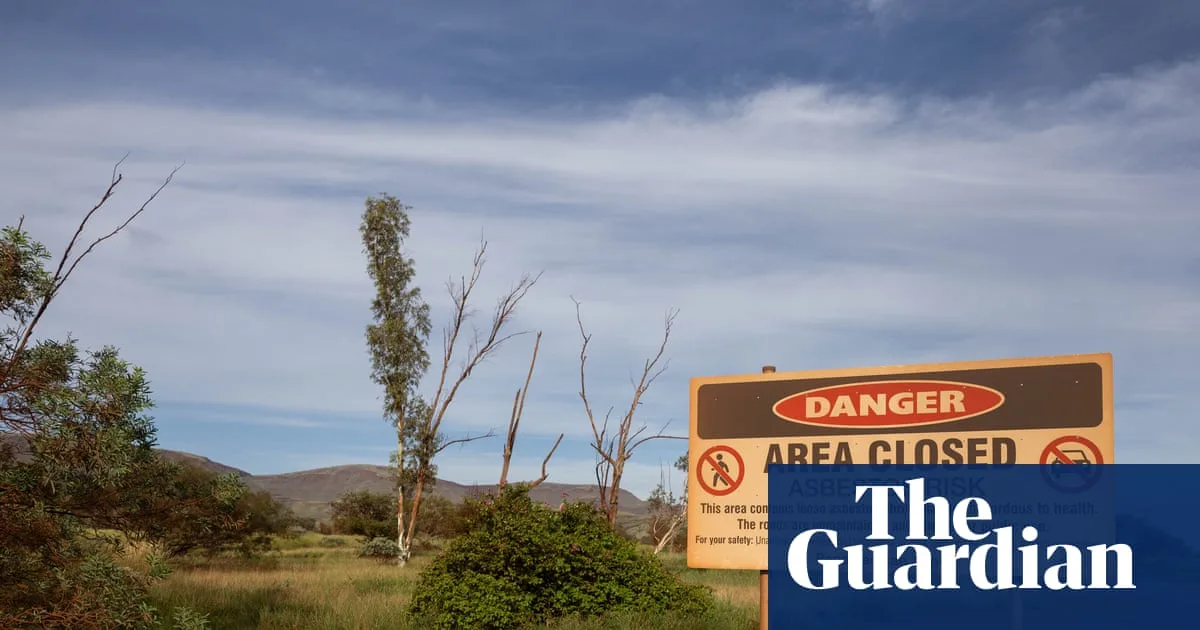
The Banjima people, traditional owners of land in Western Australia's Pilbara region, have launched a $1.5bn legal claim against the state government over asbestos contamination at the former mining town of Wittenoom. The site, which housed three blue asbestos mines operating from 1943 to 1966, has been described as 'the largest contaminated site in the southern hemisphere'.
The Banjima Native Title Aboriginal Corporation (BNTAC) filed proceedings in the federal court on Tuesday, seeking removal of more than 3 million tonnes of toxic waste, remediation of polluted waterways, and compensation for harm caused. Blue asbestos, considered the most hazardous form, causes mesothelioma and does not break down in the environment.
Johnnell Parker, a Banjima traditional owner and deputy chair of BNTAC, said the contamination has disconnected her people from their land. 'There's not one family who lived in Wittenoom unaffected by mesothelioma,' she said, adding that she has lost loved ones to the disease. A 2016 study found Indigenous Western Australians have the highest mesothelioma mortality rate globally, linked to Wittenoom.
BNTAC is seeking court orders to seal three abandoned mines, clear three tailings dumps, and remove asbestos from the racecourse and airport. The claim argues the WA government has taken no steps to remediate, despite a 1994 committee recommendation to accept responsibility. Peter Gordon, BNTAC's lawyer, noted that preliminary engineering estimates the cleanup at $1.5bn, while the state has reaped $70bn in mining royalties since 2016.
WA Premier Roger Cook said he was not surprised by the legal action, having discussed remediation with the Banjima last September. Gordon, who secured Australia's largest class action settlement last year, emphasised the cultural, health, and environmental degradation. 'Out of sight, out of mind is not good enough,' Parker said.