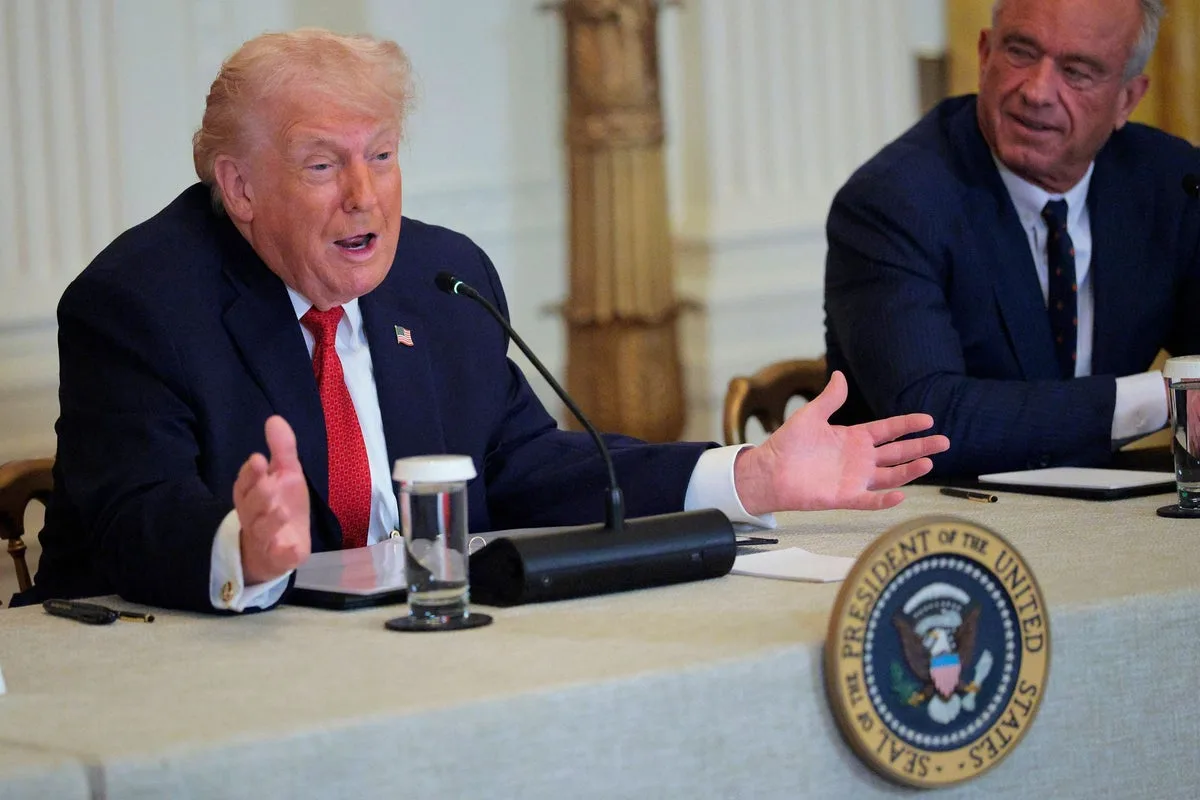
The latest US dietary guidelines advise Americans to double their daily protein intake, prompting concern among nutrition experts. The 2025-2030 guidelines, unveiled by the Trump administration, urge people to consume 1.2 to 1.6 grams of protein per kilogram of body weight, up from the previous 0.8 grams. Health Secretary Robert F. Kennedy Jr. declared an end to “the war on protein” as the new food pyramid emphasises red meat, whole milk and other animal sources.
However, leading nutritionists question the push, noting most Americans already exceed the old recommendations. The average adult man consumes about 100 grams of protein daily—double the previous guideline. “If you’re not actively building muscle with resistance training, you’re getting enough,” said Dr. Dariush Mozaffarian of Tufts University. Experts warn that excess protein can be converted to fat by the liver, increasing the risk of abdominal fat and diabetes.
The new guidelines are based on 30 studies linking higher protein to weight management and nutrient adequacy, but critics argue these trials are not suitable for general population recommendations. Stanford’s Christopher Gardner fears the advice will boost sales of protein-enriched processed foods, confusing the public. “I think they’re going to confuse the public in a big way,” he said.
While some experts see the protein push as helpful if it steers people toward whole foods and away from processed carbohydrates, others remain sceptical. “The main problem is processed carbohydrates,” said Dr. David Ludwig. Yet with protein added to everything from cereals to snacks, consumers may struggle to make healthier choices.