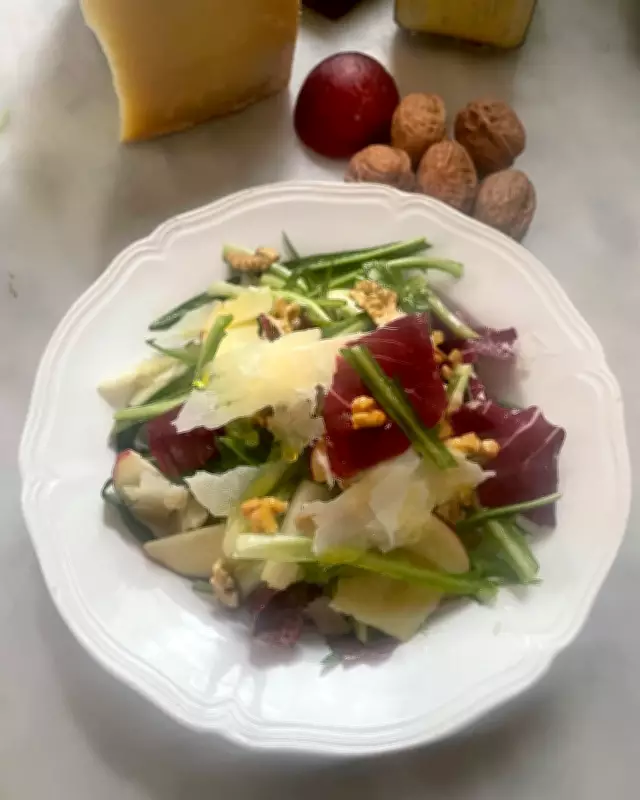
Rachel Roddy's puntarelle, radicchio, celery, apple, and cheese salad is a vibrant and punchy dish that serves as a loving tribute to the late vegetable specialist Charlie Hicks. This recipe celebrates a shared passion for the versatile Italian chicory known as puntarelle, blending bitter greens with sweet and savoury elements for a memorable culinary experience.
Remembering Charlie Hicks and Veg Talk
Many in the UK fondly recall Charlie Hicks from his role on Veg Talk, a popular weekly radio show that aired on BBC Radio 4 from 1998 to 2005. The programme was born after Sheila Dillon interviewed Charlie, a fourth-generation fruit and vegetable supplier at Covent Garden market, for an episode of The Food Programme. Inspired by his vast knowledge and enthusiasm, Dillon pitched the idea to her colleagues, leading to the creation of Veg Talk, which explored seasonal produce trends with market reports and featured guests like Angela Hartnett and Alastair Little.
Despite some criticism, such as broadcaster Andy Kershaw's harsh remarks in a 2005 interview, the show garnered a loyal following. Listeners tuned in for Charlie's practical expertise, honed over decades in the markets, combined with his scholarly approach, sharp humour, and warm voice. His ability to connect with chefs and home cooks alike made him a beloved figure in British food circles.

Charlie's Influence on Chefs and Produce
Charlie's impact extended beyond the airwaves, as highlighted by the late cooking teacher Carla Tomasi in Rome. In the 1980s, he supplied her restaurant Frith's in Soho with exceptional produce, including bitter greens, blood oranges, and puntarelle. This support was crucial for Carla, whose menu drew on her Italian heritage, showcasing how Charlie's sourcing helped shape authentic dishes in the UK.
Rachel Roddy's first contact with Charlie came through Carla and this very column, when he called to discuss puntarelle for his market report. Their conversation delved into the chicory's unique characteristics: dark, bitter outer leaves and pale, succulent inner tubes. They explored traditional Roman preparations, such as slicing the tubes and dressing them with anchovy and garlic, as well as innovative uses in salads with sweet elements like apples.
Recipe: Puntarelle, Radicchio, Celery, Apple, and Cheese Salad
This salad is a perfect way to honour Charlie's legacy, combining textures and flavours that he championed. It serves four and features a honey dressing for balance.
Ingredients
- 1 head puntarelle or frisée
- 1 small head radicchio
- 2 celery stalks
- 1 crisp red apple
- ½ lemon
- 100g cheese (e.g., pecorino, grana padano, asiago, manchego)
- 6 tbsp olive oil
- 1 tbsp red-wine vinegar
- 2 tsp runny honey
- Salt to taste
- 100g walnut halves
Instructions
- Begin by preparing the puntarelle. Remove the dark outer leaves, discarding any tough or damaged ones. Separate the pale inner tubes, trim the ends, and slice them into short lengths or on an angle.
- Break the radicchio into leaves, wash all greens thoroughly, and dry them. Tear larger leaves into bite-sized pieces.
- For the celery, remove and discard any strings, then slice the stalks thinly on an angle.
- Quarter the apple without peeling it, remove the core, and thinly slice the quarters. Rub the slices with lemon juice to prevent discolouration.
- Use a potato peeler to shave thin, uneven slices of cheese.
- In a large bowl, whisk together the olive oil, red-wine vinegar, honey, and a pinch of salt to create the dressing.
- Add the prepared leaves to the bowl and toss well to coat. Then, incorporate the celery, apple, and walnuts, tossing again to combine.
- Mix in half of the cheese, give it a final toss, and transfer the salad to a large platter or individual plates. Top with the remaining cheese and serve immediately for the best crispness.
This salad not only offers a delightful mix of bitter, sweet, and savoury notes but also stands as a testament to Charlie Hicks' enduring influence on how we appreciate and utilise fresh produce in British kitchens.